
By Jeff Kapembwa
African Non State Actors have challenged developed countries-key emitters of Green House Gases (GHGs) to pay up, show receipts, for their pollution of the ecosystem and stop pledging what cannot be fulfilled, as the COP 31 goes underway in Antalya, Türkiye.
The 100+ climate change campaigners from the 54-African countries, under the auspices of the Pan African Climate Justice Alliance (PACJA), have united under their position paper titled: “From Belém to Antalya: Delivering Climate Justice, Protecting Africa’s Development Space and Financing Africa’s Transformation” to protect mother nature.
The campaigners, in a solidarity statement for UNFCCC COP31 underway in Antalya, Türkiye, have roundly condemned United States, India, China, among other polluters for their unabated deceit to cover up for their emissions, with a call to stop the uncouth acts.
PACJA, draws its membership drawn from Grassroots, Community-based organizations, Faith-based Organizations, Non-Governmental organizations, Trusts, Foundations, Indigenous Communities, Farmers and Pastoralist Groups with a shared vision to advance a people-centered, right-based, just and inclusive approach to address climate and environmental challenges facing humanity and the planet.
The consortium in its petition, wants a fair, equitable, ecologically-just and locally-led climate action.
The campaigners are demanding Accountable Climate Finance Over Pledges unlike unfulfilled pledges as was evidenced by rich nations since the COP 15 in which an estimated US$100 billion has persistently been pledged by unfulfilled yet emissions of GHGs, continues.
“Rich nations must stop making empty promises and instead “pay up, show receipts, and stop pledging,” the campaigners say. They are further demanding that finance towards pacifying over emissions and other human-induced acts affecting nature be transparent, measurable, and strictly enforced.
The demand includes a call that ‘Grants, Not Debt-Inducing Loans’ be championed and actualized for onward application to save the ecosystem.
The alliance strongly opposes climate finance that increases Africa’s debt burden. They insist on predictable, accessible, grant-based financing rather than loans that drain domestic budgets from health and education.
The Non-state actors are demanding for adaptation finance to be substantially increased—pushing for targets such as tripling adaptation funding to around $120 billion a year—with a heavy emphasis on local implementation, food security, and freshwater resilience.
A Just and Equitable Energy Transition being facilitated and that it must be country-led, protecting local livelihoods, creating decent green jobs, and ensuring Africa retains greater economic value from its natural resources and critical green minerals rather than being exploited as a raw-material exporter.
People-Centered Inclusivity be championed. They are demanding that for a seat at the table to speak for the marginalized groups, including youth, women, Indigenous Peoples, smallholder farmers, pastoralists, fisherfolk, and trade unions, ensuring climate decisions center affected communities.
And Zambia has taken its position during the COP 31 with a challenge to the international community to raise climate financing for the health sector, noting that the increasing impacts of climate change, including severe droughts, water scarcity and disease outbreaks, are a burden on developing countries.
Gilbert Siame, Zambia’s minister of Green Economy and Environment in his clarion call during the Ministerial Dialogue on Advancing Global Health through Climate-Resilient Health Systems, convened by AMREF Africa at the 31st Conference of the Parties (COP31) in Antalya, Türkiye, says climate financing was more inevitable than ever before to pacify over unforeseen burden.
Climate change, he argued was a growing public health crisis requiring urgent and coordinated action and is no longer just an environmental challenge.
He called for the strengthening of primary healthcare and improve collaboration among the Ministries responsible for Health, Green Economy and Environment, and Finance.
This is to ensure health systems are better prepared for climate-related shocks. He showcased Zambia’s concerted towards integrating health adaptation into national climate and development frameworks.
Health is among the eight vulnerable sectors identified under the National Adaptation Plan, while health-related indicators have also been incorporated into the country’s third Nationally Determined Contribution (NDC 3.0) which each country was pursuing.
The ongoing preparations for Zambia’s Ninth National Development Plan (9NDP) demanded and provided an opportunity to strengthen the integration of climate-resilient healthcare into national development priorities.
Dr. Siame is saddened by the limited resources allocated to adaptation, particularly in the health sector, and is demanding for increased support from international partners and development finance institutions to develop and finance investment-ready health adaptation projects.
Zambia remains committed to strengthening institutional coordination, mobilising resources and building partnerships to protect vulnerable communities from the impacts of climate change, arguing:
“The climate crisis is a public health crisis, and it requires a unified financial response,” Dr. Siame, who is leading the Zambian delegation told the delegates.
The COP 31, was opened by Murat Kurum (COP31 President / Türkiye’s Environment Minister. He stressed the need for climate action to move from grand declarations into physical realities:
“Our decisions must take shape in a city’s infrastructure, on a farmer’s land and along a factory’s production line. Families must feel their impact in lower energy bills.” He said
He challenged delegates to debate and agree to review the global target to electrify 35% of the global economy by 2035 (up from roughly 20%) to cut emissions and lower household energy costs.
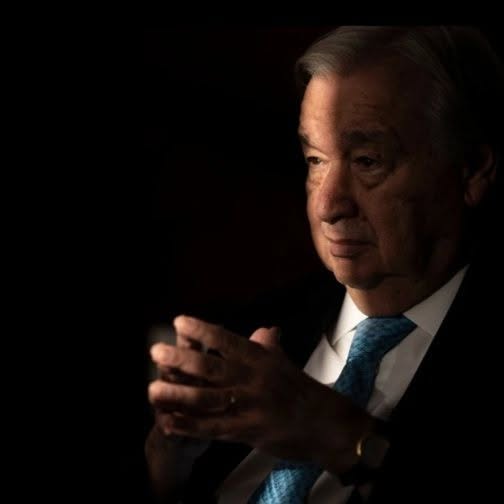
United Nations General Secretary António Guterres, during the official opening ofCOP 31, warned world leaders that humanity has entered a dangerous “new age of climate extremes” .
His appeal coincided with a newly released World Meteorological Organization (WMO) report confirming that 2026 is on track to be among the four warmest years ever recorded.
Guterres cautioned that global climate anomalies are moving “off the charts”, turning extreme heat, devastating wildfires, and catastrophic floods into a permanent reality.
Her called for Urgent Action and describing the current crisis as a final climate “moment of truth”, Guterres demanded that heads of state “get serious” about implementing aggressive emissions cuts and transitioning rapidly away from fossil fuels.
Reflecting on recent UN Environment Programme (UNEP) findings, he acknowledged that while global temperatures are projected to temporarily breach the critical 1.5-degree Celsius threshold in the immediate years ahead, keeping long-term goals alive is a fundamental “fight for humanity”