
By MERCY NAMUCHIMBA
FOR years, the scorching sun and erratic rainfall patterns have dealt a harsh blow to farmers in Chongwe District, leaving them vulnerable to crop failures and food insecurity. But, amidst the challenges posed by climate change, a beacon of hope shines bright with the launch of a Solar Irrigation Scheme Initiative.
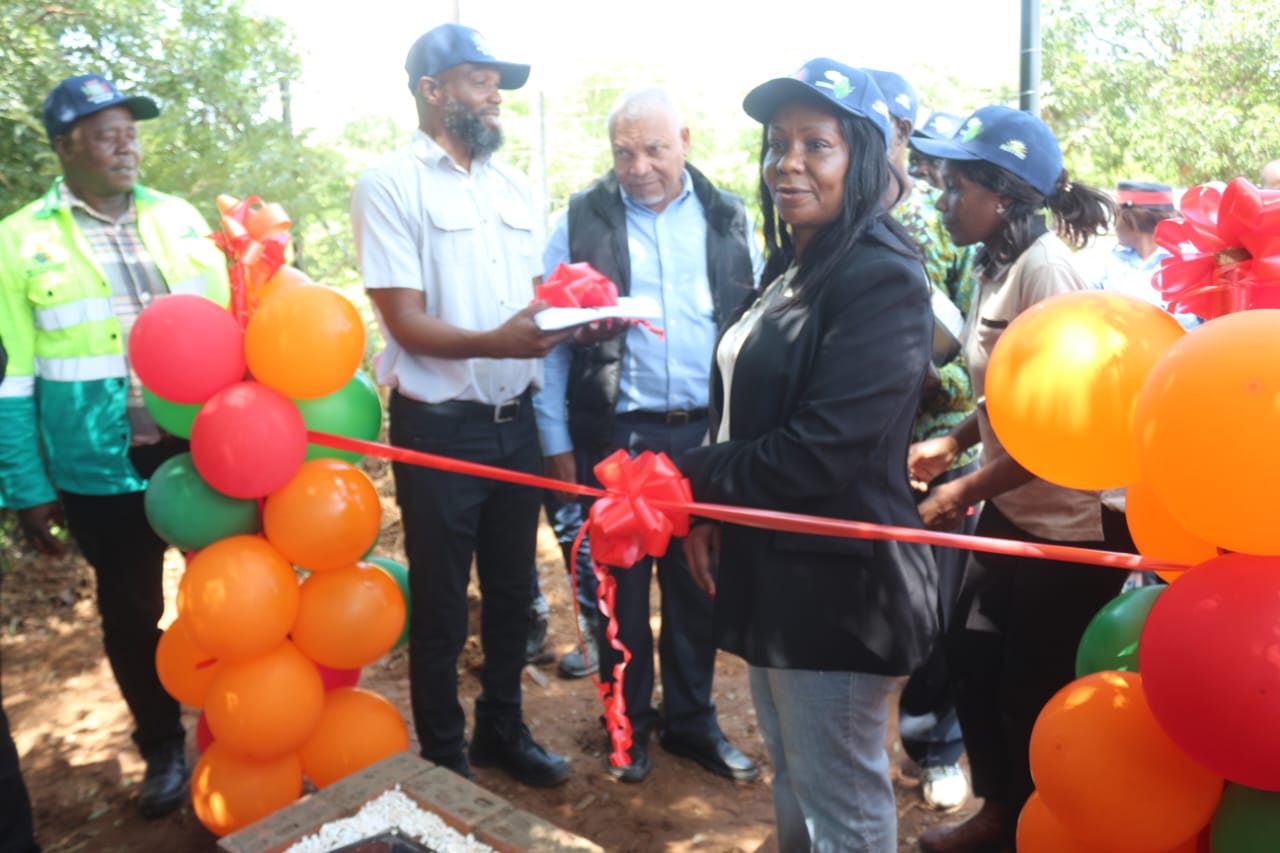
The Support for Education and Economic Development (SEED) Foundation, a capacity building unit of Swhweizer Agriculture in collaboration with the Division of Resettlement under the Office of the Vice President (OVP) has launched the Kanakantapa Solar Irrigation Scheme Initiative (KASISI) Project in Chongwe District.
The project which was launched under the theme, “Accelerating Attainment of Presidential Crop Production Targets Using Climate- Resilient Seeds, Solar Irrigation Solutions and Regenerative Agriculture” will house about 413 households in Kanakantapa camp of Chongwe district.
Schweizer Executive Director, Jonas Chihangu said, Kasisi Project is a five year 2 Phase Agricultural Infrastructure Program will be implemented in partnership with the Government of Zambia through the Division of Resettlement under the Office of the Vice-President.
“The first phase of the project is the commissioning of the live pilot installation at the farm of one of the farmers who is a horticulture farmer. The pilot demonstrates how solar power irrigation combines with climate resilient seeds, mechanisation and regenerative agriculture practices,” Dr Chihangu highlighted.
He explained that in Phase 2, the project will scale up installation from one hectare up to four hectares per farmer, reaching thousands of farmers across the Kanakantapa Resettlement scheme.
“The scale is designed to unlock access to finance and guaranteed markets so that farmers are bankable, insurable and commercially viable emphasising that the purpose of the project is to help famers produce consistently, commercially and sustainably despite climate change,” Dr Chihangu added.
He said his organisation reaffirms its commitment to work closely with the government, local traditional leaders, financial institutions, insurers and the private sector companies such as Zambia Agriculture Research Institute (ZARI), Seed Control and Certification Institute (SCCI), among others.
The project’s impact extends beyond individual farmers. By increasing food production and incomes, Kasisi will contribute to national food reserves and local employment. This initiative also aligns with the Government’s vision to transform resettlement schemes into production hubs, as outlined in the Presidential Irrigation Programme.
Speaking during the launch, Vice President Mutale Nalumango said the event was not merely a launch of the irrigation project but a statement of intent that Zambia will no longer accept vulnerability to climate shocks as inevitable and that our smallholder farmers and settlers must be empowered to produce more, better and all year round.
Ms Nalumango who was represented by the Permanent Secretary, Mervis Nkomesyha, added rainfed agriculture alone is not sufficient, solar powered irrigation initiatives such as Kasisi project, represent a strategic response to climate change, enabling farmers to transition from seasonal production to all year production while reducing reliance on fossil fuels and lowering production costs.
She noted through irrigation mechanisation, access to finance and structured markets, smallholder famers can become commercially viable producers contributing meaningfully to household incomes, local employment and national food reserves.
Ms Nalumango explained the vision of the resettlement program under the Office of the Vice President is to transform resettlement schemes into production hubs.
“In Kanakantapa, under the Presidential Irrigation Initiative, government and its partners is committed to bringing over 500 hectares under irrigation by 2027 and scaling up to 1,500 hectares by 2030 through structured private sector partnerships and innovative financing models,” she added.
Ms Nalumango said renewable energy particularly solar power irrigation is a game changer for rural Zambia because it reduces energy costs, increases reliability and allows farmers to invest savings into productivity enhancing inputs, more importantly it increases access to irrigation for small holder farmers, youths, women and persons with disabilities who are often excluded from capital intensive systems.
She noted Kasisi goes beyond irrigation as it integrates access to finance and working capital, guaranteed markets through off-taker arrangements, high quality seed multiplication and certification, mechanisation, value addition and capacity building.
Ms Nalumango said Kasisi is more than a project but a model for the future of agriculture in resettlement schemes and it reflects government strategic shift towards all year production, climate smart agriculture and inclusive private sector lead growth.
She added, the partnership between Schweizer and the Office of the Vice President through the Resettlement Division is clear testimony to what such collaboration can deliver.
Chongwe District Commissioner, Dr Evans Lupiya was elated at the commissioning of the project as it will empower the people of Chongwe.
Meanwhile, Ministry of Youths, Sports and Arts, Director Youth, Mable Benene Ziwe said within the Ministry of Youths, Sports and Arts holds a firm commitment to young people who must be at the centre of all the responses that this country is going to implement in relation to the challenges being faced.
Ms Ziwe said climate resilient seeds, solar powered irrigation, mechanisation and regenerative agriculture are more than just technical solutions, noting her ministry offers hope for a stable production, sustainable livelihoods and a generation of young farmers who can feed the nation whilst protecting the land.
“The ministry is committed to ensure young people with resettlement schemes are skilled in agriculture to enable them contribute meaningfully to food security in the country through developing their skills in the agriculture sector. This will also ensure they are empowered with the agricultural kit; they need to be part of the food production in this country,” she said.
Theresa Chewe, a farmer in Kanakantapa camp, is one of the recipients of the irrigation solar system empowered by Schweizer limited. She explained that Schweizer limited also trained the farmers in seed production and Horticulture.
Ms Chewe was excited to be the recipient of the solar irrigation kit. “The production at her farm will also increase which means the income levels will increase and also there will be food security not only at home but Chongwe district,” she further said.
Theresa’s sentiments are echoed by Kobi Mwansa, a young farmer who benefited from the project. “Agriculture is our future, but we need the right tools and support. This project has given us hope and chance to thrive,” Ms Mwansa.
As Zambia strives to achieve food security, the Kasisi project serves as a shining example of what can be achieved through partnerships and climate-smart agriculture. For the people of Chongwe, this project is more than just an initiative, it’s a chance to reverse the tide of climate change and build a brighter future. -NAIS