
By Josiah Mpofu
ZAMBIA’s livestock sector has remained highly exposed to climate and biological risks such as drought, pasture degradation, pests, diseases and accidental losses.
These risks have limited livestock productivity, thereby erasing years of farmers’ investment.
To help address these challenges, Government in partnership with PULA Advisors has launched the Hybrid Livestock Index Insurance Pilot.
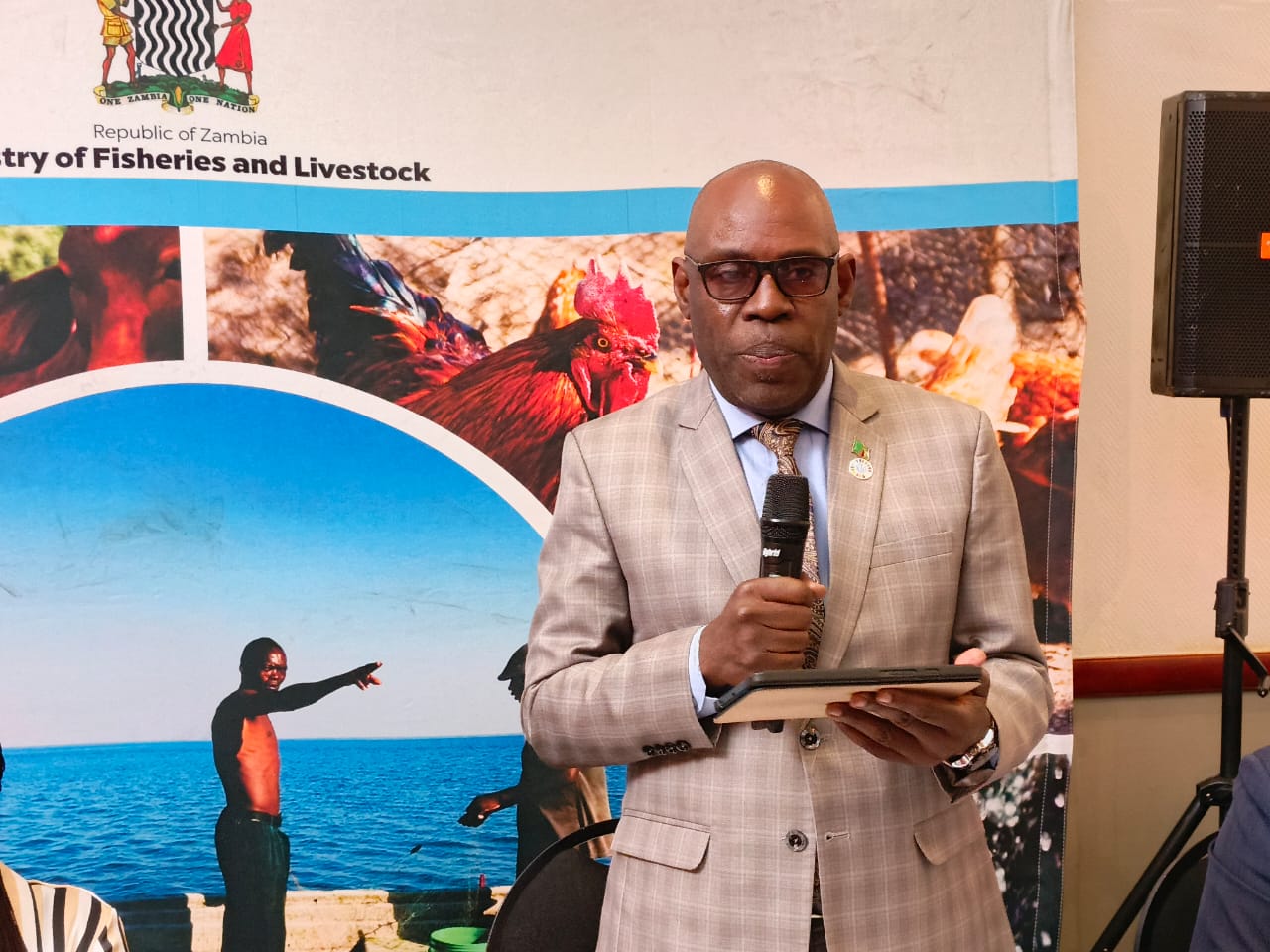
Fisheries and Livestock Permanent Secretary, Max Choombe, revealed that about 5 million Kwacha in premium subsidy has been released by BLUEORCHARD to support the pilot of the Hybrid Index Insurance product.
“Government is confident in PULA’s financial strength and credibility and values its partnership with BLUEORCHARD finance limited in supporting the Ministry of Fisheries and Livestock to pilot and scale up livestock insurance. This commitment is demonstrated by the provision of US$248,400 (about K5 million) in premium subsidy support for the pilot of the hybrid index insurance product,” Dr Choombe revealed.
Dr Choombe said the implementation of the livestock index insurance in selected regions would offer as a safety net and resilience tool that will enable farmers manage risks and maintain productive herds.
“As we roll out the implementation and testing of the livestock index insurance in selected regions, the desire of government is for livestock insurance to become a safety net and resilience tool that empowers farmers to manage risk, maintain productive herds, and invest confidently in the future,” Dr Choombe said.
He explained that the tool would use rainfall, vegetation cover’ and other remotely sensed data, to trigger payouts when thresholds that signify drought or pasture decline are met.
Dr Choombe added the Hybrid Livestock Index Insurance will ensure transparency, efficiency and predictability for livestock farmers.
“Considering the growing impacts of climate change, the hybrid index insurance model is a timely and welcome innovation. It uses objective environmental indicators, such as rainfall, vegetation cover’ and other remotely sensed data, to trigger payouts when thresholds that signify drought or pasture decline are met. government is confident that this design will ensure transparency, efficiency, and predictability for livestock farmers,” Dr Choombe explained.
He noted that Zambia’s livestock sector has remained highly exposed to climate and biological risks such as drought, pasture degradation, diseases, and accidental losses.
“Zambia’s livestock farmers and pastoralists face growing climate risks, including drought, heat stress, pasture degradation and volatile weather patterns that threaten grazing resources and animal health. These shocks result in losses which undermine household incomes, limit investment in livestock enterprises and weaken food security,” Dr Choombe elucidated.
Dr Choombe further thanked PULA for being instrumental in Zambia’s broader agricultural insurance ecosystem, including crop insurance under the Farmer Input Support Programme (FISP) and ensuring that the pilot reaches livestock farmers in a timely and efficient manner.
And PULA Advisors Southern Africa Commercial Director, Joyce Mlewa, indicated that through the partnership, the organization seeks to unlock insurance access to 44,000 cattle farmers.
Ms Mlewa said the livestock insurance solution is designed to offer periodic payouts when grazing conditions deteriorate due to risks such as drought and respond to mortality arising from illness, disease, or accidents.
“Our livestock insurance solution is designed with pastoralist realities in mind. it blends asset protection and asset replacement, offering periodic payouts when grazing conditions deteriorate due to risks such as drought and pest infestation, while also responding to mortality arising from illness, disease, or accident,” Ms Mlewa said.
She assured that in doing so, it helps farmers protect herd value and recover more quickly from shocks. Through this partnership, the aim is to unlock insurance access to 44,000 pastoralists. these targets reflect shared commitment to learning, adaptation and responsible scale.
Meanwhile, Enhanced Smallholder Livestock Investment Programme (E-SLIP) Livestock Production and Productivity Unit Coordinator Ellison Msumuko disclosed 5,000 cattle have so far been insured against various risks under the programme.
He expounded that the insurance cover is aimed at protecting farmers from losses and strengthening resilience in the livestock sector.
The Zambia Livestock Index Insurance Pilot is expected to deliver far-reaching benefits such as enhancing risk protection at the household level, market confidence and investment, financial inclusion and private sector growth, livestock sector resilience. It would help to build a foundation for data-driven policy and programme design. This would assist in achieving the government’s aspirations of increasing the national cattle population to 7.4 million by 2027 and supporting the recently initiated $1 billion beef exports target. –NAIS