
By Happy Mulolani
As climate change continues to ravage communities, various actors and players need to upscale their interventions to reduce negative impacts on the environment.
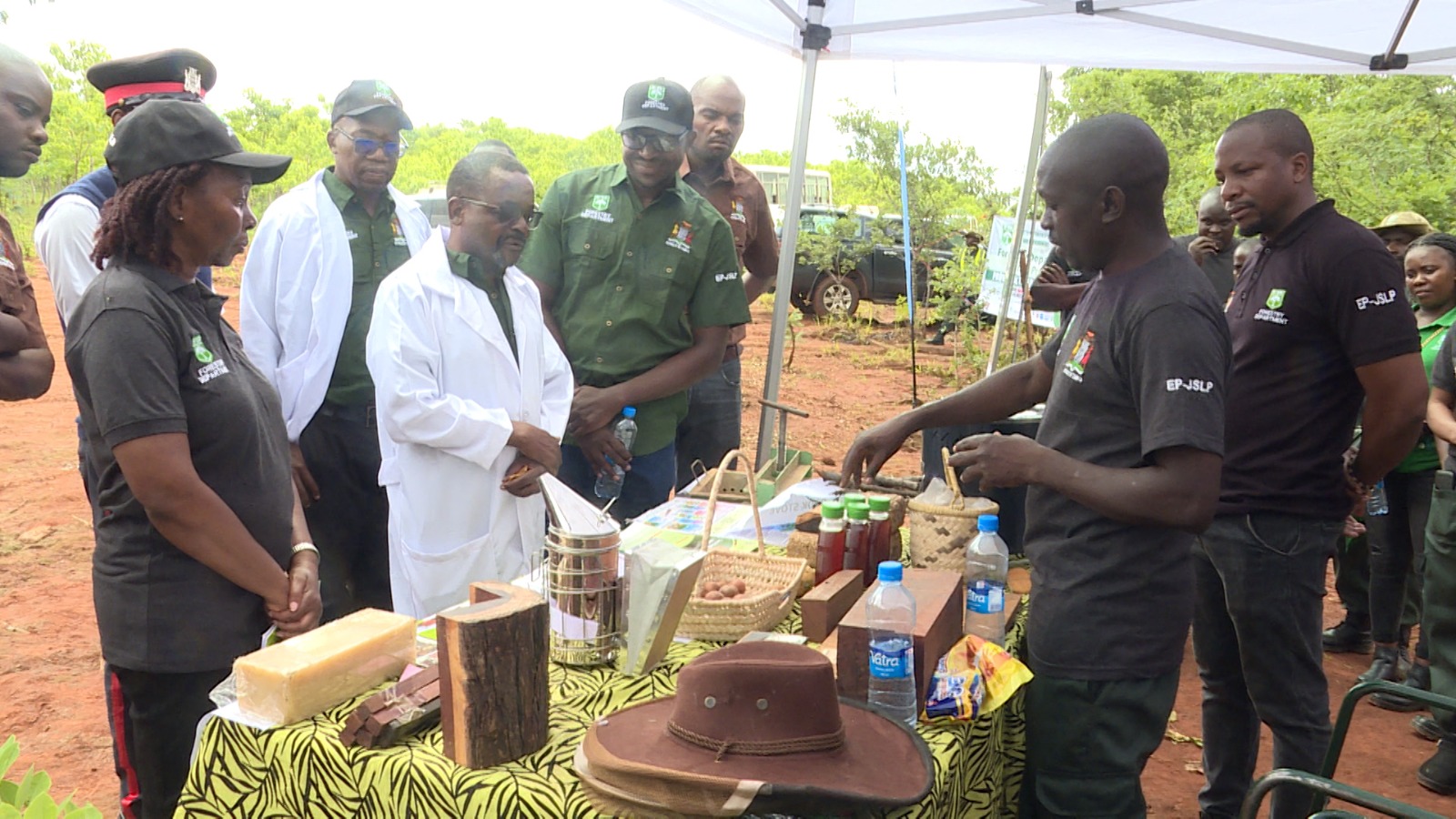
To effectively restore negative impacts on the environment, the Ministry of Green Economy and Environment officially launched the 2025/2026 National Tree Planting season in Eastern province, commemorated under the theme “Trees for life: Restoring nature, empowering communities.”
Eastern Province Minister Peter Phiri explained, “The theme is highly relevant to the development and aspirations of Eastern province…it underscores the inseparable link between environmental sustainability, human well-being, and inclusive development. When we plant and protect trees, we are investing in life, restoring degraded ecosystems, and empowering our communities to secure sustainable livelihoods.”
Mr Phiri emphasized, government has prioritised environmental protection and climate resilience in the Eighth National Development Plans (8th NDP) and the Green Growth Strategy.
To reverse deforestation, the Ministry of Green Economy and Environment, through the Department of Forestry, has set out targeted interventions which seek to tackle deforestation and restore degraded landscapes across the country.
Mr Phiri explained, to identify degraded forest areas in Eastern province and other areas, modern tools like geographic information systems and remote sensing are being utilised. Once these degraded forest areas are identified, they are prioritised for restoration through “tree planting, assisted natural regeneration, agroforestry, and the establishment of community woodlots.”
“Tree planting integrated with farming systems offers great potential to improve crop productivity while reducing pressure on natural forests,” Mr Phiri reiterates.
He pointed out the importance of community participation through the community forestry programme. “Local communities are being empowered and legally recognised as custodians of forest resources in their areas,” Mr Phiri said.
He stated, through this approach, it is evident communities are empowered, forests are better managed, livelihoods are improved, and sustainability is attained.
As emphasis is placed on all actors taking collective responsibility during the planting season, the active participation of stakeholders is a priority. Institutions ranging from government institutions, traditional leaders, schools, faith-based organisations, the private sector, and individual citizens are critical to the success of this approach.
Mr Phiri said, tree planting should include proper nurturing, protection, and monitoring to ensure high survival rates and long-term benefit, -it should not be ceremonial.
Eastern Province, Provincial Forestry Officer, Catherine Zulu, expressed concern that Zambia is one of the countries in Africa which face highest deforestation rates, as a result of charcoal and fuelwood production, unsustainable agricultural practices, infrastructure development, uncontrolled forest fires, and the increasing impacts of climate change, like droughts and floods. These factors negatively impact forests as well as food security, water availability, and the welfare of communities.
Ms Zulu reaffirmed trees and forests are critical in sustaining the environment and also supports livelihoods and strengthening community resilience. “They provide timber and non-timber forest products, improve air and water quality, prevent soil erosion and flooding, regulate our climate, and offer cultural, spiritual, and recreational value to our people,” she said.
Ms Zulu pledged all stakeholders, such as line ministries, traditional authorities, local authorities, and cooperating partners, to ensure this programme and its objectives are effectively implemented.
“By involving communities, youths, and institutions, we are ensuring that tree planting goes beyond the act of planting to include tree survival, ownership, and long-term benefits. In this way, trees truly become trees for life – supporting livelihoods, restoring ecosystems, and empowering communities,” she said.
Eastern Province Jurisdictional Sustainable Landscape Programme (EP-JSLP) is one of the partners supporting these targeted interventions. It is a programme under the Ministry of Green Economy and Environment supported by the World Bank, which is a follow-up on the Zambia Integrated Forest Landscape Project (ZIFLP).
With the onset of favourable rains this season, there is need for stakeholders to actively engage in tree planting. Institutions such as schools, farms, public institutions, and communities. In this way, each tree planted and nurtured contributes to restoring landscapes, protecting the environment, and empowering the community.
It must be made categorical that tree planting is a development intervention, not necessarily an environmental activity, which needs to be aggressively pursued to improve soil fertility, protect water sources, support climate-smart agriculture, and enhance food security.
Overall, the theme “trees for life: restoring nature, empowering communities,” speaks to environmental sustainability and human development. This notion of restoring nature assures “strengthened community resilience, create green jobs, reduce poverty, and secure a healthier future for generations to come.”
Notably, the trees planted this season are meant to grow into forests which will eventually protect, sustain the economy, and preserve natural heritage. Therefore, there must be concerted efforts of planting trees to replenish the environment, communities, and a shared future. -NAIS