
By Jeff Kapembwa
Climate change has extended its ‘fangs’ of damage to the Zambia’s education sector-inducing a staggering US$60 million in damage to infrastructure, disrupting learning for 5 million children, fueling concerns of a bleak future if not militated, the UN says.
The United Nations Children’s Fund-UNICEF-a 190-year-old educational agency operating in 190 countries and territories globally, has issued a damning report on the gravity of damage to the education sector in the country.
It estimates US$60 million loses with higher projections of further infrastructure loses, expected to be incurred in the next 24 years if no climate action is taken, urgently, and mitigate the impending damage.
In a latest Dalberg report titled: “”Protecting Children’s Learning Futures: Quantifying Climate-Related Disasters on Education in Zambia,”, regrets the extent of damage to the sector’s infrastructure and the impact on the future of the learners, noting that the disruptions could result in up to US$21 billion in lost future earnings by 2050, a call for redress.
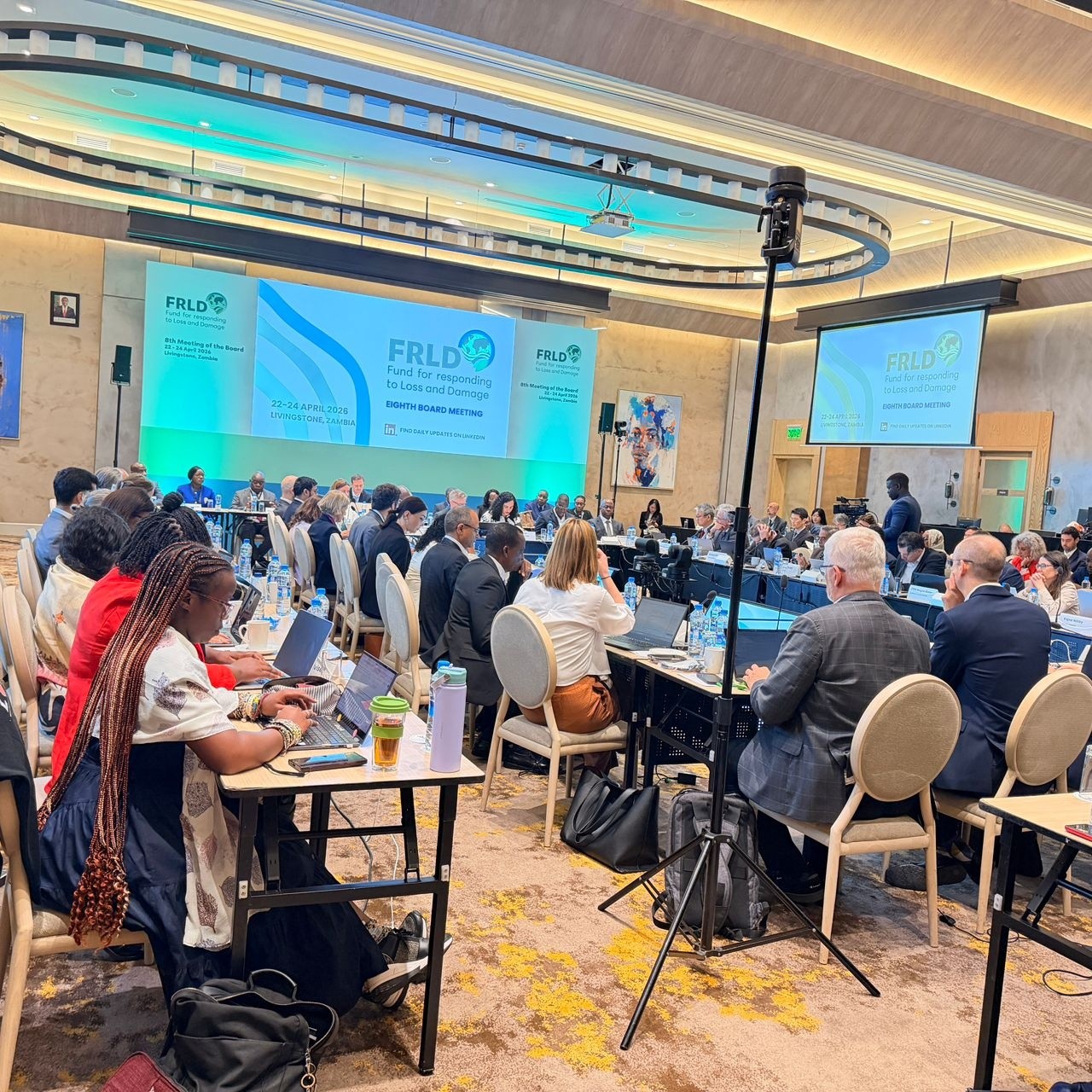
The report presented during the ongoing Eighth Meeting of the Board of the Fund for Responding to Loss and Damage (FRLD B8) in Zambia’s tourism capital, Livingstone-April 22–24, 2026, UNICEF recommends for urgent and stern action to insulate the sector.
It projects widespread disruption to various schools in the country-stating that so far in addition to the other 5 million children that have had their education disrupted by the various El Nino induced disasters.
Long-term impact on the future earnings of these children is estimated at up to US$21 billion by 2050.
The explicit report calls for increased investment in resilient education infrastructure and disaster risk reduction to protect children’s futures.
The Zambian Ministry of Green Economy and Environment is working with partners, including UNICEF and Government are jointly preparing a consortium-based submission for funding.
The Board, is focusing on finalizing the modalities for the disbursement of resources to qualifying countries. A 2023–2024 El Niño-induced drought caused around 60% of households to report children missing school due to hunger, water shortages, and power outages.
Meanwhile the conference (FRLD B8) opened by Southern Provincial Minister Credo Nanjuwa has made various headways in devising mitigation measures towards halting the speed of climate change damage to Zambia and beyond.
The gathering, attracting various experts are discussing urgent financing solutions for vulnerable countries, with a strong focus on turning commitments into operational reality with a call for urgent funding and Action.
Minister Nanjuwa regretted the havoc being caused by climate induced crisis-threatening Zambia’s ecosystem-disclosing that Zambia has lost over US$13.8 billion over the past 30 years due to floods and droughts as the Government struggles to meet the mitigation and adaption demands.
Zambia needs a staggering US$17 billion to implement its climate commitments between 2023 and 2030, but a paltry US$3 billion has been disbursed to date. He calls for simplified and adequate financial support.
And FRLD Executive Director, Ibrahima Diong, reiterated the Fund’s commitment to supporting affected nations, emphasizing practical, accessible solutions, including the launch of the first funding cycle using the Barbados Implementation Modalities (BIM). The meeting underway at the Radisson Blu Mosi-oa-Tunya ends tomorrow.
And Actionaid, one of the climate campaigners envisions workable results from the (FRLD) meeting, the first to be held in Africa, given the accelerating climate impact buffeting Zambia and other parts of Africa and beyond.
Zambia is one of the most climate-vulnerable countries in the world. In addition, Zambia is a Least Developed Country (LDC) and is in the midst of a sovereign debt crisis – economic conditions that further deepen its vulnerability to climate shocks.
A pre-conference report by Michael Mwansa, Geoffrey Sizala and Brandon Wu, all from Actionaid, in their analysis envisage sound decisions on how to mitigate the crisis especially with Zambia’s 2023-24 drought that wiped half of the country’s projected 3 million tons of grain.
In a call for multiple remedial actions expected of the board, Action aid is to among other
designing a Resource Mobilization Strategy (RMS) for its operations beyond the initial BIM phase.
The report notes that the FRLD –meant to be the flagship multilateral fund supporting climate-impacted communities in every developing country in the world needs more funding to pacify the climate change damages.
It, the Actionaid claims – has received less than $1 billion in pledges since its creation over two years ago (of this, less than $450 million has actually been received).
This is compared to hundreds of billions of dollars in climate-induced losses inflicted on the Global South every year – not including non-economic loss & damage such as loss of life, land, and culture.