
By Jeff Kapembwa
The woes buffeting Zambia’s Kafue Plains-grappling with run-down-ecosystem-human and climate induced are seemingly being answered-thanks to the US$3 trillion United Nations propelled global fund set to induce a new lease of life in natural habitats.
The fast depleting and Zambia’s much resource endowed ecosystem, the Kafue Plains-faced with myriad of challenges now has a ray of hope and will benefit from the global facelift being driven by United Nations’ Decade on Ecosystem Restoration initiative.
Under the 2021-2030-joint United Nations Environment Programme (UNEP) and Food and Agriculture Programme (FAO) dubbed: “The UN-Decade on Ecosystem initiative”, Zambia’s quest to reverse the environmental and climate induced challenges buffeting the Kafue Plains, is unfolding and help protect the much touted natural habitat, severely affected by human and climatic induced actions.
According to the UNEP report the US$3 trillion project-being undertaken is a global movement promoting the restoration of billions of hectares of both terrestrial and aquatic ecosystems.
Driven with the primary goals of creating a large-scale global movement for restoration by encouraging cooperation between governments, the private sector, NGOs, and individuals to revive degraded ecosystems, it is aligned with the 2030 deadline for the Sustainable Development Goals.
The ultimate is arguably to combat climate change, protect biodiversity, end poverty, and prevent mass extinction. It is still promoting projects and providing updates on its progress, with events and announcements being made throughout the decade, as seen in recent reports from October 2025.
The report is focused on actively protecting ecosystems on land and in the ocean, combat climate change, and prevent a mass extinction by uniting people to restore and revive the natural world and requires the global participation of all interest groups to succeed.
It is contexturised to run parallel to the final years for the Sustainable Development Goals and the timeframe identified by scientists as the last chance to prevent catastrophic climate change.
The investment is part of the larger UN Decade on Ecosystem Restoration and aims to halt the current trend, which currently affects 3.2 billion people and could impact up to 90% of the world’s soils by 2050.
Potential benefits: Restoring 350 million hectares of degraded land could generate US$9 trillion in ecosystem services and remove 13 to 26 gigatons of greenhouse gases from the atmosphere.
Current situation: According to the World Atlas of Desertification, 75% of the world’s soils are already degraded, affecting 3.2 billion people.
Urgency: The current trend could increase to affect 90% of the world’s soils by 2050.
Benefits for Kafue Plains:
The Kafue Basin, could potentially benefit indirectly through improved environmental conditions and sustainable practices in Zambia, which align with its national development goals.
The basin’s ecosystem services and the availed resources can assist improve through controlling deforestation, promoting sustainable agriculture, and supporting community education on forest conservation.
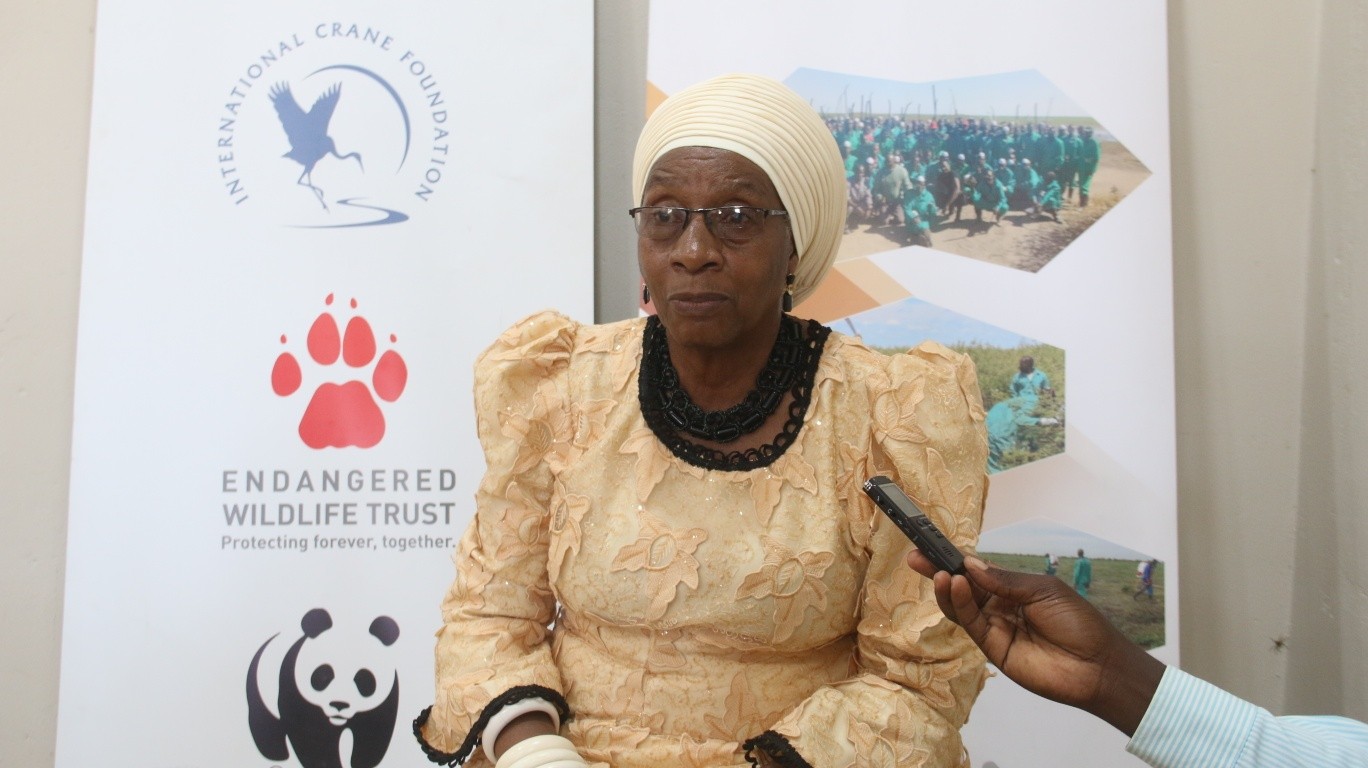
Recently, traditional leaders had voiced their concerns over the depleting ecosystem in Kafue Plains with clarion calls for urgent restoration, said Chieftainess Muwezwa of Ithezi Thezi and senior Chief Nalubamba of the Mbeza Chiefdom
Potential benefits for the Kafue Basin:
• Sustainable land use: The global investment could fund projects that reduce the drivers of land degradation, such as deforestation from agriculture, logging, and charcoal production, which are significant issues in Zambia.
• Improved ecosystem services: Restoration efforts could lead to a healthier Kafue Basin, improving its ability to provide essential services like clean water, soil fertility, and flood control.
• Economic opportunities: A healthier environment can support economic growth through sustainable agriculture and ecotourism, creating jobs and supporting livelihoods in the basin.
• Alignment with national goals: The investment’s focus on environmental sustainability is consistent with Zambia’s Vision 2030, which aims for a prosperous, middle-income nation, and its Seventh National Development Plan (7NDP), which prioritizes economic diversification and resilience.
How to support the Kafue Basin
• Community engagement: Local communities can be educated on the value of forest resources and sustainable practices, which is crucial for conservation.
• Sustainable agriculture: Promoting farming methods that prevent soil exhaustion is essential for land health.
• Controlling illegal activities: Strict control of commercial logging and charcoal burning is necessary to protect the forest cover.
• Renewable energy: Shifting to renewable energy sources like solar and wind power can reduce the reliance on wood and help prevent deforestation.
Overview:
Zambia aims to achieve national Land Degradation Neutrality (LDN) by 2030, which is also the global target date set by the United Nations Sustainable Development Goals (SDG target 15.3).
The “benefits” from these efforts are ongoing as the country implements various measures, but the comprehensive realization is tied to achieving the specific targets by the year 2030.
Key targets Zambia is working to achieve by 2030 include:
· Achieving no net loss of land from degradation (Land Degradation Neutrality).
· Increasing forest cover by 5% compared to 2015 levels.
· Increasing the area under sustainable agricultural practices from 6,000 km² in 2015 to 10,000 km².
· Halting land use change in wetlands and ecologically sensitive areas (no net loss).
· Rehabilitating all degraded land in mining and quarrying areas.
· Integrating land-use planning across the nation.
Zambia has integrated these LDN values into its national planning processes, including the Eighth National Development Plan, to ensure broad implementation and eventual benefits for its citizens, such as enhanced ecosystem services, improved livelihoods, and increased food security.
“Kafue Plains”: Refers to two main areas within and around the Kafue National Park: the Busanga Plains in the north and the Kafue Flats in the south.
The actual size of the entire Kafue National Park, which contains these plains, is approximately 22,400 square kilometers (8,650 square miles).
Specific areas of the plains have their own approximate sizes:
• Kafue Flats: This vast, seasonally inundated floodplain covers an area of around 6,500 square kilometers (2,500 square miles).
• Busanga Plains: Located in the northern part of the park, this important wetland ecosystem covers over 750 square kilometers.
The Kafue National Park itself is one of the largest national parks in Africa, comparable in size to the country of Wales or the US state of Massachusetts, data shows.
Kafue Flats, one of Zambia’s most crucial ecosystems, is faced with an existential crisis due to deforestation, rampant bushfires, and wildlife depletion.