
By Jeff Kapembwa
Least and Developing countries-and various campaign groups have challenged the International Monetary Fund to strive to provide grant-biased climate financing to off-set the threats posed by the temperature-driven crisis.
The campaigners have during the 12-18 October IMF and World Bank annual meetings hosted by Bangkok are pressing the Breton Woods institution and multilateral development banks (MDBs) to deliver on scaled-up, affordable, and grant-based climate adaptation finance, warning that vulnerable regions face severe risks without concrete backing.
Although the policymakers did not, by press-time formally announce a major breakthrough or new formal decision on scaled-up climate financing sought to propound heavily on immediate macroeconomic pressures—such as high global debt, inflation driven by Middle East conflicts, and energy supply shocks, the campaigners insisted on revised terms of accessing the financing to remain resilient.
Campaigners and Least Developed Countries (LDCs) urged the financing organisations to instead, transition toward grant-based climate financing primarily because the current debt-driven financial structure forces vulnerable nations to pay for a temperature crisis they did not cause, trapping them in economic ruin.
Arguably, the LDCs face escalating devastation from climate-driven extreme weather, yet over 90% of the climate finance provided by multilateral development banks arrives in the form of loans rather than grants.
Campaigners and LDC leaders are demanding a shift to grant-biased financing, citing various critical factors.
They argue that when LDCs suffer severe floods, droughts, or rising sea levels, they are forced to take out further loans to rebuild.
Advocacy groups and vulnerable nations further pushed international financial institutions to address how climate impacts compound debt distress, noting that extreme weather and transition costs leave developing economies with shrinking fiscal space
This creates a destructive cycle where governments spend more money servicing foreign debt to Western-dominated lenders than on vital public services.
Low-income countries, it argues are in severe debt distress have been forced to slash education and health spending to meet loan obligations. Grants allow these nations to adapt without compounding their debt mountains.
International loans heavily favor climate mitigation projects (like large-scale renewable energy infrastructure) because they offer tangible financial returns to lenders.
However, LDCs desperately need funding for climate adaptation—such as building flood defenses, upgrading infrastructure, and sourcing drought-resistant seeds.
These essential resilience measures protect lives but do not generate profit, making them entirely unsuited for traditional commercial or development loans.
But the IMF stressed the call for climate affected countries to maximise Resilience and Sustainability Facilities.
The ongoing financing tools like the Resilience and Sustainability Facility (RSF)— extended to among other countries-Liberia—is intended to help nations build long-term climate resilience alongside traditional adjustment programs.
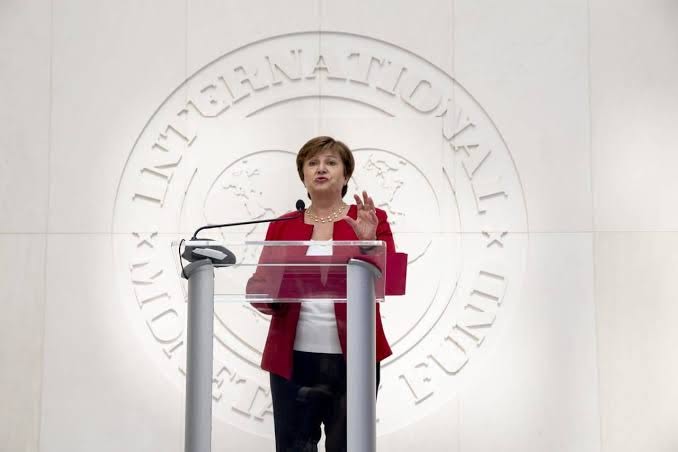
Managing Director Kristalina Georgieva and policymakers debated the difficult trade-offs governments face in reigning in public spending while simultaneously scaling up investments to adapt to climate risks and energy transitions.