
By Jeff Kapembwa
An El Nino induced weather pattern that caused drought and dwarfed food production in Southern African regional countries, is forecast to recur early next year as Zambia launches the US$4 million Systematic Observations Financing Facility (SOFF), an early warning facility to counter climate change and other weather induced headwinds.
Predictions by the Zambia’s Disaster Monitoring and Mitigation Unit (DMMU), and the National Oceanic and Atmospheric Administration (NOAA) a United States Federal weather monitor, forecasting short-term-climate variations, extreme weather events including El Nino and La Nina, foresee a recur of the 2023-24 season drought that dwarfed food security and energy production among other calamities in the 16-member states.
The NOAA and other climate predicators, an El Nino is eminent in the SADC region, forecasting an 82% probability of its emergence between May and July. It has a 96% chance of persisting through early 2027.
In the Southern African Development Community (SADC), this recurring climate pattern typically brings suppressed rainfall and prolonged dry spells. Coming off the heels of the historic and devastating 2023–2024 El Niño episode—which caused massive crop failures and left millions food insecure—the impending return of the phenomenon raises major concerns across the region.
The impending El Nino may bring below-average rainfall and an increased heat stress projected to stunt crop growth (particularly maize) and reduce water availability for livestock.
It is envisioned to reduce harvests typically trigger surges in food inflation and place heavy constraints on economic growth. SADC governments and partners are closely tracking recovery metrics, as many smallholder farmers and vulnerable communities are still recovering from previous severe droughts.
DMMU national Coordinator Norman Chipakupaku, speaking in Lusaka Tuesday, warned of an impending El Nino similar to the 2023-24 drought that afflicted the region, a call to member states to take precautions against potential losses.
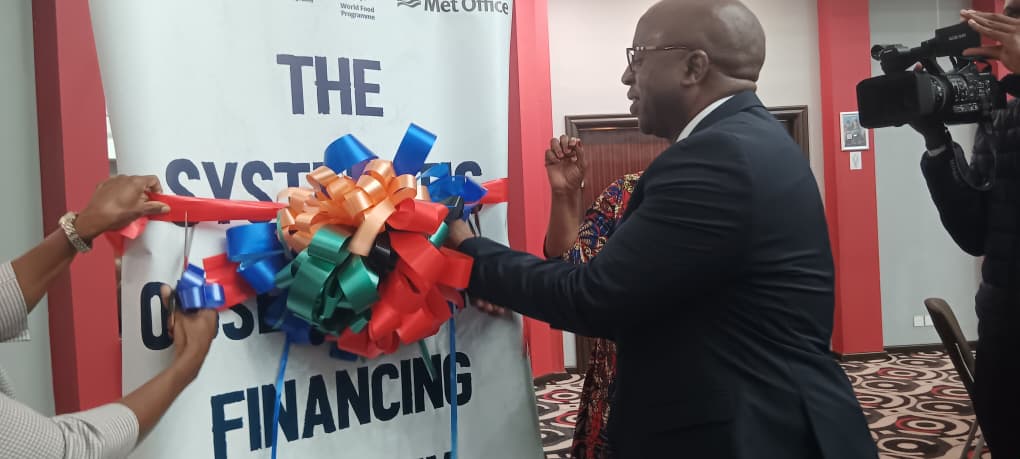
“We need to start preparing for a repeat of El Nino induced disasters next season and we should start preparing on safety measures,” he said during the launch of the US$4 million SOFF grant facility availed to Zambia with assistance from Partners-World Food Programme and the UK Metrological office- paving way for a transition into a green economy.
And launching the SOFF, Permanent Secretary, Doubty Chibamba, described the multipurpose facility a cornerstone of Zambia’s climate resilience agenda and ideal for Zambia as it transitions into a green economy.
“The SOFF project is not just an infrastructure upgrade; it is a strategic investment in our national security. To transition to a green economy, our policies must be rooted in precise, reliable and real-time climate data,” he said.
Arguably, he noted that Zambia is on the front line of extreme weather shocks, reminiscing the El Nino-induced drought of 2023 and 2024 that slashed agricultural production, eroded household purchasing power, pushed up food prices, and left an estimated five million people facing severe hunger, a call to action.
The SOFF initiative, forms part of the reforms underway in the Zambia Meteorological Department that is inadequately equipped to monitor and provide reliable weather information, given the 200 stations dotted around the country of the country’s minimum requirement of 500 which the Government seeks to finance.
Amid the world embracing science data and the millions of the Zambians, smallholder farmers included that deserve up data in real time, it was the country’s commitment to fulfil the desires of the majority consumers of such information for their livelihood and security if the country’s economy was to improve.
“We cannot manage what we cannot measure. and for Zambia to transition to a green economy, our policies must be rooted in precise, reliable, and real-time climate and weather data. the SOFF project is exactly that, an investment in the foundation of all sound decision-making in this country.”
Dr. Chibamba said in a speech.
The severity of the 2023-24 El Nino induced drought, devastated harvests. flash floods destroyed infrastructure, displaced communities, and claimed lives and left over 3 million children in 116 districts of the country 10 provinces malnourished with energy generation reduced, leaving the country and its neighbors with power outage as the deficit emerged.
Zambia’s Meteorological network has relied heavily on manual observations, with significant gaps in spatial coverage and data quality. the “observation gap”.
This has forced forecasters handicapped and working without complete information to address challenges, hence the SOFF.
The SOFF, is envisioned to help upgrade and automate 21 existing surface weather observation stations and install 4 upper-air stations to help Zambia meet Global Basic Observing Network (GBON) standards – an international agreement which sets clear requirements to countries for collecting and share weather and climate data.
According to architects, the Zambia Meteorological Department, the US$4 million grant aided SOFF will also help close critical climate data gaps that currently limit forecasting accuracy and early warning capabilities and ensure the country’s safety, food security and economic development
And World Food Programme (WFP) country director, Ms. Cissy Kabasuuga, was apt and called for countries vulnerable to weather related calamities, to transition and invest in similar facilities and safeguard lives and ensure food security.
“Accurate weather and climate observations are the foundation of early warning systems, disaster preparedness, anticipatory action, and loss and damage assessments.” “
The initiative will further help close critical climate data gaps that currently limit forecasting accuracy and early warning capabilities.
SOFF fund was established in 2022. I
t is dedicated to closing the basic weather and climate data gaps in the world’s most resource-constrained regions. It provides grants and peer-to-peer technical assistance to help Least Developed Countries and Small Island Developing States generate and sustain surface-based observations that meet Global Basic Observing Network (GBON) standards.
By enabling a steady flow of high-quality weather and climate data, SOFF delivers a global public good that strengthens forecasts, improves early warnings, and supports climate-resilient development everywhere.