
By Jeff Kapembwa
An estimated 24 million in Ethiopia and a further tens of millions within and beyond Africa face heightening food insecurity, malnutrition and other climate induced headwinds, fueled by delayed disbursement of about US$900 billion+ World Bank spearheaded Loss and Damage Fund to militate the impact.
Unpredictable seasons and extreme events are driving food insecurity, malnutrition, displacement and other human rights risks in climate-vulnerable countries, which have been heightened by climate change and without access to the Loss and Damage funding, more harm is feared without financial mitigation.
Resolutions of the 2022 Conference of Parties-(COP 27), show that countries had agreed to establish new funding arrangements for assisting developing countries particularly vulnerable to the adverse effects of climate change through the World Bank.
The Bretton Woods institute-World Bank currently hosts an independent Secretariat and serves as the interim trustee for the Fund for Responding to Loss and Damage (FRLD). The role of the World Bank is to host the Fund secretariat, and to provide trustee services for the Fund.
It was envisaged that in the following year the World Bank would in turn operationalize the financial intermediary fund (FIF) for an interim period of four years through the LRLD, under the financial mechanism of the United Nations Framework Convention on Climate Change (UNFCCC).
The much espoused process has been delayed, fueling concerns among campaigners on the extent of damage to be incurred. The World Bank’s Board of Executive Directors had on 10 June, 2024 approved the World Bank’s role as interim secretariat host and trustee of a fund for responding to loss and damage caused by climate change.
This followed a decision at COP28, reached by 198 countries to move forward with a fund to provide financial support to vulnerable countries hardest hit by climate impact.
Recent discussions on the Fund’s Resource Mobilisation Strategy have heightened and call for the scale and accessibility of the Fund right. Any potential failure to do so would risk undermining its role to channel finance to affected countries.
As loss and damage (L&D) continues to escalate globally, and as the world teeters perilously close to the Paris Agreement’s critical 1.5C warming limit, the FRLD also faces the very real danger of running out of funding in 2027.
Expert analysis calculates that last year, L&D finance for climate-vulnerable countries rose to over US$$937 billion with Ethiopia, exposing over 24 million of its population affected by five back-to-back failed rains.
The calamity affected food and water shortages, including a 90% crop loss in drought-affected areas. Three years ago, 11 million people in the East African state, had required food assistance, and had over 500,000 people displaced.
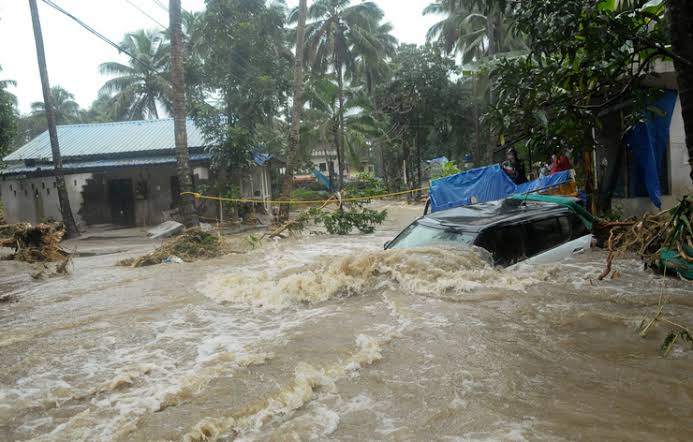
The 2023–24 floods and the 2024 Gofa landslide disrupted or destroyed health facility. It displaced thousands, and led to outbreaks of cholera, malaria, and measles, among other setbacks, spurred by climate change and needed interventions.
Beyond Africa, the Philippines, lost over $5 billion in losses. Jamaica, incurred losses in excess of US$12.1 billion in damages caused by Hurricane Melissa were estimated at $12.2 billion.
The costs and human rights violations rack up in Africa and beyond, almost four years after being agreed at COP27, raising calls for more funding to the FRLD.
Pledges made to the Fund ($822 million) are just a fraction of 1% of annual loss and damage needs. Only around half of those pledges ($448 million), have been paid into the Fund so far, far short of cushioning.
Analysis reveals that, even in the highly inequitable scenario where all states including those who have contributed nothing to causing the climate crisis were to pay towards L&D finance, wealthy countries would still be responsible for the vast majority of L&D finance.
The Fund’s Resource Mobilisation Strategy, the latest report suggests, must focus political discussions on the ability of rich and highly polluting states to raise public, grant-based L&D finance that is new and additional to existing climate finance obligations and overseas development assistance.
Developed states have the means to pay. The FRLD should introduce mandatory and progressive mechanisms to make the biggest polluters, including the ultra-rich and fossil fuel corporations, pay for their climate harms.
According to data, developing countries chiefly in Africa, need about 671 billion maximum per annum to address climate-related Loss and Damage. These figures represent the actual economic and structural needs on the ground, which stand in stark contrast to the small amount of funding mobilized globally.
There is apprehension that should greenhouse gas emissions continue at their current trajectory, the annual loss and damage costs for developing nations are projected to skyrocket to $1 trillion to $1.8 trillion per year by 2050.
Vulnerable nations have formally requested that the global fund unlock at least $100 billion per year by 2030, and help reverse damages, assessments by experts show. Africa has suffered over 1,695 climate-related disasters, accounting for 15% of global climate events, resulting in more than 731,000 deaths