
By Jeff Kapembwa
Twenty two African countries, Zambia included are part of the states placed under a US$202 million United Nations high-risk priority countries-first-ever Joint Anticipatory Action Appeal for food security protection spurred by a looming El Nino anticipated in the next two years.
Zimbabwe, Cameroon, Ethiopia, Kenya, Madagascar, Malawi, Mozambique, Nigeria, Somalia, South Sudan, Sudan and Uganda are the 13 of the total 22 countries in Africa and beyond needing food security and overall ecosystem protection.
The funding is to ensure the vulnerable countries are insulated against climate induced El Nino in which 9 million lives are under threat through this year and next, a crisis feared may escalate into Super El Nino, weather experts predict.
A joint statement says the appeal extended by the agencies calls for urgent, flexible funding ahead of anticipated climate shocks.
The natural climate phenomenon characterized by the warming of ocean surface temperatures in the central and eastern tropical Pacific Ocean (El Nino) is forecasted to strengthen during the period covered by the outlook.
This scenario, will strengthen and lead to drier-than-average conditions in some areas and wetter, flood-risk conditions in others. This, it is feared can disrupt planting, growing seasons, harvests, pasture, and water availability.
Strong El Niño conditions in the second half of 2026 are predicted to increase the likelihood of drought, floods and storms across parts of Africa, a call for urgent funding under first-ever Joint Anticipatory Action Appeal to insulate against the impact.
Asia, the Pacific, and Latin America and the Caribbean are under threat of the El Nino.
The forecast comes at a time when millions of people are already facing acute food insecurity driven by conflict, economic instability, displacement, recurrent weather-related shocks, and economic disruptions linked to the ongoing conflict in the Middle East.
Arguably, FAO and WFP had positioned to provide anticipatory action for 1.2 million people projected to be affected by El Niño.
With an additional investment of $167 million, the two agencies plan to rapidly expand support to a further 7.6 million people across 22 priority countries, bringing the total coverage to 8.8 million people, FAO Deputy Director-General Beth Bechdol, is cited as saying.
The joint appeal builds on strong evidence that anticipatory action is both highly effective and cost-efficient. Every dollar invested in anticipatory response can result in up to $7 in avoided losses and response costs.
“Experience consistently shows that early action is more effective and less costly than responding after a crisis has escalated,” said Beth Bechdol.
“We have the data, the tools and the evidence to identify risks before they become emergencies. “
The UN faces a challenge of funds being available in real time, early enough to act. When resources are available before trigger thresholds are reached, countries are anticipated to step in and protect food production.
It is hoped, will reduce humanitarian needs and help families safeguard livelihoods before critical planting, harvesting and livestock production windows are lost.
Carl Skau, WFP Acting Executive Director., adds his voice and calls for speedy mobilization of resources to step up insulation and avert a food crisis amid an already struggling continent.
Research findings show that climate-related disasters, combined with conflict and economic shocks, push over 96 million people into acute food crises across drought and flood-prone African regions each year.
Overall, an estimated 306 million people in Africa are undernourished, a situation WFP seeks to avert.
During the 2023–2024 El Niño event, FAO and WFP supported more than three million people through anticipatory action, delivering assistance months before peak impacts occurred.
Capacity has since expanded, but overall coverage remains well below identified needs, highlighting the importance of scaling up financing and preparedness ahead of the 2026 event.
FAO and WFP reiterate that the systems, partnerships and operational plans needed to act are fully in place and coordinated for immediate action.
What is needed now is the financing required to deliver anticipatory action at the scale that current forecasts demand.
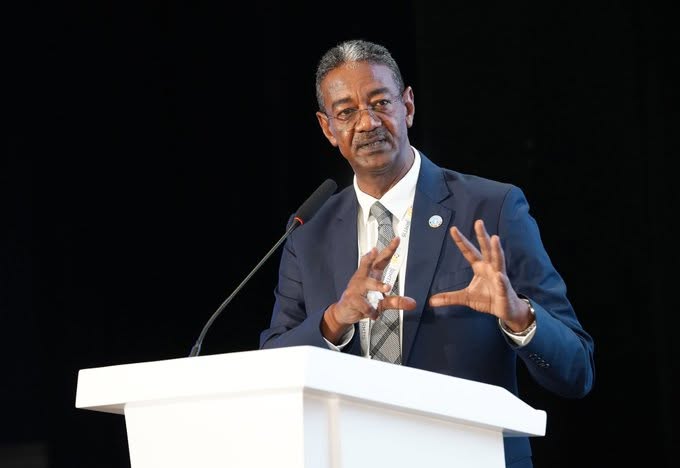
Amid El Nino threats, FAO’s deputy Regional Representative for Africa, Ayman Omer is in Zambia from June 21-26.
He is expected to meet government officials and other interest groups in climate-smart agriculture, digital innovation, and sustainable agrifood systems across the country.
A tentative programme shows the regional chief undertaking various high level meetings with among others, international development partners.
Mr. Omar is expected to be part of the Sustainable Intensification of Smallholder Farming Systems in Zambia (SIFAZ) symposium at which a new e-extension platform is expected to be launched.
SIFAZ, seeks to help small-scale farmers adopt climate-resilient, eco-friendly farming methods (like crop diversification and conservation agriculture) to boost crop yields without degrading the environment
Omer is expected in Mazabuka, Choma and Monze where he will engage local farmers, extension officers, and stakeholders on agriculture related work, a tentative from the FAO local office shows.