
By Jeff Kapembwa
Africa and other climate change-hard hit continents are gnashing their teeth after the much anticipated 10-Day- Climate Change Conference collapsed for lack of consensus over the Global Goal on Adaptation (GGA).
The mid-year UN climate intersessional technical negotiations, acting as an interim milestone in preparation for the annual year-end COP climate summits, such as the COP31 held in Türkiye stalled after delegates faced various anti-solution to the crisis with those perpetuating fossil fuels refusing to bend.
The widespread gridlock, leaving key issues unresolved saw various negotiators, chiefly from third world countries, fail to make meaningful progress on ramping up global emissions cuts, financing climate adaptation, and establishing a clear roadmap for future climate funding.
The lack of consensus on GGA to facilitate talks on financing to hype adaptation, left many climate campaigners, chiefly Non-Governmental and other Faith-based Organisations.
The campaigners-‘dropped their chins in awe’ as developed countries looked elsewhere and refusing to back down on various shortcoming heightening emissions, needing to be scaled down.
According to the policy brief, calls for climate financing hit the wall after richer and developing nations clashed over the scale and sources of funds needed to combat climate change, leaving the debate deadlocked with a pervasive “you-first-ism” attitude.
There was no consensus on adaptation modalities with discussion centred around the Global Goal on Adaptation (GGA) stalling.
Wealthy nations, arguably pushed back on specific financial targets and indicators for adaptation, undermining previously held agreements.
Campaigners were frustrated by unwarranted criticism over restrictive visa policies that prevented key negotiators and delegates from the world’s poorest, most climate-vulnerable countries from attending.
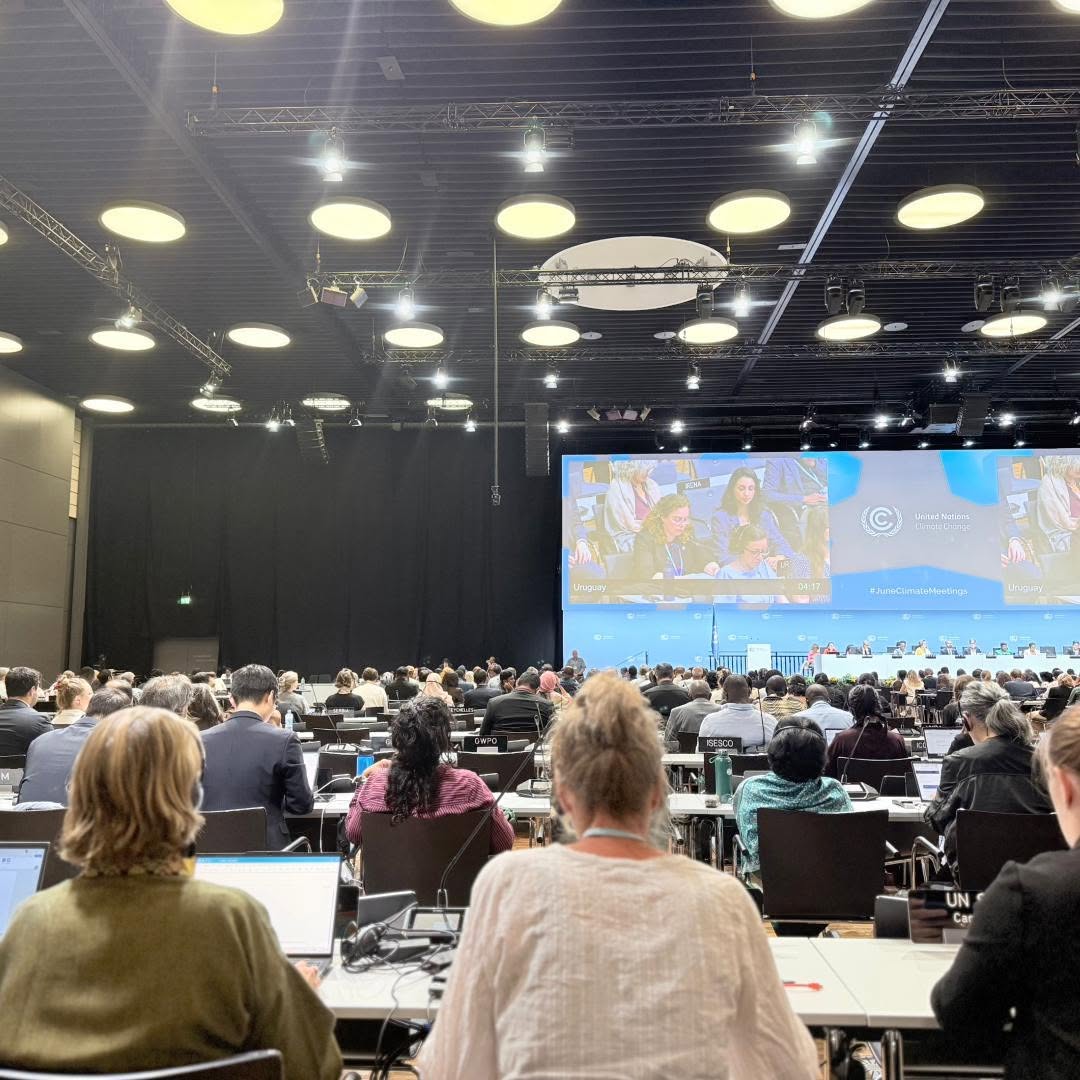
The meeting run from June 8-18 in Germany, and was held at the World Conference Center Bonn in Germany
These core issues, having been deadlocked, diplomats invoked “Rule 16” and sought a redress during the upcoming COP31 climate conference, to be co-hosted by Australia and Türkiye in Antalya.
And a report by Faith Based Organization-Caritas, one of the campaigners driving climate change adaptation and other insulations, warned that technical talks were stalled by gridlock and a lack of political progress.
Caritas, had during the meeting focused on advocating for climate-vulnerable communities, fair climate finance, and a holistic “just transition” as a moral imperative.
In its report, Caritas highlighted some Climate Finance Deficits. It was particularly concerned over the lack of progress on funding for the Global Goal on Adaptation (GGA).
The advocacy was centred on the sustained call for $1.3 trillion in climate finance through grants rather than loans to avoid exacerbating the debt burdens of developing nations.
Caritas, Zambia office, which attended the 64th Session of the UNFCCC Subsidiary Bodies (SB64), had great expectations for the SB64, which produced modest technical progress but limited political breakthroughs.
It notes that while negotiations advanced on several institutional issues, major disagreements over adaptation, finance, mitigation, and equity meant that many of the most important decisions were postponed to COP31 in November 2026.
Implications for Africa and Zambia
African countries, including Zambia, several issues emerging from SB64 were particularly significant:
Global Goal on Adaptation (GGA) finance: Consideration of adaptation financing has been the cry of African countries, particularly Zambia.
However, there has been limited progress, which means continued uncertainty over resources for climate-resilient agriculture, energy, water management and disaster preparedness.
Caritas Zambia hoped to have clear conclusive agreements on how Just Transition Mechanism (JTM) will address structural challenges by supporting transitions across key sectors such as energy, agriculture, transport, and mining; ensuring labour rights and social protection as part of the Just transition.
On Climate technology, it calls for continued operation of the Climate Technology Centre which provides ongoing access to technical assistance and technology transfer.
The absence of major decisions underscores the need for African negotiators to continue pressing for adequate capitalisation and operationalisation of the Loss and Damage Fund.
This makes African countries more vulnerable to any form of shocks related to climate change despite being the least contributors to the effects.
The persistent gap between commitments and delivery reinforces African demands for increased, accessible and grant-based climate finance to implement Nationally Determined Contributions (NDCs) and National Adaptation Plans (NAPs).
Paris Agreement Article 6.8 (non-market approaches, NMAs): Citing Article 6.8 defines a framework for NMAs, which aim to assist Parties in the implementation of their NDCs and to promote mitigation and adaptation ambition, in the context of sustainable development and poverty eradication.
Caritas however, regretted the lack of clear roadmap during the SB 64 on how NMAs will help vulnerable countries to implement NDCs so as to achieve mitigation and adaptation ambitions.
“In short, the SB64 succeeded in preserving momentum on technical and institutional matters—particularly just transition, technology and capacity-building—but it did not resolve the core political disputes over climate finance, adaptation and mitigation.
Those unresolved issues have now become central priorities for negotiations at COP31 in Antalya.” Part of the report reads.
Arguably, the report notes that while SB64 succeeded in preserving momentum on technical and institutional matters—particularly just transition, technology and capacity-building, it failed to resolve the core political disputes over climate finance, adaptation and mitigation.
Those unresolved issues will now be tabled and become central priorities for negotiations at COP31 in Antalya.