
By Jeff Kapembwa
Africa’s leading economic bloc-Comesa continues pushing its integration agenda with a clarion call to its 21-member states to embrace digital and smart solutions and bolster intra-trade, a yardstick for actualising regional integration.
The regional bloc, which has in over 30 years pioneered regional integration, has staggered to bolster its intra trade capacity with trade accounting for roughly US$14 billion-US$15 billion annually, translating to about 6-14 percent of the bloc’s total global trade, as member states trade more with outside markets.
Though the regional bloc has potential to hit a US$100 billion mark in intra trade amongst member states, with prioritised initiatives, adopting value addition to raw material and maximising African markets to trade against each other, the use of digital smart solutions remains the solution.
Studies by various trade experts have identified a baseline regional trade potential in excess of US$100 billion but only if member states divert all their extra-regional imports and exports to within the bloc, aided by the inception and operationalisation of the African Continental Free Trade Area.
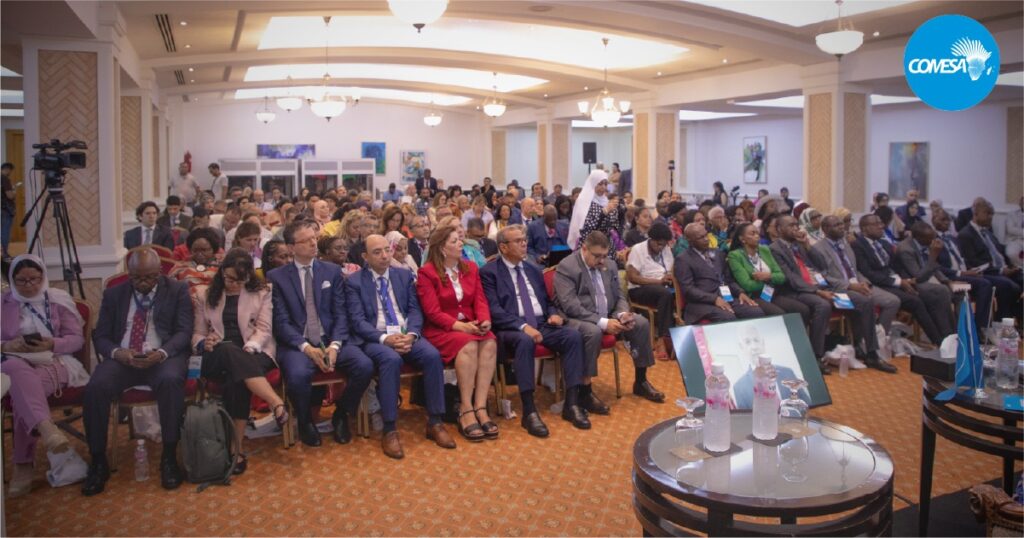
Officiating at the COMESA Institutions Awareness Forum, themed: “Expanding Intra-African Horizons: Digital Innovation as a Driver for Inclusive and Sustainable Access to COMESA Markets.” Secretary General Chileshe Kapwepwe COMESA Secretary General Chileshe Mpundu Kapwepwe backed the digital push.
The technological transformation. She warned it should not just benefit large corporations, but instead actively work for women, youth, and smaller entrepreneurs -forming the backbone of the regional economy. underscores the need for digital applications for regional trade growth.
The theme, she said, rhymes with the continent’s quest to transition to digital technological demands and harness smart technologies and bridge development gaps, strengthen regional competitiveness and build a more inclusive and sustainable economic future, which all must embrace, including the women and youth arguing:
“Digital transformation must work for everyone, not only large corporations, but also the small and medium-sized enterprises, women and young people who remain at the heart of COMESA’s regional integration agenda,” she told the delegates in Tunisia, the venue for the event.
The Forum forms part of COMESA’s broader effort to bring the regional bloc closer to its citizens and to raise awareness of the opportunities that regional integration offers.
Tunisia was recognised for its economic transformation, adding that the country’s location at the crossroads of Africa and Europe, its dynamic private sector and its strong commitment to innovation and digital development made it an ideal host for this year’s Forum.
The Secretary General echoed the need for delegates to share technical knowledge through various interactions and accelerate digital trade, strengthening regional value chains and advancing inclusive economic integration across Eastern and Southern Africa.
Tunisia’s Minister of Trade and Export Development, Mr. Samir Abid, notes the significance of digital innovation, arguing it now sits at the heart of Africa’s trade agenda and its economic future, and is driving tariff liberalization, the removal of long-standing trade barriers and the modernization of trade systems.
“The future of African trade depends on our ability to modernize trade procedures, strengthen digital infrastructure and deploy smart solutions across logistics, customs and electronic payment systems,” he said.
“These innovations are essential to reducing costs, accelerating transactions and making our enterprises particularly small and medium-sized businesses more competitive.”
Digitalization is a powerful catalyst for inclusive growth, one that gives young people, women and entrepreneurs greater access to regional markets while expanding e-commerce, digital services and more efficient cross-border trade.
Reaffirming Tunisia’s commitment to regional integration, the Minister pointed to reforms now underway to improve the business environment, including expanded digital trade services, simplified administrative procedures and a more attractive investment climate.
These efforts, Mr. Abid noted, complement the objectives of both COMESA and the African Continental Free Trade Area (AfCFTA), while drawing Tunisian enterprises more deeply into regional and continental value chains.
Trade between Tunisia and COMESA Member States had grown significantly between 2019 and 2025, reflecting the country’s deepening economic engagement within the region.
The private sector, financial institutions, business organizations, innovation hubs and specialized TCOMESA institutions including the COMESA Business Council and the Federation of National Associations of Women in Business (COMFWB) should seek to foster investment, innovation and promote enterprise development across the region.
The summit attracted regional policymakers, business leaders, and Chief Executives to find ways of cutting cross-border transaction costs and boosting market access for small and medium-sized businesses through e-commerce and electronic payment systems.
Trade between Tunisia and fellow COMESA member states has between 2019 and 2025,
Minister Abid noted that growth had increased significantly, a momentum hoped would be maintained through aligning local reforms with the broader African Continental Free Trade Area, Abid said.