
By Jeff Kapembwa
Climate change remains a major headwind in Africa’s Foreign Direct Investment destination with the continent attracting a paltry US$70 billion last year, slightly lower than a year earlier, a call for more private sector-led growth trajectory, chiefly in Greenfields, a global economic think tank has adduced.
The continent’s $70 billion in FDIs, dubbed the third-highest level since 1990, lower than US$24 billion raked in a year earlier, and was largely influenced by climate change which precipitated over most countries, was recorded in among others, natural resources, energy, and infrastructure and selected manufacturing projects.
A report by the United Nations Economic Commission for Development (UNCTAD) notes that the fall in FDI was gravely influenced by climate change during the year under review, serving as a major driver for Greenfield project growth while highlighting a massive funding shortfall.
The 54-members continent needs a staggering $143 billion annually for climate adaptation and mitigation, but current inflows covered only about 25% of those needs.
While Foreign Direct Investment (FDI) remained strong at roughly $70 billion, large-scale Greenfield project values fell as investors pivoted toward a higher volume of smaller, localized infrastructure projects.
Greenfield projects often provide a clearer indication of where investors see long-term opportunities.
Egypt remained Africa’s largest FDI recipient, with inflows of about $15 billion, helping North Africa remain the continent’s largest recipient sub-region despite a sharp decline from the exceptional 2024 level.
It notes that parts of Africa are well positioned to benefit from these trends. The continent holds major reserves of minerals essential for renewable energy technologies, battery manufacturing and advanced industrial production need to be tapped.
Copper, cobalt, lithium, manganese, graphite and rare earth minerals are becoming increasingly important to global investors seeking to secure future supply chains.
Countries such as Egypt, Morocco and South Africa continued to attract investment linked to industrial development, hydrogen production, logistics and renewable energy.
Namibia and other resource-rich economies are drawing attention as demand rises for minerals needed in batteries, renewable energy systems and advanced manufacturing.
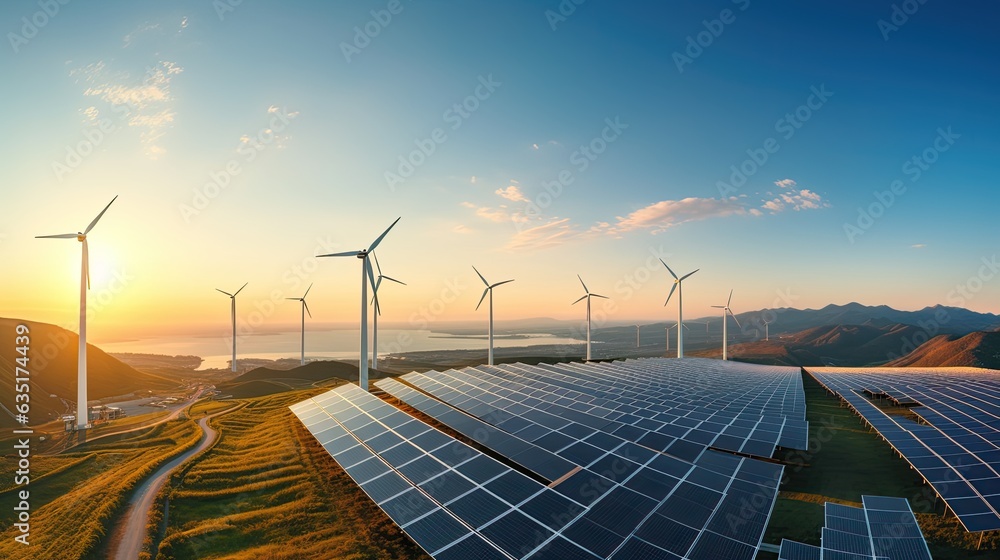
Climate transition needs drove heavy investment into strategic industries, with renewable energy, logistics, and critical minerals seeing significant capital injections, particularly from Asian and Gulf economies, as demand for Energy and Critical Minerals Surge.
Research by climate experts calls for an urgent need for countries to strive for resilience to prompt new initiatives that will attract investment that thwart the crisis.
Further study by the Centre for Nature and Climate notes that the solution represents a US$3 trillion investment on the continent though it is experiencing a significant gap in private sector financing that needs “rejigging”.
Unlocking and scaling up private sector investment was cardinal as it will prompt climate change resilience efforts across the African continent in agriculture, water and infrastructure, research adds.
The World Economic Forum and the Global Center recent report on Adaptation adds its voice, having reportedly secured a $1 billion commitment specifically for climate adaptation in Africa to militate and advance climate action.
UNCTAD, the UN think tank, advocating for solutions addressing the climate crisis while creating sustainable economic opportunities and quality jobs in developing nations notes that despite a decline from the exceptional level reached in 2024, inflows remained roughly one-third above the continent’s long-term average.
It notes that while Greenfield project values fell by almost one third, but the number of announced projects increased, pointing to broader engagement through smaller projects, -reiterating its call for sustained investment in greenfield projects into Africa.
Investors from the Gulf and other Asian economies are becoming important sources of Greenfield investment, especially in energy, logistics, real estate and infrastructure.
Arguably, African Least Developed Countries (LDCs) received about $33 billion in FDI, with inflows concentrated in a few economies linked to natural resources, energy, and infrastructure and selected manufacturing projects.
Energy, infrastructure and critical minerals are drawing investment, but benefits remain concentrated in a limited number of countries and sectors and needs ‘more effort’ through attractive investment policies.
UNCTAD, however, says for many African economies, attracting investment into energy or resource projects is only the starting point.
Capturing more of the value created around those investments through processing, manufacturing, services and stronger regional supply chains remains the catchword.
This, however, will require infrastructure, skills, industrial capabilities and policies that help connect investment projects to the wider economy.
Policy priorities include better project preparation, risk-sharing mechanisms, reliable power and transport infrastructure, supplier development, local processing where commercially viable, and regional corridors that connect smaller markets to larger production systems.
Without those links, investment in minerals or energy can raise headline inflows without creating enough domestic value.
This implies that the success of Africa’s next development chapter is dependent not only on how much investment arrives, but also on how effectively countries can transform that investment into jobs, technology transfer, industrial upgrading and economic diversification.
Despite Africa grappling with FDIs, developed nations-chiefly the top-20, United States included benefited from the 80 percent global investment attracted during the year under review. The US was top with US$277 billion FDIs, followed by Japan with US$204 billion and China’s US$196 billion.
Overall, global FDIs rose 6% to $1.6 trillion in 2025, though the recovery remained fragile after two years of poor intake. Excluding conduit flows through major European financial centres, the increase was 4% after two consecutive years of decline.
Developed economies received $723 billion, up 11%, while developing economies received $901 billion, up 2%. High-income economies accounted for most of the increase.
Economic commentator, Pedro Manuel Moreno, calls for doable solutions to raise FDIs profile into Africa, noting: “The policy choices made today will determine whether foreign direct investment becomes an engine of shared development or entrenches divergence.