
By Jeff Kapembwa
The construction of the proposed US$17 billion-17,000 barrel-a-day oil refinery in Kenya’s coastal town, Lamu, has faced stiff opposition from climate change campaigners, with many fearing for the ecosystem in the East African nation’s ecosystem.
Africa’s richest business icon, Aliko Dangote, plans to extend his oil refining production beyond his home country, Nigeria, to Kenya, expected to be operational in a few years. If facilitated, it could reverse calls to ban fossil fuels on the continent, threatened with high temperatures, an enabler of climate impasse, negating on the ecosystem.
Kenya’s leader, William Ruto claims discussions have been finalized to allow for the setting up of the mega-refinery in Lamu. The project is expected to create about 60,000 jobs and supply refined fuel to eight East and Central African countries, according to the president.
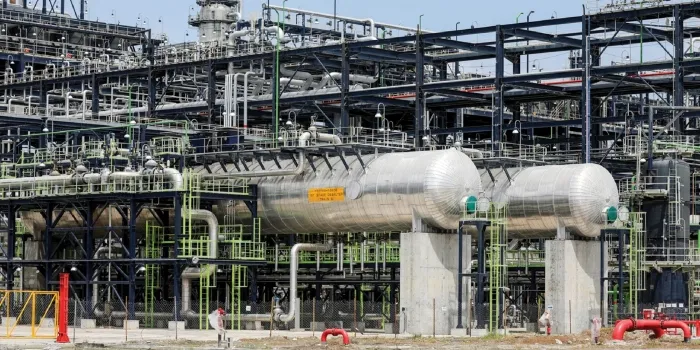
If completed, the 700, 000-barrel-per-day facility would become East Africa’s largest refinery.
The project strengthens Kenya’s ambition to become a regional energy and logistics hub. The project, once completed and lit up, will be East Africa’s largest refining project and is expected to take up to three years to build.
Once finished, it would supply refined petroleum products to Kenya, Uganda, Tanzania and Rwanda, among others, helping to reduce the region’s dependence on imported fuels.
The notion has raised dust with climate change campaigners frowning upon it. They cite various environmental degradations, though President Ruto feels it was a good business venture, contrary to researchers’ findings on the welfare of the region.
Dangote foresees the refinery as a leeway to development, and a stop-gap measure for Africa’s high cost of importing oil and the creation of the project will enhance quick delivery of the commodity to end-users in real time,
The proposed mega-refinery in Lamu is strategic because of its location and coastal infrastructure, strong economic demand, and potential for establishing an East African energy hub for the commodity.
The favoured site, endowed with a vast expanse of water and highly developed port facilities which can efficiently handle massive crude oil imports and refined product exports, is one of the factors for his zeal to operationalize the project.
Dangote sees Kenya as a robust and growing economy with significantly higher domestic fuel consumption compared to other proposed locations like Tanzania.
The refinery is projected to process 700,000 barrels per day to supply refined petroleum products to Kenya and eight other East and Central African countries (including Uganda, Tanzania, Rwanda, and the DRC).
The facility is to ultimately end East Africa’s total reliance on costly, imported refined fuels from the Middle East and Asia.] The plant will leverage Kenya’s Lamu Port-South Sudan-Ethiopia Transport (LAPSSET) Corridor to generate large cargo volumes and spur further infrastructure investment.
The plant, locks the region into fossil-fuel dependency, a vision activists argue would heighten climate change through fossil production and would undermine the clean energy transition.
In a petition, the campaigners argue this has the potential to lock in large-scale carbon emissions, and risks becoming a stranded asset as global demand for oil shifts.
Key Climate Change Contributions:
The campaigners fear this could lock in Fossil Fuel Dependency. If set up, the project would entrench petroleum reliance across eight East and Central African countries for decades and would allow unlimited emissions from processing and Burning.
“Once completed, the refining process and the eventual combustion of its fossil fuels will significantly increase greenhouse gas emissions in the region.” Petitioners argue and calls for a rethink of the venture.
Sherelee Odayar, oil and gas campaigner at Greenpeace Africa, warned that a refinery of this scale could increase the risk of habitat destruction, marine pollution, oil spills and air pollution in one of East Africa’s most fragile coastal ecosystems.
The risks stem not only from the refinery itself – including storage tanks, pipelines and fuel handling facilities – but also from the large volumes of crude oil that would need to be shipped into Lamu and refined products exported by sea.
Increased tanker traffic and fuel transfers, she said, would raise the likelihood of accidents in ecologically sensitive coastal waters.
Lamu’s low-lying, flood-prone coastline could compound those risks by damaging infrastructure and carrying contaminants from storage facilities into nearby fishing grounds and marine ecosystems.
“Lamu’s mangroves, coral reefs and seagrass beds are not expendable; they support fisheries, livelihoods and coastal protection,” Odayar added.
Kenyan authorities should suspend any approvals until an independent environmental and social impact assessment is completed, with genuine public participation and transparent scrutiny of the long-term economic, health and ecological risks, Odayar added.
Mohamed Adow, director of a Kenya-based climate and energy think-tank Power Shift Africa, adds his voice. He opposes Dangote’s project, arguing that giving Dangote the green light for the refinery is “an extraordinary act of environmental recklessness and economic short-sightedness”.
The campaigners are apt. “This would tie Kenya to “yesterday’s energy system” just as global demand for petroleum products faces increasing uncertainty. Dangote Group, however, defends itself.
It says the project is state-of-the-art and will be automated, and will be a single-train facility, though there are some shortcomings, according to the developers’ plan.
It will not entirely avoid emissions. As a fossil fuel project, it will inevitably generate greenhouse gases and air pollution, sparking environmental concerns.
The project is set to be technologically advanced and capable of producing ultra-clean, Euro-V standard fuels to reduce emissions in end-use.
The Dangote Group plans to open the planned mega oil refinery in Lamu, within 30 months to 4 to 5 years from the start of construction.
While site selection and initial engineering work are currently underway, an official opening date has not yet been set, as the project is still in its early planning phases, data available shows.