
By Jeff Kapembwa
The United Nations has urged countries to act quickly and insulate against climate change warning that the ‘the Window for Action is narrowing, as climate scientists warn of devasting 451, 000 deaths to occur, chiefly in Africa and the global South, spurred by the temperature driven crisis.
United Nations, which has advocated for climate action in recent years, has raised eyebrows at the slow pace the world is reacting to mitigate and adapt to the perceived effects of the El Nino induced crisis, threatening the environment and humanity.
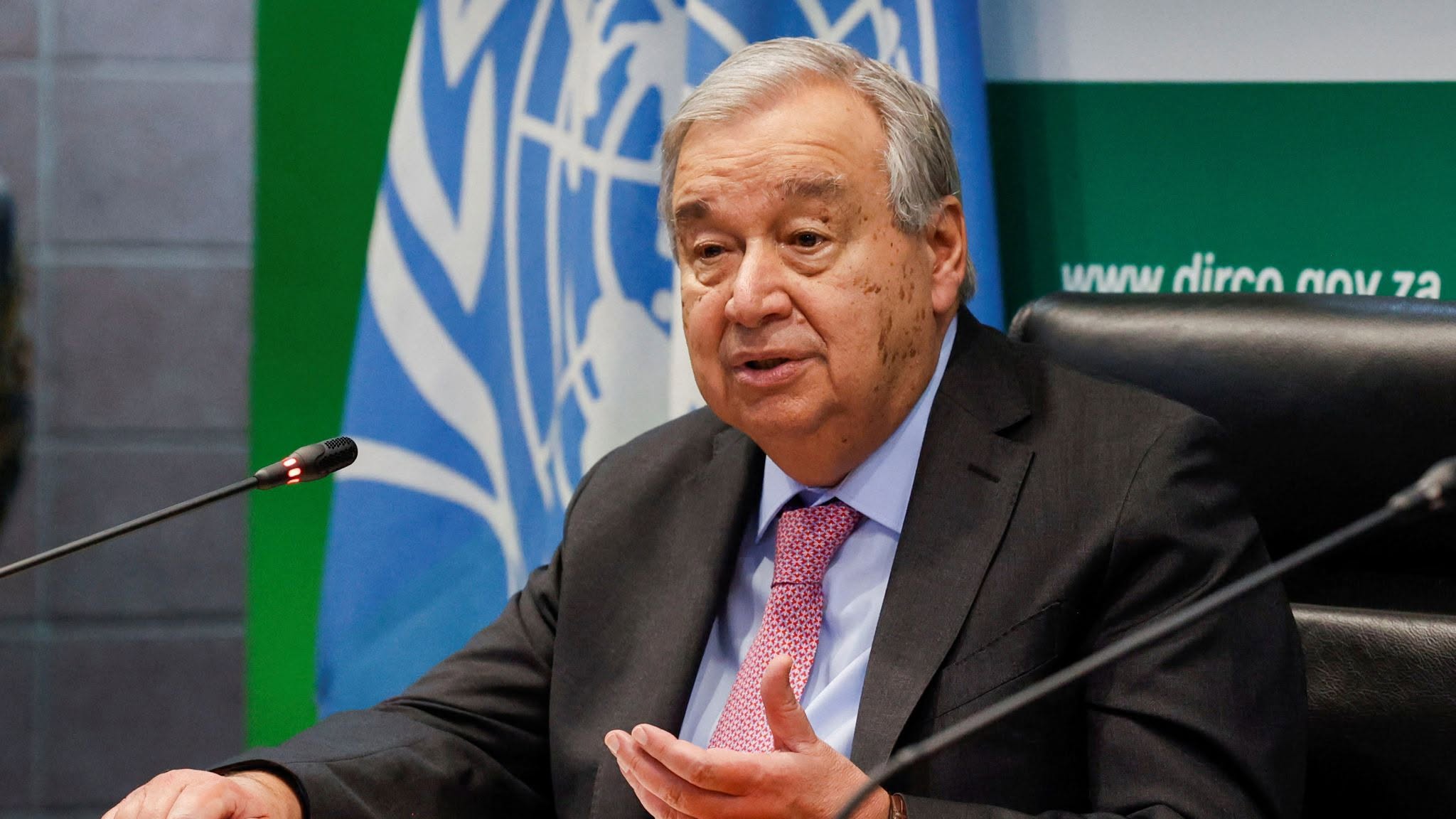
Secretary-General António Guterres, addressing the General Assembly at the U.N. headquarters in New York City, Tuesday, repeated his earlier plea for global action against climate change as the ‘window to insulate was narrowing, yet the response has been lukewarm.
The climate crisis, he warned, has escalated from a “distant warning to daily reality,” arguing:
“A “super El Niño” is pouring fuel on the fire of an already warming world, driving catastrophic weather anomalies globally.” said with a plea to various heads of state to take action and save the environment and humanity, likely to be victims of the impending catastrophe.
Guterres warned that the crisis was irreversible and the risks demand stronger international cooperation and urgent, coordinated action. Guterres bluntly warned that the world cannot “allow countries and cultures to vanish beneath the waves.”
He urged a shift from fragmented regional initiatives to sustained, fully funded international cooperation. Guterres reiterated his concern against pushing for sustained fossil fuel corporations, accusing the campaigners of treating the atmosphere like an “open sewer.”
He called the climate crisis the “most profound intergenerational power imbalance” and warned that humanity is on a near-certain trajectory to breach the critical 1.5°C global warming threshold.
Guterres demanded that developed nations triple adaptation funding. He urged all governments to submit concrete roadmaps with clear timelines to transition away from fossil fuels.
He also emphasized the necessity of expanding sustainable cooling infrastructure and fulfilling the mandate for global early warning systems and insulate against the impending calamity.
According to Guterres’: “El Niño is no longer just on our doorstep but “inside the house – and turning up the heat.” UNGA 81 served as his final major platform before his tenure ends on 31 December, 2026, making this a definitive push to cement global compliance with international climate goals.
Meanwhile research from climate scientists shows that the majority of the projected 451,000 heat-related deaths caused by the super El Niño are expected to be concentrated overwhelmingly in the Global South, a report by the Climate Impact Lab, Says.
Hardest to be hit regions and countries include Africa’s Sahel Region, projected to suffer the highest impact, with around 66,800 additional deaths across the area. Nigeria may lose about 31,400 faces, making it the world’s highest projected death toll.
In Indonesia, estimated 19,300 deaths are anticipated, Sudan: 17,500 to 17,600 deaths, India: 15,800 deaths, Brazil: 13,300 deaths, Niger: 10,000 deaths, Chad: 8,000 deaths. In Southeast Asia, the Philippines, Vietnam, Thailand, and Cambodia are forecast to see a combined 19,400 excess deaths.
Earlier, the UN had warned about Africa’s vulnerability to warming faster than the global average and bearing the heaviest burden of climate change despite contributing less than 4 percent of global greenhouse gas emissions.
The continent, he contended, is heating up quicker than the rest of the world, causing severe droughts, floods, lost harvests, and displaced communities, stating: “Climate shocks are worsening hunger, particularly in East Africa, where acute food insecurity has spiked significantly over the past decade.
African nations face financial inequality, with borrowing costs rated twice as high as the Organisation for Economic Co-operation and Development (OECD), an international economic organization founded in 1961 to stimulate economic progress and world trade.
Africa faces an investment deficit, holding 60% of the world’s best solar potential but receives only 2% of global clean energy investments.
On Tripling Adaptation Finance, Guterres seeks a threefold increase in adaptation funding and universal access to early-warning systems by 2027.
The international financial institutions should provide debt relief and lower borrowing costs for developing nations as part of the Global Financial Reform.
On Fair Mineral Value Chains, Guterres stressed that critical minerals mined in Africa for the green transition must benefit local economies through in-country processing rather than exploitation.
He called the absence of a permanent African seat on the UN Security Council unjust and indefensible.