
By Jeff Kapembwa
In the next 72-hours, over 5,000 experts in food related knowledge will converge in the Rwanda capital, Kigali to discuss the continent’s much touted Kampala Comprehensive Africa Agriculture Development Programme (CAADP), a blueprint to revolutionalise and make the agriculture sector a tramp card to fight hunger.
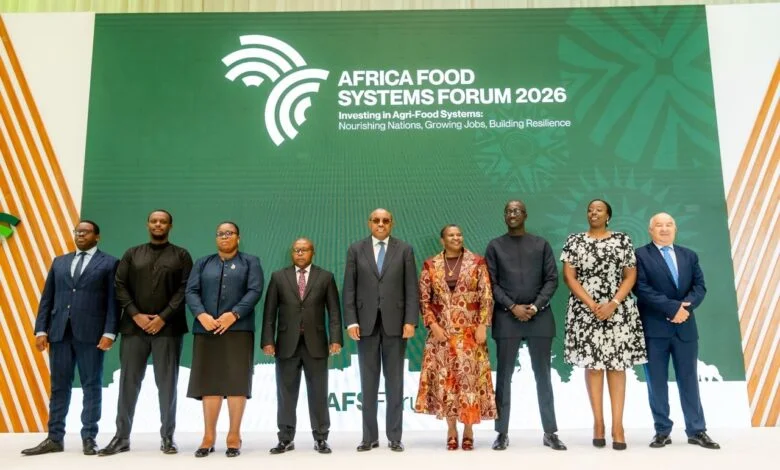
Themed: “Investing in Africa’s Agri-Food Systems: Nourishing Nations, Growing Jobs, Building Resilience”, the 31 August-4-September 20th food conference, attracting over 50 countries is expected to share notes.
The conference, expected to drive the Africa agriculture growth agenda, will be expected to build on the earlier deliberations intended to find durable solutions to Africa’s nagging agriculture stagnation and how to build on successes made since CAADP implementation in 2003.
The ‘Africa Food Systems Forum 2026, incorporating discussions on the Comprehensive Africa Agriculture Development Programme (CAADP) will endeavor and focus on how to implement the Kampala CAADP Strategy and Action Plan (2026–2035).
The continental meeting of agriculture experts and cooperating partners incorporating CAADP-driven policy sessions will encourage High-Level Panels & Policy Dialogues that will chiefly focus on the new post-Malabo Kampala CAADP Strategy and Action Plan (2026–2035) to drive agrifood output and public commitment.
Attracting the United Nations’ Food and Agriculture Organisation among other cooperating partners, the conference will strive to Making Agrifood Investment Plans Succeed through collaborative sessions translating regional agricultural plans into concrete financing and action.
Discussions will also hinge on aligning national policies with continental transformation targets to coil up Coherent CAADP-Driven Food System Policies.
The conference will highlight women-led food systems, youth employment, and grassroots digital innovations as aa deliberate policy for inclusivity and innovation.
It will also host investment roundtables to seek to mobilizing capital and private-sector partnerships for sustainable growth.
The Africa Food Systems Forum (AFSF) is a major continental gathering on Africa’s agrifood systems, bringing together leaders from governments, the private sector, research institutions, development partners, farmers, women and youth.
The conference will be an impetus for boosting investment by encouraging governments to allocate significant public funds (such as the target of 10% of national budgets) to agriculture.
It will encourage Sustainable Land and Water Management: Expanding reliable water control and protecting natural resources.
It will seek to improve rural infrastructure and boosting intra-African trade in farm goods.
Other areas of interest will be aa review of the Market Access and Trade, increasing food supply and help reduce hunger, lowering post-harvest losses, and managing food crisis.
Arguably, four-day-conference will seek to encourage countries to prioritise agricultural research through enhanced technology creation, adoption and evidenced based planning.
And the food agency-FAO will be a key player during the Kigali meeting, contributing expertise, evidence and practical solutions to discussions on investment, innovation, climate action, gender equality, youth employment and the transformation of Africa’s agrifood systems.
FAO experts and senior leaders will participate in plenaries, roundtables, special events and technical sessions, while FAO will co-organize a number of sessions focused on translating agrifood systems plans into investment and action.
Climate Change:
The meeting will take interest in devising climate action and all strategies to avoid frustrating the development of agricultural growth on the continent it espouses to develop for food security.
According a Strategy paper, the Forum, will extensively discuss climate mitigation and adaptation measures to avert agricultural losses on the continent.
As themed: the forum incorporates various topics that promote climate resilience and action are positioned as core pillars of the summit’s high-level program.
Delegates, including heads of state, scientists, and investors, will address the intersection of climate change and food security through several dedicated thematic areas.
The sessions will include addressing how to spend resources on making farms less vulnerable to climate shocks in the first place through promoting soil health and scaling up regenerative farming practices to reverse the continent’s heavy land degradation.
Breakthrough events, such as those hosted by Practical Action, will focus on “Putting Clean Energy at the Heart of Food Systems,” discussing how integrating clean energy into production, storage, and processing can mitigate emissions while reducing post-harvest losses.
The forum will strive to lobby for unlocking youth climate finance through organisations CORAF and the Global Green Growth Institute (GGGI)-all leading action-oriented panels to explore how climate-smart agricultural technologies and green investment pipelines can be accessed by young African Agri-preneurs.
The Zambian delegation—including official stakeholders and representatives like the African Food Fellowship cohort—will engage in discussions on climate resilience, sustainable agriculture, and food security.
Background:
• The focus of the Comprehensive Africa Agriculture Development Programme (CAADP) is agriculture-led economic growth to eliminate hunger, reduce poverty, and improve food security across Africa. Core Focus Areas
• CAADP guides member countries of the African Union to invest in and transform their agricultural sectors through key priority pillars:
• Boosting Investment: Encouraging governments to allocate significant public funds (such as the target of 10% of national budgets) to agriculture.
• Sustainable Land and Water Management: Expanding reliable water control and protecting natural resources.
• Market Access and Trade: Improving rural infrastructure and boosting intra-African trade in farm goods.
• Increasing Food Supply: Reducing hunger, lowering post-harvest losses, and managing food crises.
• Agricultural Research: Enhancing technology creation, adoption, and evidence-based planning.