
By Jeff Kapembwa
The Africa Food Systems Forum hosted by the Rwandan capital, Kigali, closed Friday, with calls for actualization of the Kampala Comprehensive Africa Agriculture Development Programme (CAADP) Strategy and Action Plan 2026-35 touted to make agriculture sector the continent’s mainstay and ensure food security.
Themed: “Investing in Africa’s Agri-Food Systems: Nourishing Nations, Growing Jobs, Building Resilience” the forum, attracting over 5,000 experts in various agricultural fields and held from August 31 to September 4 called for a turning point in the execution of the strategy with leaders stressing the need to migrate from past policy creation to executing the strategy.
Riding on the theme, delegates sought for the turning of the existing agricultural commitments into concrete action and ensure Africa’s Agri-Food Systems: Nourishing Nations, Growing Jobs, Building Resilience.” were attained during the projected time-frame of the agenda mooted in 2003 during the Maputo Declaration but remains on the drawing board since.
A communique availed, shows that the forum unanimously called for increased investment in the sector.
The stakeholders urged stronger public-private partnerships to connect capital with smallholder farmers, improve value chain financing, and make nutritious diets more affordable.
There was sustained calls for modernizing the sector, with leaders stressing positioning the sector as a dynamic engine for youth and women entrepreneurship, technology adoption, and digital innovation rather than a traditional, low-yield sector.
There is greater need to build resilience and scaling up trade through regional integration regional integration through the African Continental Free Trade Area (AfCFTA) and strengthening agricultural cooperatives to mitigate climate shocks and energy crises.
Arguably, architectures of the CAADP Strategy and Action Plan (2026-2035)-a buildup of the Kampala Declaration, target a 45% boost in agri-food production and halving food waste by 2035 through foolproof initiatives to fight Post Harvest Loses.
Friday with calls for actualization of de-risking of agricultural-biased projects among other resolutions sought to re-invigorate the agricultural sector, a yardstick touted to enhance sustained food security on the continent.
The new Comprehensive Africa Agriculture Development Programme (CAADP) Strategy and Action Plan (2026–2035) and the Kampala Declaration shift from the traditional four pillars to six strategic objectives to transform Africa’s agrifood systems.
It seeks to promote investment and financing by mobilizing public and private funds—including a target of $100 billion—to finance agricultural growth.
It envisions eliminating hunger, reducing stunting, and ensuring access to healthy diets through promoting food and nutrition security.
Empowering smallholder farmers, women, and youth to share the benefits of agricultural growth has been prioritized as a basis for attaining inclusivity and equitable livelihoods.
There are plans to building climate-smart agricultural practices and protection mechanisms against environmental and economic crises be resilient against shocks Governance.
There are plans to strengthening policy implementation, institutional accountability, and local ownership.
The United Nations Food System took an active role in the discussions with its Coordination Hub and AUDA-NEPAD which brought together National Convenors and partners to discuss this question, with experiences from Algeria, Botswana, Tanzania and Zambia.
Food and Agriculture Organization of the United Nations (FAO) Chief Economist Máximo Torero highlighted the opportunity the CAADP Kampala agenda presents for agrifood systems transformation, emphasizing evidence-based interventions, alignment with country priorities, and financing and execution.
The Hub’s Senior Programme Coordinator, Khaled Eltaweel, underlined the critical importance of addressing policy coherence at a structural level by bringing synergies between CAADP focal points and National Convenors, ensuring policy coherence, elevating coordination structures and promoting joint budgeting and accountability.
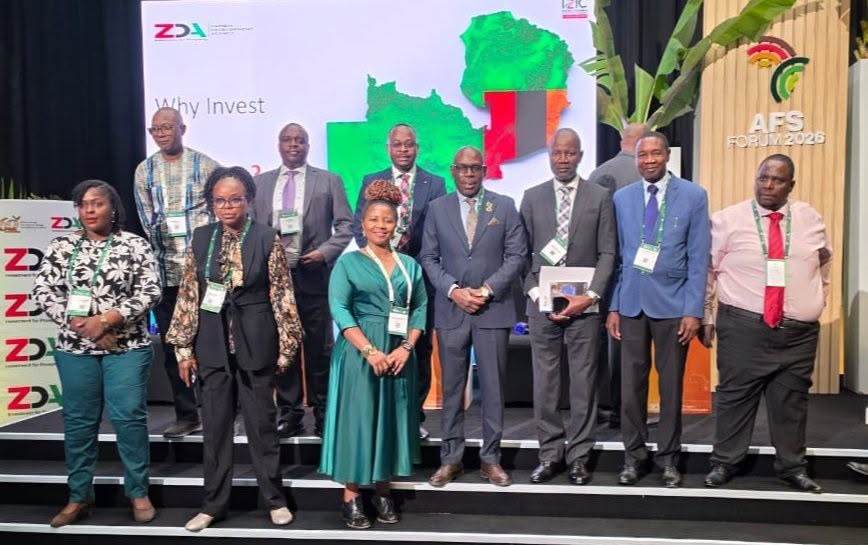
Meanwhile Zambia’s agriculture permanent Secretary John Mlongoti stressed various needs for Zambia’s agriculture transformation initiatives that promote transformation of the country’s agricultural potential into investment, jobs, food security and sustainable economic growth.
The permanent secretary underscored Zambia’s ongoing agricultural investment agenda.
He reaffirmed Zambia’s re-purposing programs like the Farmer Input Support Programme (FISP) to deliver tangible results.
Zambia’s unique regional position was strategic to lure international companies, sharing strategic opportunities available for private sector investment in the agrifood value chain.
Zambia is also seeking to promote a broader transformation of its agricultural economy by strengthening policies, institutions, markets and public-private partnerships capable of creating a more predictable environment for investors and farmers.
Zambian proposition comes amid a time when the country seeks to move beyond viewing agriculture primarily as a source of food and towards positioning it as a driver of industrialisation, employment, exports and rural economic development.
.
And Ministry of Fisheries and Livestock Permanent Secretary Dr. Max Choombe said the forum was a good opportunity for the Government.
It, he says showcased its investment opportunities in agriculture and the entire agri-food sector, with particular emphasis on unlocking private-sector investment and accelerating value-chain development.
The permanent secretary outlined an investment proposition centred on the development of a competitive and integrated Soybean Growth Corridor, aimed at increasing production while creating opportunities across the entire value chain.
The proposition encompasses agricultural production, mechanisation, irrigation, input financing, processing, storage and aggregation, logistics, as well as access to domestic, regional and international markets.
Zambia is targeting annual soybean production of 3 million tons and also pursuing increased production and investment across strategic commodities and sectors, including maize, wheat, sugar, and beef, as part of the Government’s comprehensive agricultural transformation agenda.