
By Jeff Kapembwa
Ethiopia opened its doors to thousands of campaigners as it hosts the preparatory 32nd United Nations Climate Change Conference (COP32) in Addis Ababa, the fifth to be hosted by the continent since inception.
Endorsed during the COP 30, Ethiopia joins Zimbabwe-COP2 (1996), Kenya-COP 12, South Africa, COP 17 (2011) and Egypt-2022 (COP 27) to bring together experts in the United Nations-owned Conference of the Parties (COP), in the past 10 years, a move described by many a centre of global climate dialogue.
A programme of event, availed shows that the pre-2027 COP 32 meeting will strive to focus on delivery and structural transformation.
Organisers envision shifting global focus away from unfulfilled promises and toward measurable action and accountability as part of the Credible Implementation process.
It will in the next few days this week, seek to scaling up development financing and leveraging the Fund for Responding to Loss and Damage for vulnerable nations.
Expanding clean energy transitions, infrastructure, and high-integrity carbon markets led by African nations an illustration to foster Green Industrialization.
According to COP 32 Foreign Minister and COP32 President-Designate Dr. Gedion Timothewos the conference will provide Africa a major platform to advance climate priorities.
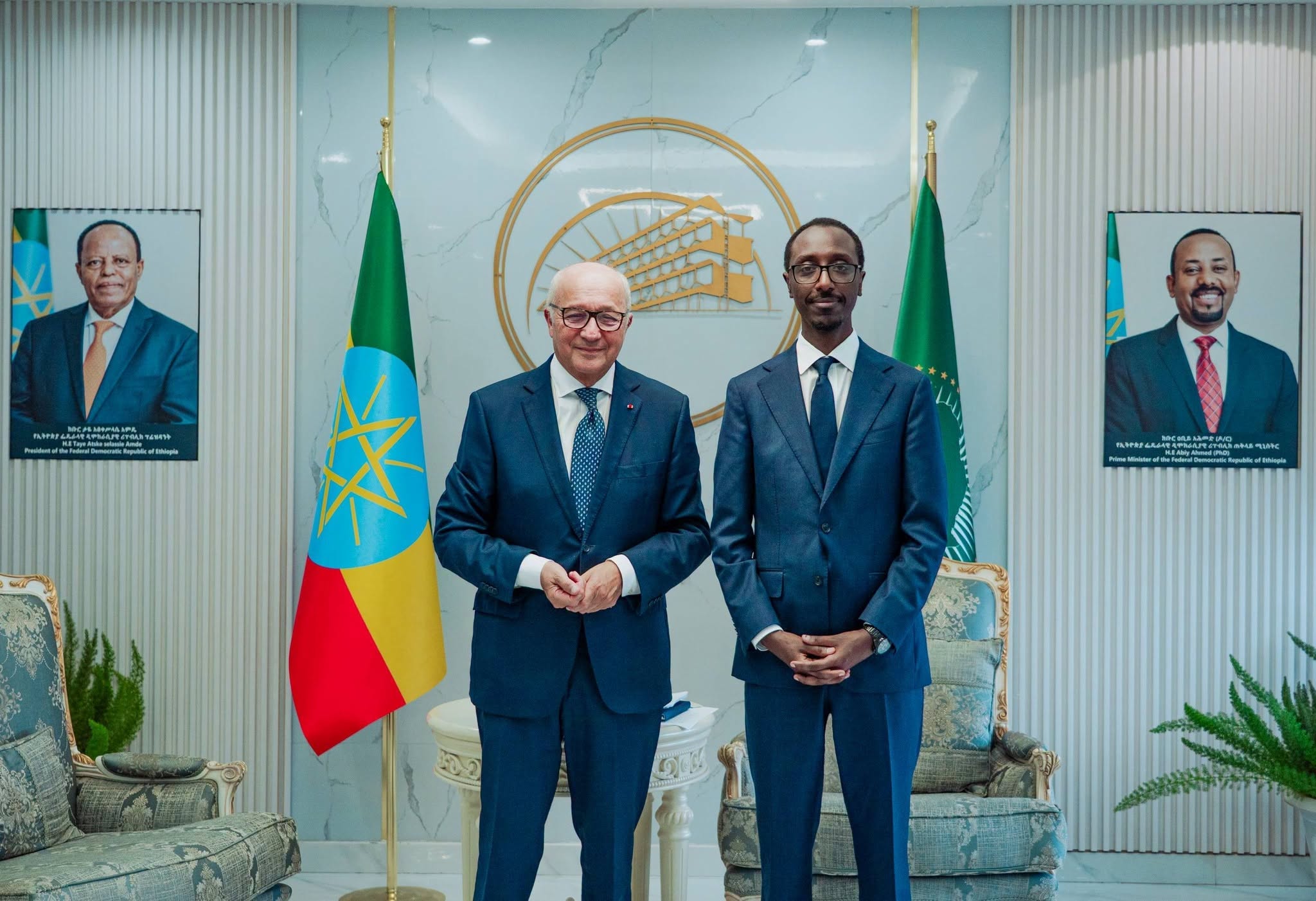
The efforts, include adaptation, finance, and sustainable development, according to his talking notes after a meeting held with COP21 President Laurent Fabius on the sidelines, on lessons from the Paris Agreement and global climate action.
Expert opinion shows that the choice of the Ethiopia capital, Addis Ababa, also the capital of the African Union marks a symbolic effort by the continental leaders both symbolic and practical value — a continental capital where development, diplomacy, and environment intersect.
In recent years, Ethiopia has made significant strides in turning its country into a ‘clean and green environment through climate-forward policies based on a Green Legacy Initiative.
Arguably, authorities have made several strides in fulfilling and actualizing its ambition and has among others, planted more than 30 billion trees since 2019, to investments in renewable hydropower and green industrial parks.
The country has sought to align growth with sustainability. Hosting COP 32, equivocally, cements its reputation as a champion of adaptation and low-carbon development.
Foreign Minister Gedion Timothewos has since neem appointed as President-Designate to lead preparations.
Showcasing national green initiatives like the Green Legacy reforestation program and expanding clean-energy investments. Africa has stood its stance and made headway in pushing for various climate-related initiatives and want to make the COP 32 summit a
a platform to advance an African-centred climate narrative.
The leadership wants a continent — one rooted in adaptation finance, just energy transition, and equitable carbon markets. It follows a period in which African negotiators have become increasingly unified, pressing for debt relief, climate justice, and greater access to concessional finance.
Observers expect COP 32 to accelerate work on the Nairobi Declaration’s goals of balancing growth with resilience, as well as progress on the African Carbon Markets Initiative and the continent’s Renewable Energy and Green Hydrogen strategies.
The success of the summit, has several opportunities and benefits for Ethiopia, ultimately. COP 32, arguably is expected to catalyse infrastructure upgrades, green investment, and international visibility.
The long awaited indaba, will undoubtedly attract tens of thousands of delegates, offering opportunities for tourism, energy, and logistics sectors, while anchoring Addis Ababa’s ambition to become a diplomatic and sustainability hub.
Africa too, stands to frame global debates on climate finance architecture.
With climate-related investment needs exceeding US $250 billion annually, hosting the summit gives the continent leverage to push for mechanisms that reflect its priorities — from blended finance to risk-mitigation instruments that can unlock private capital.
“Ethiopia’s hosting of COP 32 is both a recognition and a challenge: a recognition of its leadership and Africa’s collective progress — but also a reminder that the continent remains on the frontline of climate vulnerability.” Analysts say, envisioning Africa’s success, ultimately.
If harnessed effectively, the 2027 conference could redefine Africa’s climate diplomacy, turning political visibility into tangible investment and technological partnerships. In the words of one negotiator:
“This is Africa’s time not just to host the conversation, but to shape it.”
The African Development Bank readies for the COP 32 and pledges to play its key roles in ensuring Africa’s resilience to various climate-induced calamities are cushioned.
Last June, during the financial institutions annual meeting dubbed: “Africa’s Climate Leadership: Financing Transformation, Strengthening Partnerships, and Shaping the Road to COP32” its rallied behind multilateral institutions, climate funds, the private sector, and civil society.
Arguing them to advance Africa’s climate and development agenda.
Kevin Kariuki, Vice President for Power, Energy, Climate and Green Growth at the African Development Bank Group, emphasized the scale of the partnership’s impact:
“Over the past 15 years, we have successfully deployed over $1 billion in CIF resources. These funds have unlocked an additional $2.5 billion from the African Development Bank and $9 billion from other sources. That means that for each dollar of CIF, $10 was leveraged.”
Climate Investment Fund’s Chief Executive Officer, Tariye Gbadegesin, had reflected on the partnership and the next steps and said:
“Today, we are not only celebrating that partnership, but we are also discussing what its next chapter must look like. And that next chapter must be bigger, faster, and more implementation-focused.
The demand from countries is clearly there. The ambition from countries is clearly there. The real challenge now is delivery.”
Africa’s leading and climate justice campaign group-the Pan-African Climate Justice Alliance (PACJA)—has been tasked to lure Diana Acconcia (European Commission), Felix Wertli (Switzerland), Mattias Frumerie (Sweden) and Jette Michelsen (Denmark).
Jori Keijsper (Netherlands), Orla Kilcullen (Ireland), and Mithika Mwenda (PACJA) are all expected to step up as key speakers at the COP 32.