
By Dorcas Kabuya
GOVERNMENT has called for increased investment in climate-resilient agriculture and renewable energy to safeguard Zambia’s agricultural sector against climate-related shocks anticipated during the 2026/2027 farming season.
Ministry of Agriculture Permanent Secretary, John Mulongoti, said the agricultural sector continued to face threats from erratic rainfall, prolonged dry spells and droughts, which affect crop production, livestock, water availability and the livelihoods of farming communities.
“There is need for stakeholders to move beyond understanding climate risks and translate climate information into timely decisions, investments and practical interventions,” Mr. Mulongoti said.
He was speaking in Lusaka when he officially opened the National Dialogue on Climate-Resilient Agriculture and Renewable Energy for Zambia’s Climate Resilience amid the 2026/2027 El Niño, organised by the Agricultural Consultative Forum (ACF) under the theme: “From Climate Outlook to Action: Building Agricultural Resilience Ahead of the 2026/2027 El Niño.”
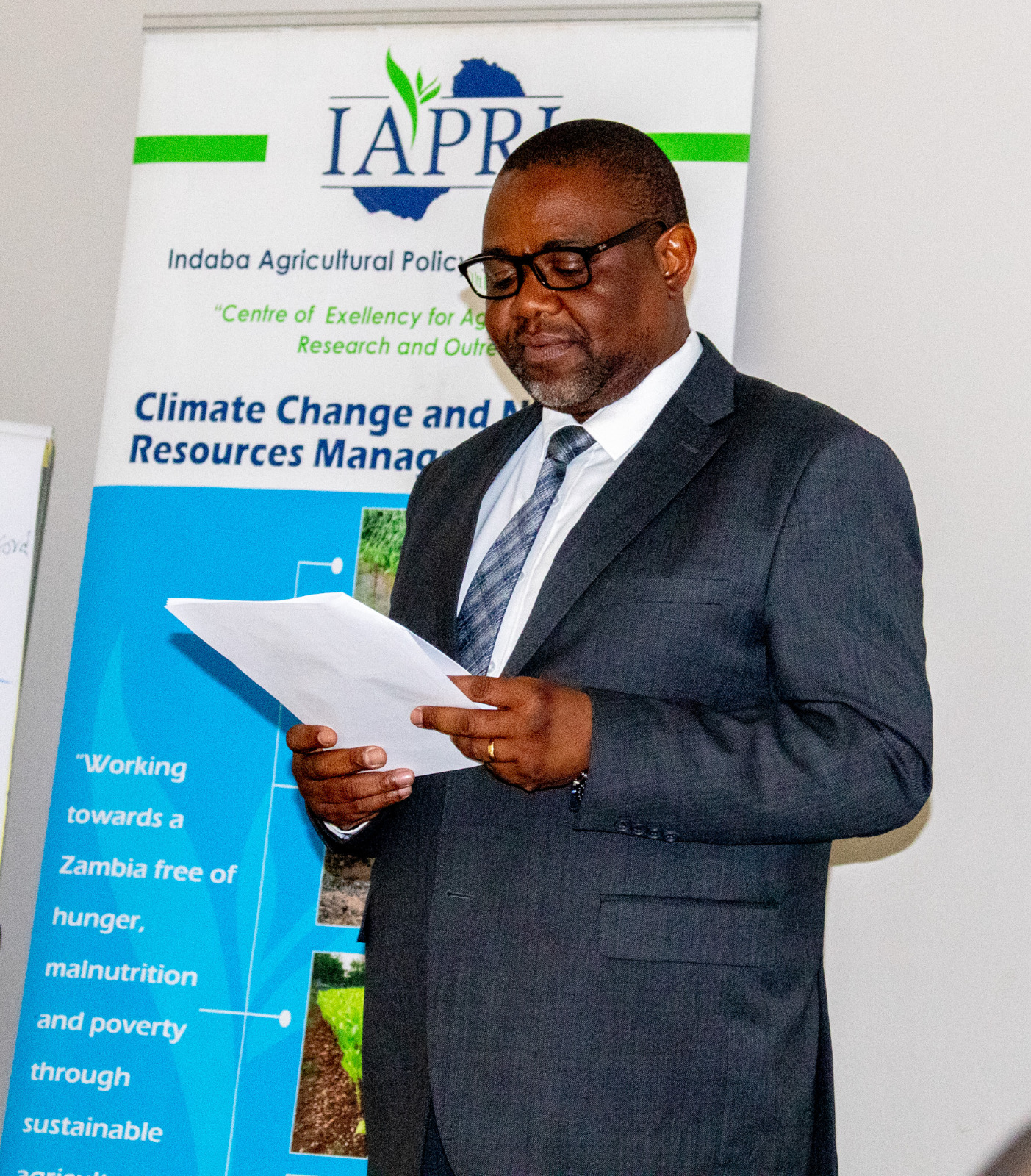
His speech was read on his behalf by Zambia Agriculture Research Institute (ZARI) Director Dr Patrick Chikoti.
Mr. Mulongoti said the anticipated challenges for the 2026/2027 agricultural season reinforced the need to strengthen food systems and improve preparedness and response to climate-related risks.
He noted that government, through the Ministry of Agriculture, with support from civil society and cooperating partners, was implementing measures to strengthen farmer resilience and reduce vulnerability to climate-related shocks.
“Among the measures to strengthen farmer resilience to climate change include the promotion of climate-smart agricultural technologies and practices, irrigation development, and appropriate crop and livestock production systems that can withstand changing climatic conditions,” he said.
Mr. Mulongoti also said reducing excessive dependence on rain-fed agriculture was critical to strengthening Zambia’s resilience to climate change, noting that government had set a target of bringing 500,000 hectares of land under irrigation by 2031.
“Government has also identified opportunities presented by solar-powered and other off-grid irrigation solutions which deserve greater attention,” he said.
Mr. Mulongoti said renewable energy could support not only irrigation but also agricultural processing, storage, cooling and other activities along the agricultural value chain.
“This calls for stronger coordination between the agricultural, water and energy sectors. There is need to explore innovative agricultural financing models that can enable farmers, cooperatives and agricultural enterprises to invest in irrigation, renewable energy, climate-smart technologies and other productive assets,” he said.
Mr. Mulongoti said strengthening climate resilience was also essential to achieving the government’s Grow Zambia Agenda, which seeks to increase agricultural production and productivity.
He said government had set production targets by 2031 of 10 million metric tonnes of maize, three million metric tonnes of soybeans, one million metric tonnes of wheat and one million metric tonnes of sugarcane.
He said achieving the targets would require increased investment in resilient agricultural systems capable of sustaining production despite changing climatic conditions.
Meanwhile, Ministry of Green Economy and Environment Permanent Secretary, Douty Chibamba, said climate resilience required stronger integration of climate action into agricultural planning and investment.
Dr Chibamba noted that climate change was no longer a distant environmental concern but an immediate economic and development challenge threatening national food security.
He said Zambia needed to move beyond policy commitments and translate climate information and national plans into practical actions that protect communities and strengthen resilience.
“Climate information should reach District Planners, Agricultural Extension Officers, livestock keepers and smallholder farmers to enable them to make informed decisions on planting, water harvesting and resource allocation,” he said.
Dr Chibamba identified anticipatory action and early warning systems, targeted climate finance and resilient infrastructure, and cross-sectoral collaboration as key priorities in strengthening Zambia’s response to climate-related shocks.
He stressed that climate-resilient agriculture would also require increased investment in drought-tolerant crop varieties, sustainable water management systems and renewable energy solutions across agricultural value chains.
The need for increased investment in climate resilience was also echoed by Agriculture Consultative Forum Board Chairperson, Renford Gombwa, who urged Government to prioritise climate-smart infrastructure and financing in the 2027 National Budget.
Dr Gombwa said increasing climate-related shocks, including prolonged dry spells, erratic rainfall and droughts, had demonstrated the vulnerability of Zambia’s predominantly rain-fed agricultural systems.
“We urge the Ministry of Agriculture, during the formulation of the 2027 National Budget, to increase allocations towards solar-powered irrigation, grain and cold-chain storage, and the Sustainable Agriculture Financing Facility,” Dr Gombwa said.
He said the effects of the 2023/2024 drought, which affected crop production, water resources and the national power system, demonstrated the urgent need to strengthen agricultural resilience.
“We cannot afford to wait for the storm to arrive; we must strengthen our agricultural systems and protect our communities now,” he said. –NAIS