
By Jeff Kapembwa
The El Nino looming over Zambia is a threat to the 2027 budgetary execution and the Government should strive to mobilise resources locally to cushion the impact of the impending drought on the economy and households, a local think tank warns.
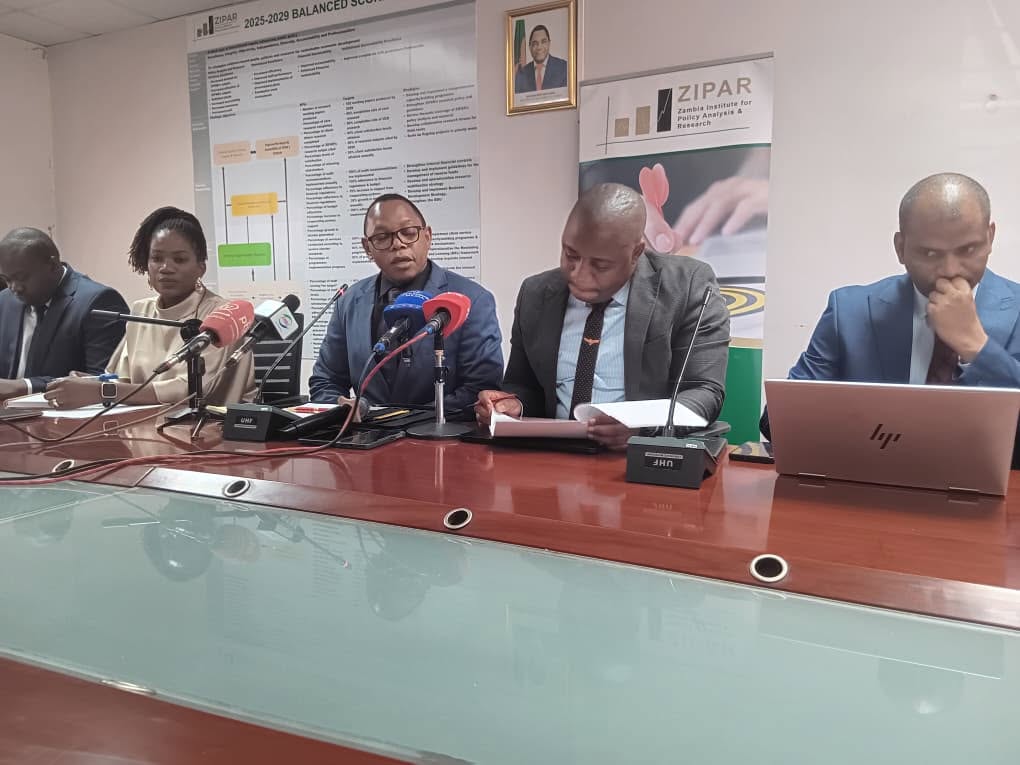
The Zambia Institute for Policy Analysis and Research (ZIPAR)’s Executive Director Zali Chikuba foresees an El Nino, replicating the 2023 climate crisis, and if not cautiously handled, derail gains made in economic growth, attaining a 5.4 percent of Gross Domestic Product (GDP) last year.
He told Lusaka based reporters ahead of the 2027 national budget announcement this weekend that climatic threats on the economy were real and needs decisive steps to avert slowing down productivity.
It was imperative for the Government to make robust decisions when formulating the budget to ensure it is well planned and ensure creation of jobs, while exhibiting candidness on how it must be financed while averting debt slippages.
ZIPAR, commends the Government’s Zambia Grow Agenda planned for the next five years, but wondered how the Government would meet all the financing needs to invest in various sectors.
There is urgent need to lure the private sector to drive the economic growth agenda, though noted the staggering debt backlog they are owed for services delived but still unpaid, a call for reforms.
“We expect the private sector to begin to take a bigger role. But for them to take a bigger role there must be reforms that support that transition and these must be adequately articulated,” he said.
ZIPAR envisions that with Government determination, the Grow Agenda initiative was tenable, capable of reaching 75 to 80 percent of the ambitious 2031 targets, but called for alertness on the structural constraints.
Mr. Chikuba notes that finance minister Situmbeko Musokotwane has already give a direction that the growth agenda is an export-led growth programme, implying that production could exceed domestic consumption and should meet quality standards for regional and global markets, but that could need critical financing to bolster food production.
“We need critical financing that will enable that standard production to be achieved needs to be articulated in the 2027 budget, and if not articulated, we should how that is going to happen,” he said.
ZIPAR, remains optimistic that the 2027 National Budget would be a turning point in Zambia’s economic development and ensuring that the economic growth translates into jobs, increased production and improved living standards.
The budget, he argued, should not be judged by the amount of money allocated to different sectors but by whether public spending delivers measurable results for ordinary Zambians while supporting the country’s long-term development ambitions under the Grow Zambia Agenda.
Chikuba said Zambia needed a budget that balanced economic ambition with fiscal discipline, particularly as the government faced competing demands for public resources, pressure to finance development programmes and the need to sustain economic recovery.
Maintaining price stability, Chikuba warned remained important for households and businesses, with the medium-term inflation target set at between six and eight per cent. He said budget decisions needed to support macroeconomic stability while ensuring that essential development priorities were not neglected.
Chikuba said the 2027 Budget would ultimately need to demonstrate that public resources were being directed towards priorities capable of generating lasting economic benefits.