
By Jeff Kapembwa
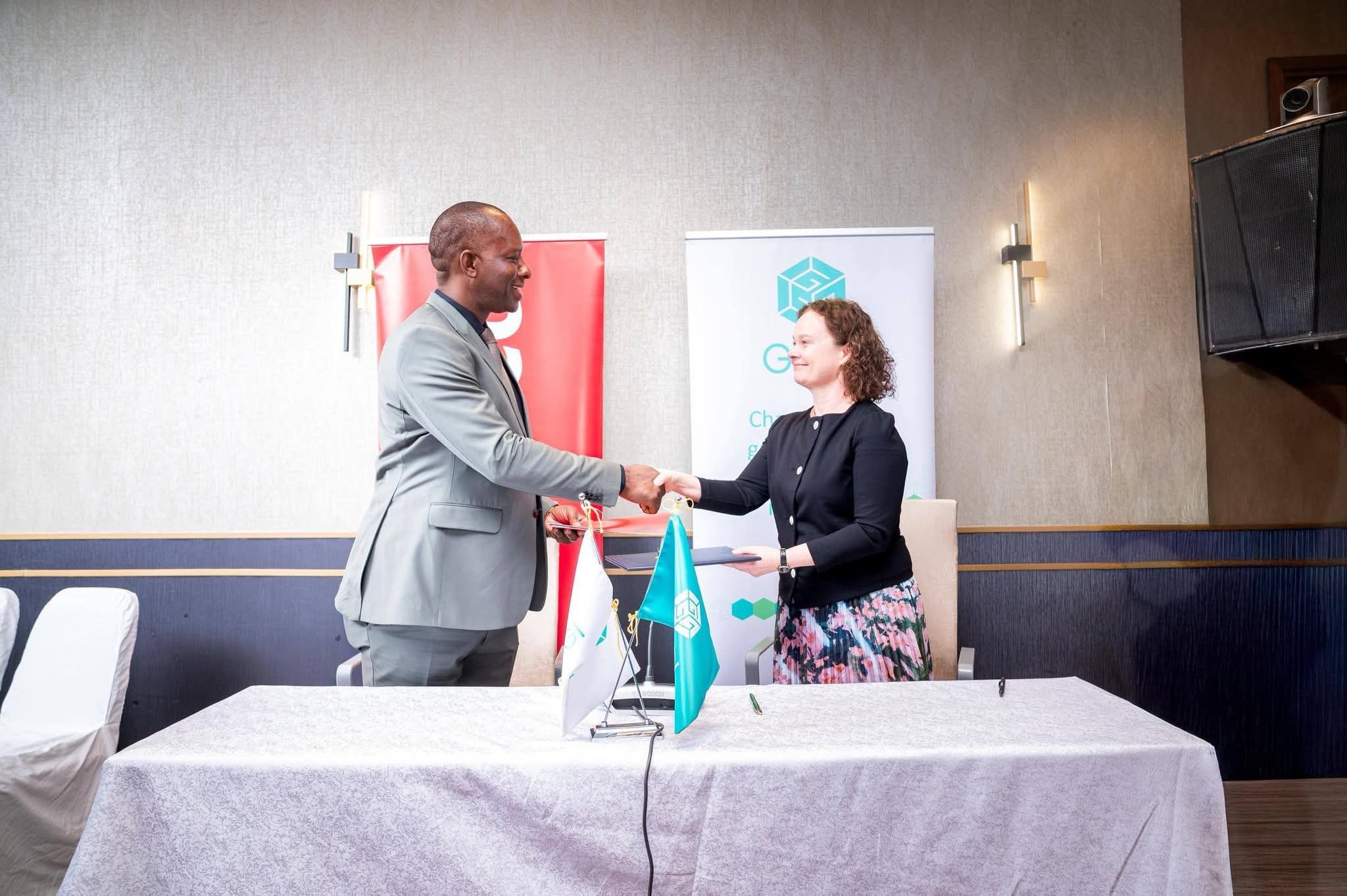
Zambia and Norway signed a US$420 million financial transaction for carbon credit exchange as the country in the country’s quest to transition into renewable energy and insulate against climate change that dwarfed sector growth.
A carbon credit deal, according to energy experts’, entails undertaking a financial and environmental agreement centered on the exchange of carbon credits. These agreements involve one party paying another to reduce or remove greenhouse gases from the atmosphere, typically deemed a way to “offset” the buyer’s own emissions.
The agreement stems from a carbon financing signed on 1 April this year between the two countries to bolster the power sector as the country transitions into renewable energy after El Nino induced climate change dwarfed energy growth-reducing hydro power generation-representing Zambia’s energy source-creating power outages in industry and domestic consumers.
The deal-signed through the ministry of Green Economy and Environment facilitated a Call for Proposals for the Carbon Feed-In Premium Programme (CFIP), a pioneering results based and policy driven crediting mechanism designed to fast-track the decarbonisation of Zambia’s energy sector.
Ministry of Green Economy and Environment Principal Public Relations Officer Harriet Chimuka, in a statement says the CFIP, a new concept in Zambia is a multiple-game changer for the faltering sector. It is envisaged to unlock about $420 million of crucial investments in clean, grid-connected electricity generation technologies.
These include renewable energy projects with battery energy storage systems (BESS), that facilitate the integration of variable renewable sources to deliver stable power to the national grid. It is deemed an additional energy source amid doubts of the hydro power sustainability ‘clouded out’ by climate change.
“The CFIP will prioritise new and financially additional energy generation paired with battery energy storage systems, guaranteeing the supply of renewable electricity during peak and evening hours when grid emissions are highest.” She says.
The initial technological focus will be on solar photovoltaic (PV) projects totaling 300 MW, consistent with Zambia’s national priorities as the country seeks to transition into renewables that promote grid connections and meet demand chiefly in rural areas where power is devoid.
Arguably, the CFIP Programme forms a key pillar in Zambia’s ongoing efforts to enhance electricity supply for households and industry. In the immediate future, it will facilitate investment in the rapid construction of 300 MW of solar power infrastructure as a first window.
Should this innovative financing instrument prove effective, analysts say, more windows will be published for support under the programme.
Developers of grid connected renewable energy projects face significant hurdles, including the limited bankability of ZESCO, the principal off taker, and Power Purchase Agreement (PPA) tariffs that often do not guarantee acceptable returns for Independent Power Producers (IPPs) or ZESCO itself.
This has led to hesitancy among financial institutions to provide credit due to repayment concerns as well as reduced investment in the energy sector.
To address these challenges and secure a resilient energy future, Zambia and Norway have designed the CFIP Programme specifically to accelerate investment and decarbonisation by offering an additional financial incentive of carbon payments for verified greenhouse gas (GHG) emission reductions from new renewable energy projects.
Acting as a tariff “top-up” where PPA prices are insufficient, CFIP payments can bridge funding gaps, improve project bankability, and unlock investment in the energy sector.
The facility is designed to de-risk investments, improve bankability, and make solar businesses viable. In January 2026, Zambia and Norway concluded a Mitigation Outcome Purchase Agreement (MOPA) for the CFIP Programme with an expected carbon finance contribution of USD80 million to USD200 million.
The MOPA enables both countries to trade performance based Internationally Transferred Mitigation Outcomes (ITMOs) from selected renewable energy projects. Structured around Article 6 of the Paris Agreement, the CFIP is fully integrated within Zambia’s national systems, ensuring robust Host Country oversight and sector wide stakeholder engagement.
This policy-based scheme moves beyond individual projects to enable comprehensive government-led interventions, driving systemic, nationwide transformation and delivering significant climate and socio-economic benefits.
Participation in the CFIP is voluntary, and both Independent Power Producers and ZESCO and its subsidiary led projects are eligible, provided they meet the established financial, technical, and geographical criteria. This ensures activities are genuinely additional, support national climate targets, deliver measurable emission reductions, and generate meaningful Sustainable Development impacts.
Background CFIP):
Zambia-Norway partnership signed through an Article 6 deal signed in January 2026, and is the primary user of this specific initiative.
The program offers premium payments for solar project emission reductions (ITMOs) to help independent power producers stabilize the grid and diversify the energy mix. It aims to deploy up to 300 MW of solar capacity with battery storage (BESS) over ten years.
Although results-based financing exists elsewhere, this specific, branded “Carbon Feed-In Premium (CFIP)” program is unique to the Zambia-Norway initiative.
The project is supported by the Norwegian Global Emission Reduction Initiative (NOGER) and the Global Green Growth Institute (GGGI). It has the first call for proposals expected to be opened in April 2026 under MGEE.
- A carbon offtake agreement is a contractual arrangement between a carbon project developer and a buyer. It details the volume of carbon credits the buyer agrees to purchase over a set period and the terms of the transaction.
- The structure of this agreement is similar to a power purchase agreement (PPA) that many are familiar with. Like a PPA, a carbon offtake agreement often spans several years and is usually drawn up with the help of a market advisor to help explore, structure and negotiate the deal mechanics.