
By Fair Sulwe
What 2023/2024 was Really Like?
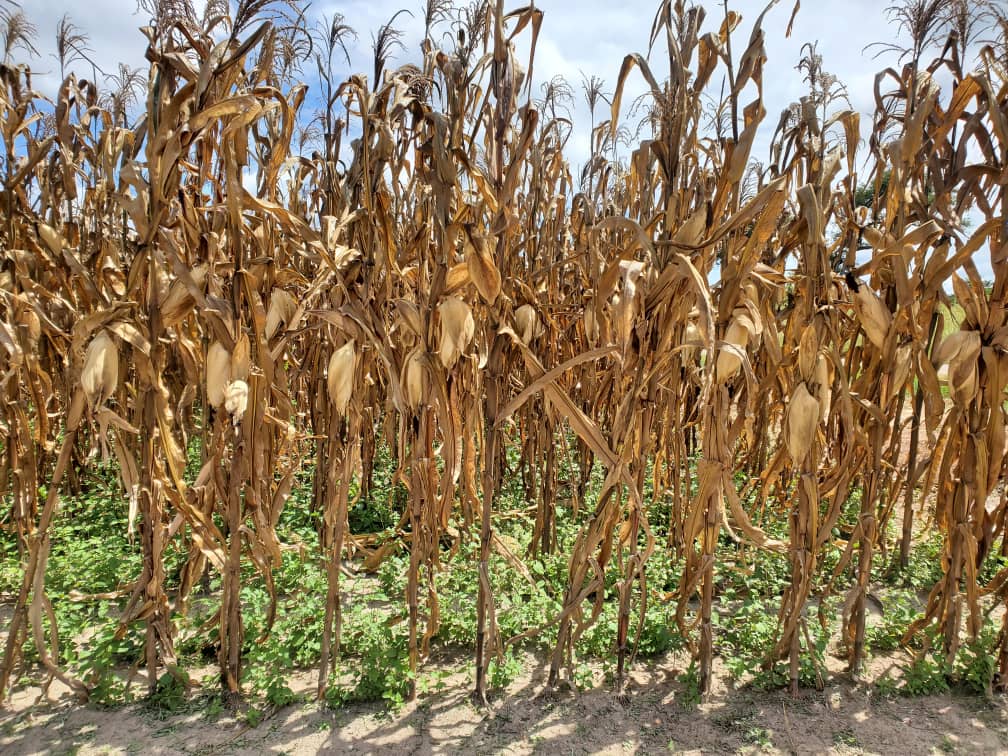
Ask any farmer in the Livingstone or Monze districts in Southern province how 2023/2024 felt and they won’t give you an impassioned treatise on global warming. They’ll tell you about maize that made it to knee-high but stalled. They’ll tell you about a borehole that yielded no water from August onwards. They’ll mention the necessity of selling off one goat, then another, just to acquire mealie meal at a prohibitive price that no household had anticipated, and 2023/2024 is a year to recall, precisely because these same conditions are coalescing again.
What the Forecast Says
El Niño has returned to the Pacific. In June, the US meteorologists issued an advisory with a 63 per cent probability of the event escalating into a significant strength (NOAA, 2026a). By early August, they were even more certain, assigning a 97 per cent chance of the pattern persisting until early 2027 (NOAA, 2026b). The World Meteorological Organization’s forecasts align remarkably closely, indicating more than a 90 per cent chance of El Niño conditions occurring in the latter half of this year (WMO, 2026). Now, contextualize these dates against the Zambian calendar. It is projected that the strongest impact of El Niño will be experienced between November and January this is our planting and germination period, the key months when our crops reach the tasselling stage, an entire critical window.
Why El Niño Means Drought, Not More Rain, Here
There is an important misconception here that causes farmers significant financial strain every few years. Globally, El Niño is often associated with heavier rainfall, which receives widespread news coverage. However, southern Africa, by a strange twist of fate, finds itself in the unfavourable territory of this pattern. The convergence of warm waters in the eastern Pacific redirects rain systems away from our region, leaving us with a delayed onset of the rainy season, longer periods of dry spells in between, and a premature ending. This isn’t mere speculation. The 2023/2024 drought was an El Niño drought. So were the ones in 2015/2016 and 1991/1992 a year that many veteran farmers use as their benchmark for a particularly bad year. This pattern is long established and well documented, which means we should not be taken by surprise this time. Even our own Disaster Management and Mitigation Unit has been candid. Last May, its National Coordinator, Norman Chipakupaku, warned in a meeting in Lusaka that the country should be bracing itself for “a repeat of El Nino induced disasters” in the upcoming season (as cited by the Zambia Climate Network, 2026).
A Record Harvest and a Warning: In the Same Breath
In May 2026, the government proudly announced a record maize harvest, estimating production to reach 4.94 million tonnes, a 28 per cent increase over the previous season, and a surplus of what the nation consumes. This was a commendable achievement, spurred by favorable rainfall, timely agricultural input distribution, and two preceding years of recovery.
During that very dissemination event, the Secretary to the Cabinet, Patrick Kangwa, informed those present that meteorological forecasts indicated an increased likelihood of below-average rainfall for the 2026/2027 season, highlighting the need for preparedness (News Diggers, 2026).
These two crucial statements were made on the same morning. The record harvest commanded the headlines. The latter, however, is the one we need to focus on from now until December.
While a full silo offers some protection, it does not guarantee security. In 2024, a devastating drought destroyed approximately a million of the 2.2 million hectares that had been cultivated for maize. By the time the extent of the devastation became clear, 9.8 million people across 84 districts had been affected (Al Jazeera, 2024; UN Zambia, 2024). Reserves are indeed a significant buffer during such times, but they do not sow the seeds for the next planting cycle.
Impact of Drought on Energy (Our Electricity Depends On the Rain Too)
The second challenge Zambia faces is that our electrical grid is as dependent on rainfall as our maize fields. Our largest power generation source, Kariba, relies on a sufficient flow of water. When the catchment does not fill, ZESCO cannot generate enough electricity. In 2024, the lake levels dropped so significantly that load shedding became a pervasive reality for much of the working day, month after month. Mines scaled down operations. Businesses like welders, hair salons, butcheries, and cold storage facilities suffered loss of earnings due to interrupted working hours. Clinics had to rely on unanticipated expenditure for fuel. In an address to the nation in February, President Hakainde Hichilema labelled this a “drought of its kind the worst”, projecting an energy deficit that could exceed 500 megawatts (cited in Lusaka Times, 2024; Al Jazeera, 2024). Any Zambian household that experienced 2024 knows the direct relationship between a dry lakebed and a dark socket. It’s crucial to understand this for our preparations.
Impact of Wildlife (Wildlife Always Experiences Problems First)
Animals on the ground are our early warning system for water scarcity. Wildlife are good in predicting the seasons. In Livingstone, bull elephants have been spotted in residential streets searching for food, driven from Mosi-oa-Tunya National Park by drought and diminishing habitat (WWF, 2025). WWF Zambia has cautioned that as water sources and grazing land dry up, encounters such as these will only increase around our game management areas and national parks (Xinhua, 2024). For farmers who live adjacent to these wildlife areas, a drought is compounded it manifests in the sky as well as through the perimeter fence.
More likely to have competition for natural resources as humans being coexisting with wildlife because of climate change impact.
Unequal Impacts of Drought
A commercial farmer with irrigation equipment and access to finance might weather a bad season and still be in operation the following year. However, a smallholder farmer cultivating two hectares in Gwembe with only a hoe and no irrigation cannot absorb such a loss. The rainfall might be the same, but the consequences are profoundly different. This disparity is the essence of climate justice, unencumbered by jargon. Those least responsible for global emissions bear the greatest burden of the costs, and therefore, they are the ones in most dire need of on-time seed, boreholes, and critical early warnings.
What can Really be Done Between Now and November
The 2026 planting season is not yet determined. The next few months hold immense power in deciding the extent of the damage a dry season could inflict.
- Assume the rains will be brief. Plant sorghum, millet, cassava, and fast-maturing maize eg extra early and medium varieties as lesser options. In a season expected to end prematurely, they have the best chance of reaching maturity.
- Diversify your planting dates. Instead of planting all your crops at once, stagger the process over two or three dates. If your initial rainfall doesn’t hold, you won’t lose your entire crop.
- Address your water sources before December. Deeper boreholes, dredging silted dams, and rudimentary water harvesting techniques will cost significantly less now than during the peak of January when everyone will need access to drilling equipment.
- Build resilient soils that can retain water. From the previous drought, it proven that health soils keep moisture for a good period. To have good soil: Apply organic manure,liming the field. Soil testing should be must for farmers.
Implementing practices such as ripping, minimum tillage, mulching, and leaving crop residue on the fields can help your land conserve moisture during dry spells. In a challenging year, these techniques can make the difference between a poor harvest and no harvest at all.
- Trust the Official Forecasts. This year, Zambia launched a US$4 million weather early warning facility supported by the World Food Programme and the UK Met Office (Zambia Climate Network, 2026). The facility’s effectiveness hinges entirely on farmers actually utilising the advisories provided by their local meteorological department.
- Our government can no longer plan our power infrastructure based on rainy days. Now is when we should be installing solar and other source of energy; now is when we need realistic import and sharing arrangements in place. We can only afford for the level of water at Kariba to go down once more otherwise we turn a calculated risk into a crisis.
- Save the water catchments Everything downstream flows from these sources, and any damage done to them exacerbates drought conditions that follow, from charcoal production in water catchments to land grabbing and deforestation there. Afforestation takes a long time, for precisely the reasons why it so cannot be repeatedly delayed.
The season we still can prepare for
The country has journeyed from a statewide catastrophe in 2023/2024 to a record harvest in 2026. Our harvest was no fluke. It was the inevitable result of an alignment of rain, resource inputs and coherent planning, proving how quickly Zambia can recover and rebuild if it resolves to do so. This is the story of a country ready for anything after it successfully weathered a severe bout of it-at the price of enormous suffering. The approaching planting season will not be like 2024/2025. Both NOAA, WMO, the Zambia Meterological office, as well as the country’s Secretary to the Cabinet, have informed us clearly and publicly over several weeks of what’s in store for the climate in the approaching season. It is a gift for few countries to know something in advance of this certainty. Whether the coming months catch us by surprise with the next round of hardship or serve to build a more resilient Zambia rests wholly on our preparations.
The author is a Climate Change Expert