
By Jeff Kapembwa
Zambia has secures over US$3 million in its quest to modernise weather forecasting in the Southern African state, grappling to mitigate the climate change impact.
The World Meteorological Organisation-supported Systematic Observations Financing Facility (SOFF) has been extended to Zambia after an approval by the 13th SOFF Steering Committee under Decision 13.3.
Under the US$3,627,540 SOFF funding, a UN-established fund, co-created by WMO, UNDP and United Nations Environmental Protection (UNEP), the resource, provided as technical support, is multi-faceted in its application help affected countries remain resilient against the crisis.
It is when implemented, among other stop-gaps-close the global weather and climate data gap.
The SOFF, initiated in 2022, and chiefly ideal for Least Developed Countries, Zambia included, and covers the Small Island Developing States ((SIDS), is a shared cost among WMO, UNDP and UNEP.
It strives to improve data collection and sharing, supporting the UN Early Warnings for All Initiative. forms a foundational element of the global effort to ensure everyone is protected by early warning systems by 2027.
Key among other functionaries of the SOFF fund is to act as a buffer and foster accelerated climate adaptation and resilience through improving the availability of essential surface-based weather and climate observations.
The SOFF supports compliance with the Global Basic Observing Network (GBON) regulations.
It ultimately helps to close the data gap while reducing weather forecast errors by up to 30% in Africa and 20% in the Pacific, and it is estimated to generate $5 billion in annual global benefits, according to UNEP.
SOFF utilizes a results-based approach, offering grants for infrastructure, technology, and capacity building to ensure sustainable data sharing. Ministry of Green Economy and Environment describes the breakthrough a significant development in its fight against climate-induced crisis.
The financing is a breakthrough in the country’s quest to strengthen the nation’s climate resilience and is the culmination of a rigorous readiness and preparatory phase that began in 2023 at the COP28 climate summit in Dubai.
Plans are to utilize the SOFF-US$4 million to procuring and installing state-of-the-art weather observation stations, build capacity and sustainably manage the observation infrastructure established in all the districts and catchment areas.
The project will be implemented with the support of the World Food Programme (WFP) as the Implementing Entity, and technical guidance from the United Kingdom (UK Met Office) acting as the Peer Advisor.
The modernized infrastructure will not only serve domestic needs but will also allow Zambia to contribute vital data to global weather prediction models, improving forecast accuracy worldwide.
The SOFF investment seeks to unlock synergies with other financing mechanisms, such as the African Development Bank’s Climate Action Window (CAW), ensuring a sustainable and comprehensive approach to climate data management.
Harriet Chimuka, the MGEE Principal Public Relations Officer, in a statement, citing Minister Mike Mposha, describes the initiative a breakthrough and is envisaged to effectively close existing data gaps and bring Zambia into full compliance with the internationally mandated Global Basic Observing Network (GBON).
Minister Mposha, described the approval and ultimate investment a transformative step for the country’s climate adaptation strategy, adding: “This investment is a testament to the Government’s unwavering commitment to protecting the lives and livelihoods of the Zambian people.”
Upgrading our meteorological infrastructure to world-class standards, we are enhancing our ability to provide accurate, location-specific early warning systems.
“This is directly aligned with our national development goals to safeguard agriculture, energy, and infrastructure against the growing impact of climate change.”
The financing is a culmination of extensive technical preparation and international collaboration.
The deployment of this infrastructure and capacity-building programs will commence immediately following the disbursement of funds, ensuring that our meteorological services are equipped to meet the challenges of the future.
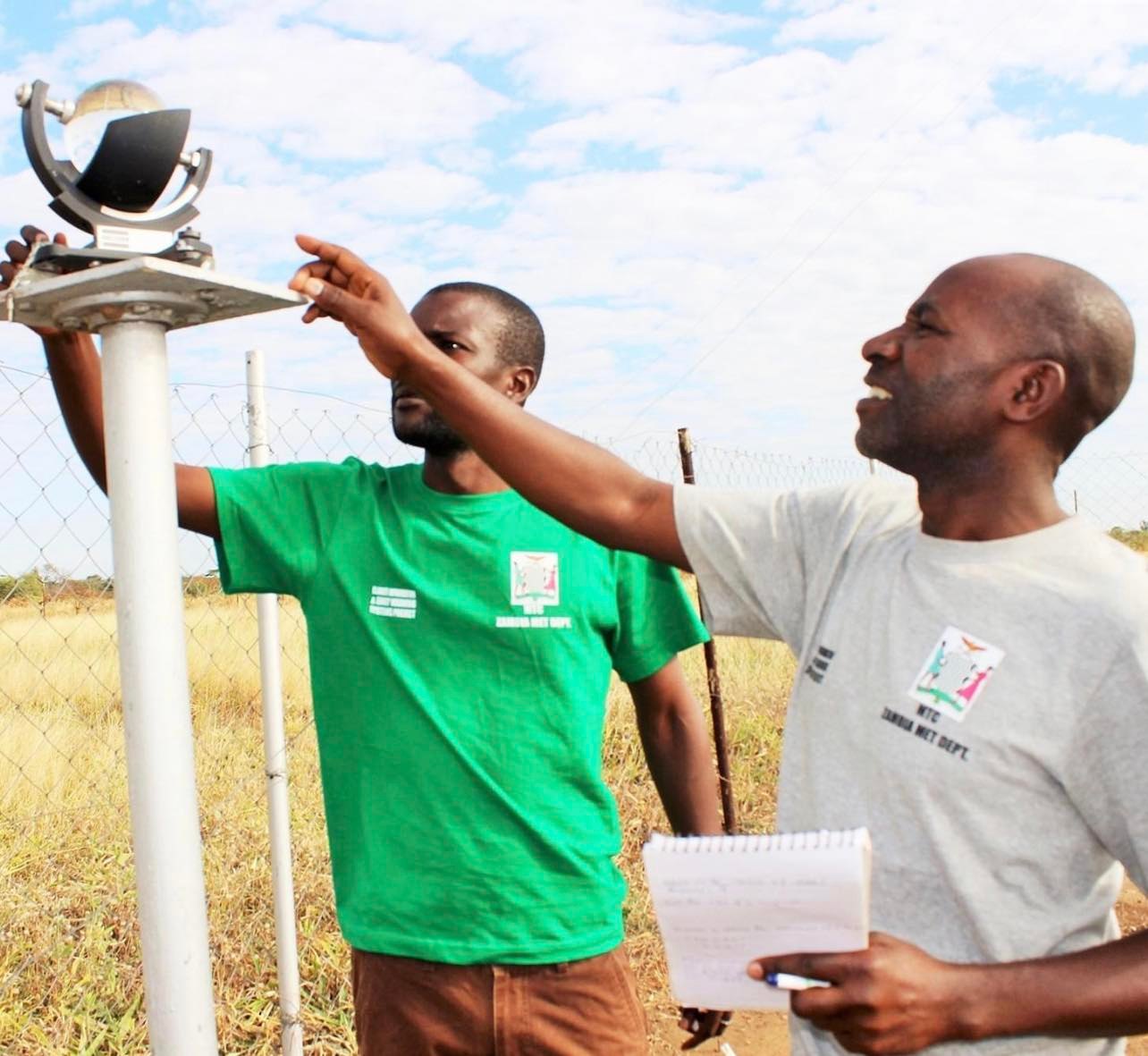
Zambia under the 2023-2026 modernization programme undertook various strategic plans to upgrade various weather stations and deploy 120 automatic weather stations across all districts to enhance early warning systems.
Last year, 15 new state-of-the-art stations were delivered under the regional WeatherNet project to improve national data collection.
Some of the equipment used by the Zambia Meteorological Department was used to discover and monitor tropical storm Anna, which was capable of uprooting houses in 6 provinces of Zambia.
The Zambia Meteorological Department (ZMD) is converting traditional paper-based records into digital formats to improve accessibility and accuracy, collaborating with the German Federal Ministry of Research, Technology, and Space.
Zambia is partnering with Swedish and American experts to access space-based data for better weather forecasting, resource mapping, and agricultural planning, among other undertakings under Space Data Integration, while not launching its own satellite.
Zambia is collaborating with the Southern African Science Service Centre for Climate Change and Adaptive Land Management (SASSCAL) and the UK Met Office to enhance forecasting, particularly for thunderstorms.
Meteorological staff are being trained in the installation, maintenance, and calibration of new equipment to ensure long-term sustainability while ensuring provision of reliable and accurate data.
The modernised data from weather stations will allow farmers to receive improved, localized climate-smart advisories, aiding in crop planning and disaster risk reduction.
The upgraded systems provide better early warnings for floods and droughts, essential for reducing risk to life and property. The modernized and improved forecasting will help manage water resources and energy production.
This modernisation aligns with Zambia’s Eighth National Development Plan (8NDP) regarding environmental sustainability, according to data.