
By Jeff Kapembwa
-Zambia’s quest to strengthen its climate action through sustained reduced GreenHouse Gases (GHGs) emissions by the close of the decade, inched closer as espoused under the Green Growth Strategy.
Zambia, one of the African countries tormented by the crisis and in seeking to insulate, has taken decisive steps and created comprehensive climate strategies, through a strengthened climate action to a 3.0 version, envisioned to reduce GHGs-targeting a 25–47% emission rate by 2030).
Through an assessment, arguably to ensure that institutional frameworks are expanded to handle increased sectoral scope, including transportation, waste, and coal, the country had sought to establish institutional frameworks to support climate action.
This however, has faced hazards on the road. Some significant gaps are incomplete and remain in coordination, technical and human resource capacity, data management systems, and the integration of climate considerations into planning and budgeting processes.
This is attainable, chiefly at sub-national level. It calls for various stakeholder engagement in ensuring the success of the 2024-2030 strategy.
Analysts, while commending Zambia for various milestones in advancing the call to emission reduction and other strategies, the assessment, arguably identifies weaknesses in coordination mechanisms, technical expertise, and data management systems needed for full implementation.
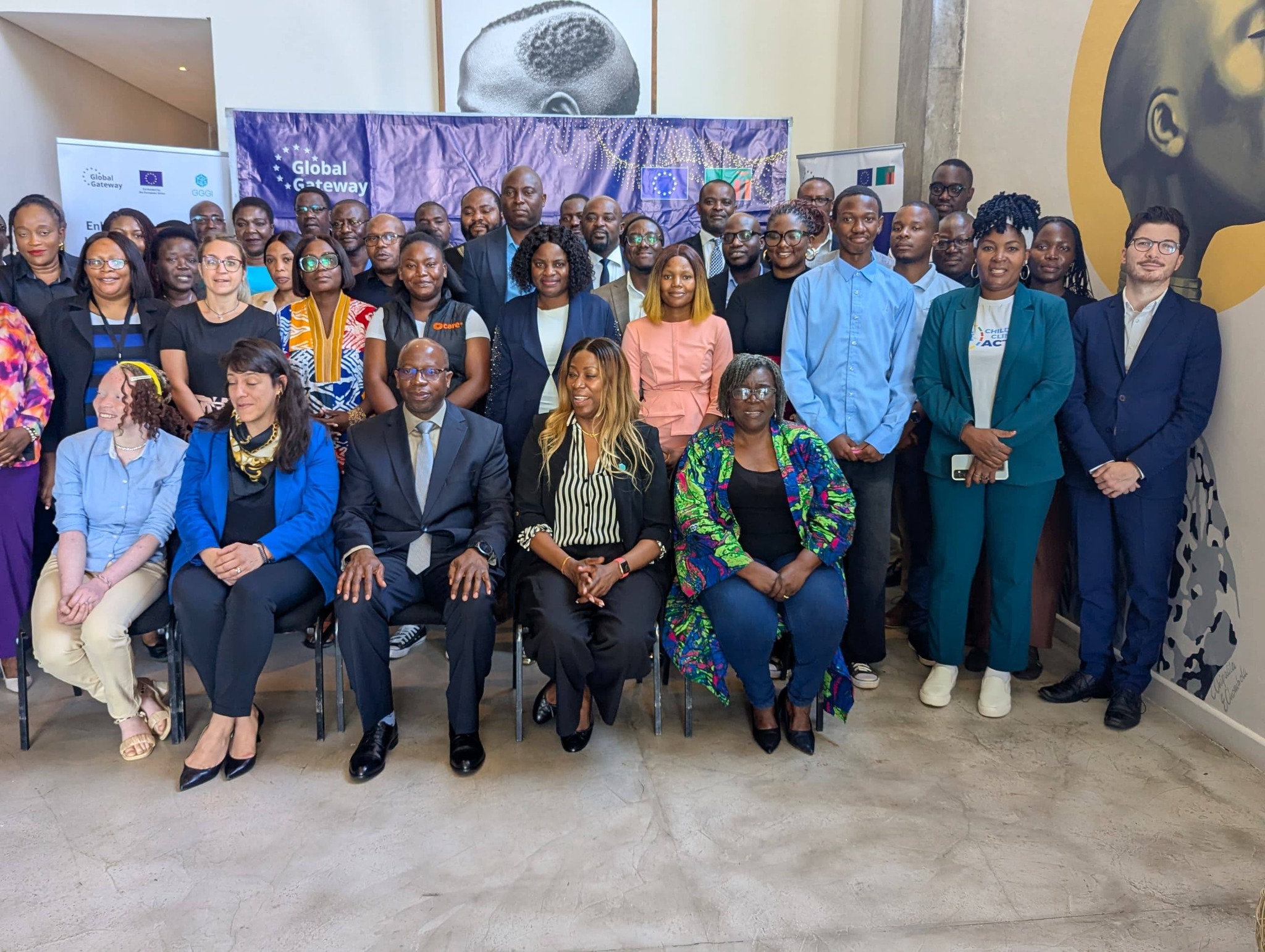
Zambia’s line-ministry-MGEE-hosted a two-day meeting of various climate campaigners and other interest groups to validate findings from a nationwide assessment undertaken recently seeking to identify institutional, technical, and systemic gaps affecting climate action implementation.
The Government’s consultative approach during the meeting is to intensify and justify its commitment to strengthening climate governance and accelerating the implementation of the country’s Nationally Determined Contributions (NDCs) under the Paris Agreement.
Funded through the European Union’s “Enhancing Zambia’s NDC Implementation (EZ-NDC) Project,” the players converged to validate findings from a nationwide assessment and identify institutional, technical, and systemic gaps affecting climate action implementation.
The assessment undertaken seeks to redress shortcomings in the tracking progress, aligning financing with national priorities, and Strengthening Reporting Systems. This is to, among other reasons, align the country with the set NDC 3.0.
Under the NDC 3.0, signed last year, Zambia targets a 25% unconditional and 47% conditional reduction in Greenhouse Gas Emissions (GHGs) by 2030, aligned with the Eighth National Development Plan and Vision 2030.
It focuses on scaling up renewable energy, sustainable agriculture, forestry management, and integrating gender-responsive, inclusive climate action.
Under the same commitment, Zambia to strive to move its action towards an economy-wide approach, expanding from three to ten sectors, including Forestry, Agriculture, Energy, Transport, Coal, Waste, Infrastructure (Green buildings), Tourism (Eco-Tourism), Industrial Processes (Cement), and Water Security.
The nation foresees reducing emissions by 25% unconditionally and 47% with international support (compared to a 2010 baseline). Under the assessment, it is envisaged to help bridge gaps in resource mobilization, facilitating the development of a “bankable” NDC investment plan.
Findings from the assessment are designed to lead to actionable recommendations that secure a low-carbon, climate-resilient nation.
It further seeks to address the fragmentation of climate efforts across different agencies, promoting better alignment with national development goals like the 8th National Development Plan, among other actions, information from various independent research data shows.
Dr. Douty Chibamba, Permanent Secretary at the MGEE in presenting the findings, noted various shortcomings, though not insurmountable. He described the validation exercise, a critical milestone in the country’s climate action pursuit.
The assessment undertaken provides an evidence-based understanding of the institutional and technical capacities required for the successful implementation of Zambia’s climate commitments. Although Zambia has progressed towards establishing institutional frameworks to support climate action, there are shortcomings.
He cites, among others, coordination, technical and human resource capacity, data management systems, and the integration of climate considerations into planning and budgeting processes, particularly at sub-national level.
The Government seeks multi-partnership to attain the goals as espoused under the GGS-2024-2030. Enhancing Measurement, Reporting and Verification (MRV) processes, and building long-term institutional capacity needed to promote transparency, accountability, and evidence-based decision-making in climate governance.
Global Green Growth Institute (GGGI) called for concerted efforts in actualizing the climate action with a call for effective implementation of Zambia’s NDCs-that hinge on the country’s institutional capacity to coordinate, track progress, align financing, and strengthen reporting systems.
Zambia Country Lead, Angela Nontulya Heinonen, notes that the Needs and Capacity Gap Assessment was a strategy designed to identify disparities between existing institutional mandates and actual implementation capacity, including weaknesses in coordination mechanisms, technical expertise, institutional arrangements, financing, and data systems.
GGGI is optimistic the project will be successful and that findings from the assessment being validated will support future updates to Zambia’s NDCs. This will further help to shape practical and targeted interventions aimed at strengthening climate governance systems.
European Union Cooperation’s, Lana Žutelija, reaffirmed the European Union’s continued support for Zambia’s climate ambitions.
The EZ-NDC Project-a four-million-Euro initiative funding was implemented by GGGI towards operationalizing Zambia’s Green Economy and Climate Change Act, as well as the integrated MRV system.
Zambia and the European Union-co-exist and foster sustainable investments, policy dialogue, and shared priorities on climate change and green growth.
Strong institutions, reliable data systems, effective coordination mechanisms, and enhanced technical capacities are essential for Zambia to effectively implement, monitor, and report on its climate commitments.
The EZ-NDC Project forms part of the European Union’s Global Gateway Initiative, which supports investments in green growth, sustainable infrastructure, digital transformation, human development, and institutional strengthening, Žutelija.
Zambia joins Ethiopia, Senegal, Burkina Faso, Togo, Uganda, Rwanda, Kenya, Morocco, Mozambique, Cambodia, India, Indonesia, Thailand, Vietnam, Philippines, Myanmar, Laos, and Mongolia.Vanuatu, Fiji, Solomon Islands, and Tonga that have been supported by GGG1 in climate action.
Palau, Samoa, Papua New Guinea, and the Dominican Republic. Guyana, Mexico, and Nicaragua are other beneficiaries of GGGI’s support for green investment, and policy development.
Dominican Republic, received GCF Readiness Funding to develop a Country Platform for Climate Finance. Papua New Guinea received AUD 20 million for the “Climate FIRST” program to develop investment proposals for NDCs.
Saint Lucia: Supported in developing a Blue Bond Framework and a Green Bond Roadmap. Mongolia: Assisted in establishing the Mongolia Green Finance Corporation,