
By Jeff Kapembwa
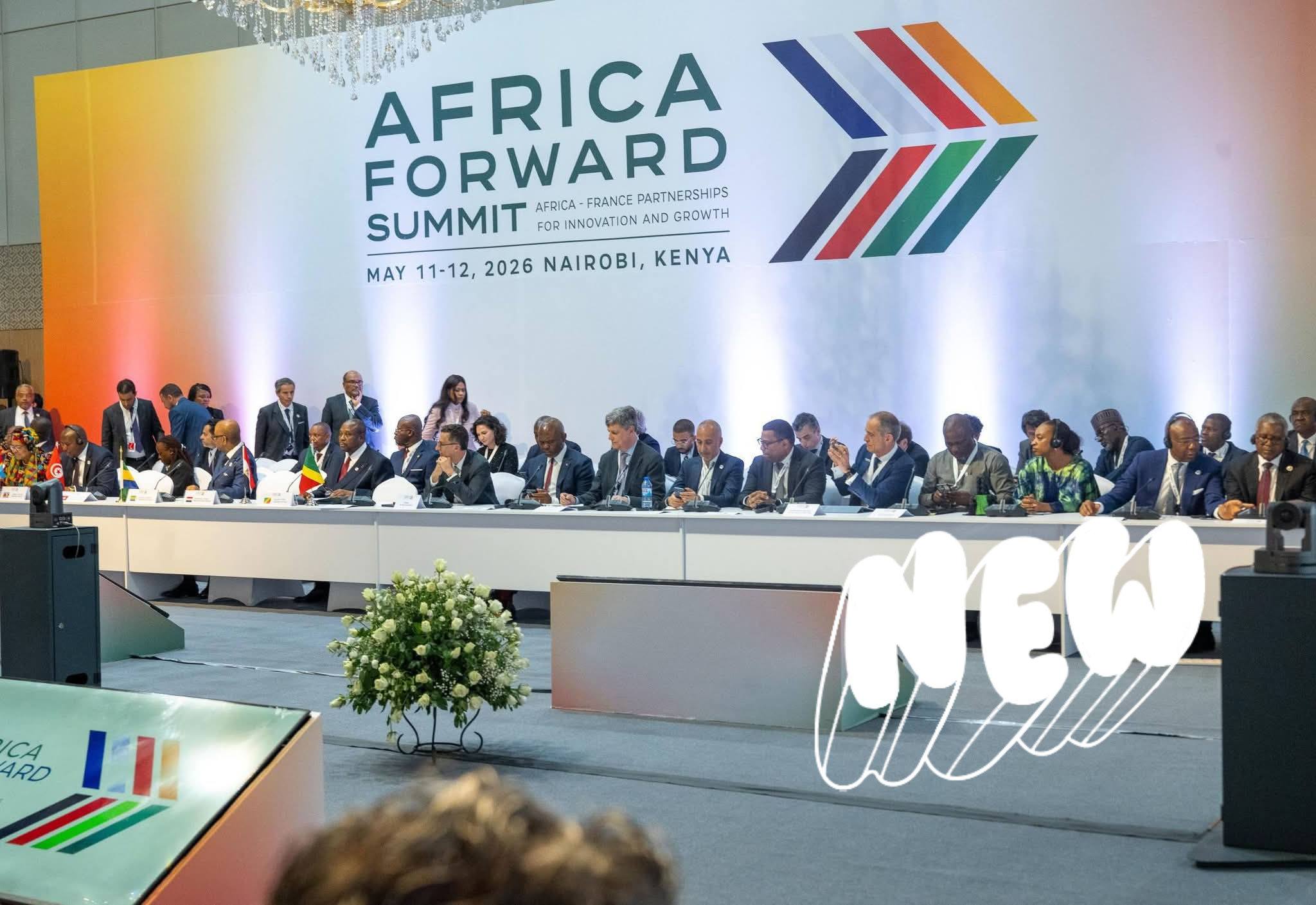
Leaders that converged in the Kenya Capital Nairobi for the landmark Africa–France Summit last week, resolved in unison to support unwavering investment into Africa and tap into the continent’s stunted growth.
The two-day indaba agreed on criss crossing matters including mobilising resources to strengthen the continent’s capacity in various fronts through the Africa-Africa–France cooperation across key strategic sectors as it progresses into industralisation for growth
According to a communique, the Nairobi Summit, sought to advance peace and security, industrialisation, digital transformation, climate action, healthcare, agriculture, and sustainable economic growth, reflecting a shared commitment to inclusive development and long-term prosperity.
Dubbed: “the Africa Forward Summit” co-hosted by Presidents William Ruto, served as a strategic platform for advancing Africa’s global partnerships through investment, innovation, and sustainable development.
Key among other priorities included resolutions that seek to strengthen peace, security, and strategic autonomy among Member States. The growing impact of global instability on Africa’s development agenda needed to be resolved for the good of the continent.
“We acknowledge the evolving global security environment, its implications for Africa, and the mutually reinforcing links between peace, security and sustainable development,” reads part of the communique.
President Ruto, in setting the tone for the discussions, called for stronger cooperation and renewed multilateralism grounded in sovereign equality, mutual respect, and shared responsibility.
“We demand stronger cooperation, renewed multilateralism, and partnerships grounded not on hierarchy but in sovereign equality, mutual respect, and shared responsibility,” Ruto said.
‘Enduring partnerships must not be built on dependency, but on sovereign equality. Not on aid or charity, but on mutually beneficial investments, and not on extraction or exploitation, but on win-win engagements.”
The leaders further reaffirmed the principles and objectives of the African Union Constitutive Act, including the promotion of unity, peace, security, good governance, democratic elections, and cooperation among member states.
The leaders and their governments further agreed to support African-led solutions to peace and security through the African Union’s Peace and Security Architecture (APSA) and the implementation of UN Security Council Resolution 2719, to enhance cooperation between the United Nations and the African Union.
The resolution seeks to strengthen planning and decision-making processes while ensuring predictable and sustainable financing for AU-led operations.
President Macron said France and Europe would continue supporting Africa’s aspirations for peace and prosperity.
They considered and sought to jointly strengthen cooperation in addressing emerging and transnational threats, including terrorism, organised crime, cyber insecurity, arms trafficking, migrant smuggling, illicit financial flows, and drug trafficking.
It was imperative there be coordinated responses to safeguard regional stability and strengthen Africa’s collective security framework.
The leaders called for stronger institutional capacity and regional security mechanisms to address ongoing conflicts in the Horn of Africa, the Great Lakes Region, and the Sahel through inclusive dialogue, counter-terrorism cooperation, and regional stabilization efforts.
Another key resolution focused on advancing sustainable and value-added agriculture, where leaders commit to promoting productive, sustainable, and resilient agriculture and food systems, including agro-industrialization and the development of integrated value chains in sectors with opportunities for scale.
The declaration saw leaders roundly supporting unwavering investment in agricultural and livestock systems that improve nutrition, while integrating the One Health approach to protect human, animal, and ecosystem health.
There was strong call for support towards agricultural research, innovation, and climate-smart practices such as agroecology, agroforestry, locally adapted quality seeds, integrated soil health management, and digital tools through joint research partnerships with French institutions.
The Heads of State and governments prioritized the development of agricultural value chains, including agro-processing, cold chains, logistics, and regional and international trade under the African Continental Free Trade Area (AfCFTA), where they agreed to transform agriculture from a raw commodity export sector into a driver of industrialization, value addition, and economic sovereignty.
On industrialisation and energy, leaders committed to promoting green industrialisation through investment in renewable energy, low-carbon systems, green hydrogen, and flagship clean energy projects such as hydropower, geothermal, waste-to-energy, and nuclear energy.
“We affirm that access to reliable, affordable, and sustainable energy is essential for development and delivering Africa’s long-term developmental agenda,” the declaration states.
The leaders also agreed to capitalise on Africa’s renewable energy potential by supporting local value chains for clean energy products, expanding access to clean cooking and electricity, and establishing interconnected regional energy markets.
Leaders committed to promoting a sustainable Blue-Economy grounded in maritime sovereignty, climate resilience, economic transformation, and inclusive prosperity.
On digital transformation, leaders agreed to harness digital technologies and Artificial Intelligence to strengthen economies, public services, security, education, creative industries, and global competitiveness.
“We commit to advancing inclusive digital transformation and responsible, safe, secure, trustworthy, and rights-respecting AI to close digital divides,” the declaration reads.
They also committed to mobilising public and private investment in resilient digital infrastructure, including broadband connectivity, regional data centers, cloud computing, clean energy, and trusted data systems, while advancing skills development, research collaboration, and innovation ecosystems.
On reforms to the international financial system, leaders said the global financial architecture must evolve to reflect contemporary realities and align with the Sustainable Development Goals (SDGs). They pledged to support reforms at the International Monetary Fund (IMF) to improve representation for under-represented countries, particularly African states, while safeguarding concessional financing for the poorest nations.
Other commitments included investing in people, skills, and innovation, with leaders recognising Africa’s youth as a strategic asset for the continent’s long-term transformation.
They also reaffirmed the importance of transport, energy, and digital infrastructure as key drivers of competitiveness and economic growth.
Under a shared vision for transformation, leaders at the same time affirmed that Africa’s future depends on building productive capacity, advancing industrialization, and fostering innovation-driven growth.
“We commit to supporting a transition from extractive economic models toward value addition, manufacturing and sustainable production systems,” states the declaration.
While echoing commitments from global leaders, African Union Commission Chairperson, Mahamoud Ali Youssouf, called for strengthened multilateral cooperation and partnerships.
He said Africa is on a trajectory to become a future powerhouse of global growth, urging African leadership and international partners to sustain the unity, cooperation, and collective momentum that the contemporary situation demands.