
By Jeff Kapembwa
The Global Carbon Council (GCC) high level dialogue hosted by Bonn, Germany, hit a snag after interest groups failed to agree on emission parameters readiness for high-integrity carbon credit implementation for each country and climate financing.
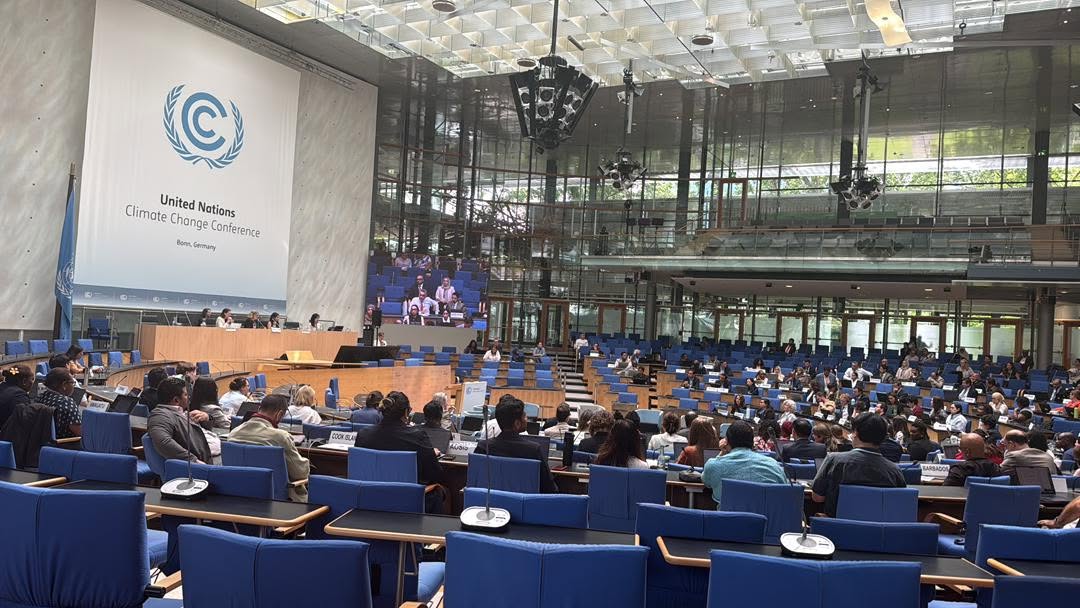
The meeting, hosting various countries including Malawi and Zambia and convened on the sidelines of the two-week-long-UNFCCC Subsidiary Bodies (SB) meetings focused on carbon market infrastructure and the call for scaling up global emissions cuts and funding for climate adaptation and actualizing the carbon market infrastructure.
Negotiators and observers in Bonn debated how to ensure bilateral deals under Article 6 and the Paris Agreement actually yield real emissions reductions rather than just paper offsets.
Stakeholders and country representatives discussed practical pathways for operationalizing Article 6.2 and strengthening country readiness for high-integrity carbon credit implementation. Carbon market campaigners had during the meeting pushed for a “learning by doing” approach, while watchdog groups raised alarm about the shaky foundations of current UN carbon credit systems.
A statement availed after the meeting stated that the two-week UN climate talks failed to meet expectations and produced few tangible outcomes as diplomats faced severe traffic “gridlock”. Negotiators differed in scaling up global emissions cuts and funding for climate adaptation.
Many countries criticised “coordinated attacks” on science by those with “fossil-fuel interests”. Some delegates saw progress on a “just transition mechanism” to support communities through decarbonisation as a positive outcome, with a package of texts agreed for the COP31 climate summit in Antalya, Turkey.
Climate finance, was a heated matter and a source of tension between developed and developing countries, influencing the debate around adaptation and trade in the Bonn talks. Parties were unable to agree on text relating to the “ Global Goal on” (GGA).
Discussion on funding for climate adaptation stalled for over two weeks with negotiators describing the stalemate as: “stuck, stalled or deferred”, even in the rooms of technical adaptation items, Jeffrey Qi, Policy policy advisor with International Institute for Sustainable Development (IISD) resilience program, is cited as saying to Carbon Brief. Other negotiators cite ‘fault lines over climate financing as reasons
In many of the rooms, this was due to a “fault line” over finance, Ana Mulio Alvarez, policy advisor at think-tank E3G told Carbon Brief, as developing countries sought support to help protect themselves from escalating climate hazards. Talks on finalizing climate finance and emission reduction strategies have been deferred to COP31 amid wider geopolitical and financial debates.
Last year at COP30, parties had agreed on a new adaptation finance target within a decentralized, collective effort to tackle global crises—most notably climate change—based on indigenous Brazilian solidarity practices “global mutirao”
The text “calls for efforts to at least triple adaptation finance” for developing countries by 2035. This is largely expected to come from developed countries, which are obliged to provide climate finance under the Paris Agreement.
While this tripling target agreed in Brazil was broadly welcomed by developing countries, it lacked key details. It, for instance did not specify the baseline for tripling, the parties which have to contribute or the types of finance that will be counted under the goal.
The Belém COP meeting had included reference to 2025 as the baseline, the deadline for a $40bn adaptation finance goal set at COP26. This led some parties and civil society organisations to state or demand that the 2035 level be pegged at $120bn.)
However, in Bonn, various parties requested that the tripling target be included within the text on the GGA.
This included the African group, small-island states (AOSIS), least developed countries (LDCs), some Latin American countries (AILAC), as well as the G77 and China.
The parties had argued that they would need finance to implement the GGA, especially as adaptation projects often rely on public, grant-based funding rather than private investment. Canada, Norway and Japan were among those opposing a reference to the tripling target.
However, Terewsa Anderson, the the global lead on climate justice for Action Aid said: “It’s been a huge fight to even get a soft acknowledgement of the Belém promise to triple adaptation finance, let alone a proper plan to meet that promise. It seems rich countries want to be able to quietly forget they ever said anything at all.”
In opening the GCC dialogue meeting Dr. Yousef M. Alhorr, Founding Chairman of GCC, called for strengthening institutional and digital infrastructure to support the next phase of carbon market development.
“We are meeting at a critical juncture in global climate action. For developing nations, navigating the complexities of the Paris Agreement requires not just ambition, but robust institutional infrastructure to back it up. By strengthening carbon market systems, enhancing transparency, and building technical capacity, countries can better access climate finance, meet their reporting obligations, and participate effectively in international carbon market cooperation,”
Analysts argue that the key message emerging from the discussions was that the future success of international carbon markets will depend not only on policy frameworks and market demand, but also on the systems and infrastructure that allow countries to operationalize carbon market cooperation on a scale.
The dialogue generated significant interest in GCC’s Integrated and Interoperable Carbon Market Infrastructure (CMI) solution and its potential to support countries in operationalizing Article 6.2 carbon markets.
Arguably, Anderson sees information on the eligibility criteria of carbon projects in host countries as vital and needs to be clearly defined, to foster both Public and Private Participation (PPP).
Meanwhile Zambia had during the GCC negotiation meeting engaged the Gulf Cooperation Council (GCC) to establish a strategic economic partnership focused on attracting Gulf investments into priority sectors like agriculture, minerals, tourism, and infrastructure.
Zambia further lobbied GCC investors to look at investing in the country, showcasing abundant local resources, proposing joint investment forums to bridge business communities in Zambia and Gulf states.
Zambia established joint business councils and signed major memoranda of understanding (MoUs)—notably with Saudi Arabia and the UAE—to facilitate massive agricultural projects (such as large-scale abattoirs for meat exports to the GCC) and renewable energy developments as part of its diplomatic effort to market the country.