
By Jeff Kapembwa
The 21st Africa Continental Climate Outlook Forum hosted in the Zambian capital, Lusaka closed Friday with campaigners warning against complacency against the impending El Nino, a risk factor to the growth of agriculture and key sectors vital for economic growth.
The over 70 participants that converged for five-days-June 15-19 noted various shortcomings and recommended key measures for anticipatory actions to multiple sectors: Agriculture and food security, Health, Water and Energy, Disaster risk reduction, and Humanitarian Response.
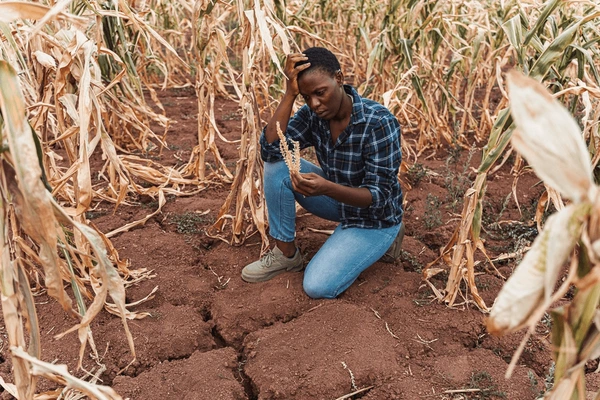
In the aftermath of the 2023-24 El Nino induced drought, the effects were cross-cutting and were determined regionally with Zimbabwe and Zambia feeling the impact. Zimbabwe alone generated around $607 million in maize production losses and killed over 44,000 cattle.
Severe agricultural and power sector impacts have historically cost individual nations hundreds of millions, requiring Flash Appeals of up to $429 million for emergency response in Zimbabwe and $228 million in Zambia, among other costs incurred by countries within the Sub-Saharan region.
In a brief summary and recommendations cited by the campaigners after the meeting, there is an urgent call for the continent to seek to strengthen continental anticipatory action mechanisms by undertaking a continental status assessment, developing a roadmap and operational guidelines.
With El Nino expected to heighten from this year until 2027, there is greater need to establish a Continental Anticipatory Action Working Group, and support Member States in strengthening legal, institutional, and financing frameworks.
Improve coordination of early warning systems by strengthening horizontal collaboration across institutions and vertical linkages from continental to regional and national levels to ensure timely and effective dissemination and use of climate information.
It recommends an enhanced operationalised use of climate services by transforming forecasts into impact-based guidance, strengthening the transition from early warning to early action, and promoting climate-informed decision-making across sectors.
Countries should urgently improve coordination of early warning systems by strengthening horizontal collaboration across institutions and vertical linkages from continental to regional and national levels to ensure timely and effective dissemination and use of climate information.
It calls for strengthening the documentation of extreme weather and climate events to generate
robust evidence supporting loss-and-damage assessments, climate adaptation planning, and resource mobilization.
Promote the use of the 2025 State of the Climate in Africa Report as a strategic reference for national development planning, investment decisions, disaster risk management, and Africa’s common position in international climate negotiations. It calls for early warning, Anticipatory Action and risk financing
According to estimates adduced by climate experts, Africa requires between $143 billion and $400 billion annually in overall climate financing, facing a massive funding shortfall as the continent prepares for the impending 2026/2027 El Niño event.
At a baseline, the African Group of Negotiators and continental institutions argue that Africa actually requires upwards of $1.3 trillion per year in broader development and climate compensation to effectively insulate its economies.
The timeline spanning from this year through 2027 coincides with a forecasted 70% to 79% probability of a severe El Niño cycle. This threatens severe droughts in Southern Africa and the Sahel, alongside extreme flooding in East Africa.
Africa needs a strengthened Africa’s unified voice in global climate negotiations, including during the forthcoming United Nations Climate Change Conference (COP31) in November this year, through coordinated continental positions and evidence-based advocacy.
Utilize the Continental Working Groups as technical advisory platforms to develop common African positions and provide coordinated technical support to the African Group of Negotiators in international climate negotiations.
In a Policy Brief, outlining various actions, campaigners call for a development and regularly aligned program that will hasten disseminate Continental Quarterly Sectoral Climate Bulletins presenting seasonal forecasts, sector-specific impacts, and recommended mitigation and adaptation actions for stakeholders.
The brief and recommendations give a wider forecast on the extent of El Nino and recommend various actions to militate damage in health and other sectors, citing persistent dryness in West Africa during the period August–October.
It calls for improved disease surveillance, scale up heat-health advisories and early warnings, as hot and dry conditions heighten risks.
Expand cholera and malaria surveillance, and integrate climate thresholds into health
early-warning systems in the Horn of Africa and Indian Ocean Region countries expected to experience above-normal rainfall August–October.
Strengthen community-level health advisories, enhance disease surveillance, and pre-deploy medical and WASH supplies to flood-prone districts in Southern Africa and Central Africa during August- October.
Part of Sahel and West Africa (dry anomalies), there is need for diversified energy supply by investing in solar and wind to compensate for reduced hydropower inflows and save Energy and Infrastructure.
Reinforce hydropower dams and transmission lines against flood damage, and improve drainage around energy infrastructure and enhance coordination among shared river basin organisations to support transboundary preparedness actions in Southern Africa, experiencing wet anomalies.
Pre-position critical relief supplies and strengthen humanitarian logistics for ease application of Humanitarian systems.
Scope of El Niño
El Niño in 2026 is perceived as one of the strongest in last decades, and is feared will significantly impact rainfall and temperature patterns throughout Africa. Its impact is increasing the risk of flooding in coastal, Horn of Africa, and equatorial areas and causing prolonged droughts in the Sahel for the targeted seasons.
Food security, public health systems, energy supply, and urban resilience are all at stake. Crops fail under erratic rainfall, hydropower inflows decline, and disease outbreaks intensify in vulnerable communities.
Urban centers face flood risks that negatively affect infrastructure and displace populations. Both internal and cross-border migration may occur. This results in additional pressure on affected countries and humanitarian systems.
Without proactive measures, the cost of inaction exceeds 5 % of the annual regional GDP. This, it is envisaged, will diminish development efforts, worsens humanitarian crises, and undermines resilience.
Secretary to the Cabinet Patrick Kangwa called for proactive planning before disasters strike, a significantly more effective and less costly than post-impact emergency responses.