
By Jeff Kapembwa
The United Nations has raised a red flag over the state of climate change globally, calling for urgent financing and adaption to reverse the accelerating levels of global warming, threatening humanity and overall ecosystems.
The latest report dubbed: The World on Heat’ in which temperatures are feared to rise above the 1.5°C threshold, the United Nations urges global leaders and all interest groups to join hands and raise resources to ‘cool down’ the rising temperatures-threatening to shoot up astronomically-citing the 2015-2024 years as the warmest years-surpassing 2023, year record.
The UN through its Wing-United Nations Environmental Protection (UNEP) calls for adaptation and financing reforms to support low carbon growth in developing countries, Africa included.
There is need for scaling up early warning systems to strengthen resilience is the latest ‘battle cry’, it says in a report released on the World Meteorological (WMO) Day.
Earlier the UNEP Emissions Gap Report, warned against low financing towards mitigating climate change impact on humanity and the environment.
The current pledges under the Paris Agreement remain insufficient, and to avoid dangerous warming above 1.5°C, global emissions must fall by 9% each year until 2030.
Nations, should strive to save themselves from climate impact. There is need to dramatically increase funding and efforts to adapt to climate impacts, particularly for the most vulnerable populations-this is a stop gap measure to save the world.
At the rate climate change was devastating the world-adduced by various shortcomings, the UN calls for joint efforts by campaigners-collaborating with respective governments, the emission of Green House Gases was escalating.
The report warns of human activities—primarily fossil fuel burning—are directly responsible for this acceleration. It cites 2023-2024 as years that saw unprecedented global temperatures, causing widespread socioeconomic disruption.
On carbon dioxide and others, it warns that its concentration, methane and nitrous oxide is on the rise-overtaking 2023-2024-with concentration rising higher than at any time in at least 2 million years.
Around 90% of excess heat trapped by greenhouse gases, it notes is stored in the ocean, with ocean heat content reaching a record high in 2024 and threatens to rise. Sea-level rise has doubled in rate from 2.1mm/year (1993-2002) to 4.7mm/year (2015-2024).
Climate change has had its own effects chiefly on health with various impacts on the rate of mortality rate, livelihoods, ecosystems and health systems and amplifies risks such as vector- and water-borne diseases and mental health stressors, especially among vulnerable populations.
Dengue stands out as the world’s fastest-growing mosquito-borne disease, the World Health Organisation (WHO warns.
The UN health agency estimates that about half the world’s population is at risk and reported case are currently the highest ever recorded.
Health experts describe mosquito driven-Dengue, a viral infection transmitted to humans through the bite of infected Aedes mosquitoes, commonly causing high fever, severe headache, joint/muscle pain, and rashes.
Known as “break-bone fever,” it is widespread in tropical/subtropical climates, affects millions annually, and can progress to severe, life-threatening hemorrhagic fever Heat stress is a growing problem.
Over one-third of the global workforce (1.2 billion people) face workplace heat risk at some point each year, especially those in agriculture and construction. In addition to health impacts, this leads to productivity and livelihood losses.
By 2023, only around half of countries provide heat early warning services tailored to the needs of the health sector, and even fewer have fully integrated climate information into health decision-making processes.
There is dire need to integrate meteorological and climate data with health information systems to allow decision-makers to move from reactive response towards proactive prevention which saves lives.
It is envisaged that with the various contributions from scientists and partners.a solution is imminent.
Africa, however, is dubbed a vulnerable continent facing the blunt of climate impact with extreme weather being recorded, spurred by devastating hurricanes (Helene and Milton) and floods in Africa and Asia.
Africa is on heat-having recorded beyond 1.5 times the global mean, exacerbating vulnerabilities. Many regions are grappling with a dual crisis of severe drought in some areas and intense, unseasonal flooding in others.
Climate change remains a massive barrier to development, with projected cumulative GDP losses in sub-Saharan Africa potentially reaching 7.9% by 2030.
High-impact weather events are severely affecting agricultural production, water security, and rural livelihoods.
While Africa requires up to US$1.8 trillion, experts fear, the financing to counter climatic change effects would not meet the budgeted amounts and needs scaling up-twice to counter its vulnerability.
Many regions are grappling with a dual crisis of severe drought in some areas and intense, unseasonal flooding in others.
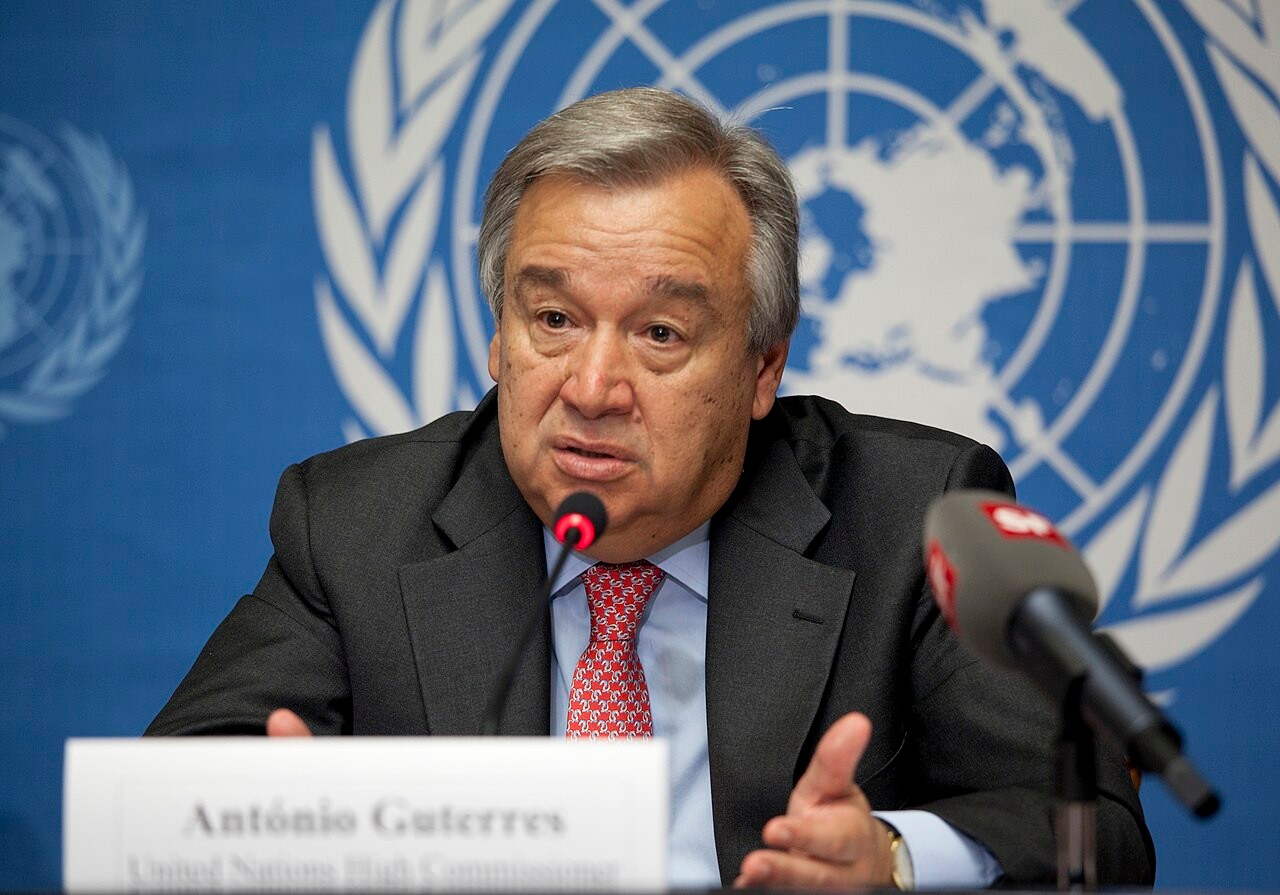
The UN-Secretary UN Secretary-General António Guterres, warns against ignoring the devastating effects of climate change across various spheres, describing the status, as alarming.
“The State of the Global Climate is in a state of emergency. Planet Earth is being pushed beyond its limits. Every key climate indicator is flashing red,” the UN chief said over the report, fearing for humanity.
“Humanity has just endured the eleven hottest years on record. When history repeats itself eleven times, it is no longer a coincidence. It is a call to act,”
Guterres warns that climate crisis is no longer a threat for the future — it is devastating lives today, he said of the report describing the past 11 years as hottest on record.
“These findings are not confined to charts and graphs. They are written into the daily lives of people,” Guterres warns — from rising food prices driven by droughts and storms, to workers pushed to the brink by extreme heat, and communities swept away by floods.
Guterres urges those on the frontlines to urgently seek adaptation finance to face the here-and-now impacts of climate change. Scaling up support is critical to protect lives, livelihoods, and communities.