
By Jeff Kapembwa
The severity of the 2026-27 El Nino which has hit the ground in some parts of Europe and headed for Africa, needs urgent insulation through securing resilient infrastructure because of its potential to fuel high level food insecurity and affect the eco-system.
The temperature driven climate catastrophe deemed to be “very strong” or “super” is projected to be exceptionally severe, with forecasts warning it could rank among the strongest events in over a century.
Climate experts and scientists foresee an 81% chance of a “very strong” or “super” El Niño peaking late in the year, with Pacific sea surface temperatures threatening to exceed historical thresholds.
Climatologists warn this event will pour fuel on global heating, potentially challenging past historical peaks set in 2015–2016.
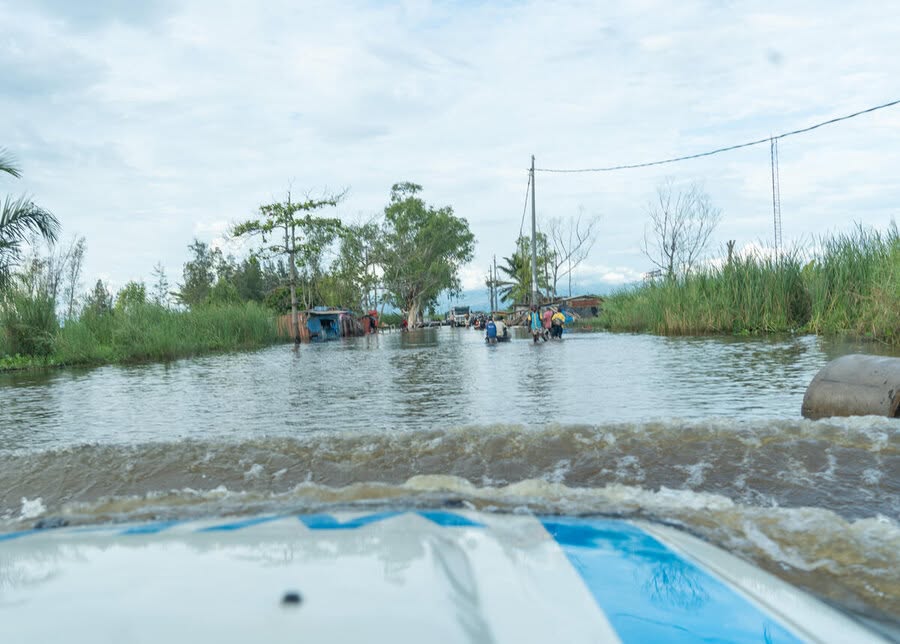
Governments globally are urged to brace for severe flooding, torrential rains in some zones, acute dry spells, and intensified strain on water and food supply chains.
It’s severity, is feared may stabilize some of the countries chiefly in East and West Africa and heighten possibilities of civil strife, forced migration, while over 18 million inhabitants are likely to go hungry as much land is unlikely to produce the food to feed the majority 3 million populace on the continent.
There is greater risk of wide spread flooding, population displacement, and waterborne diseases. Changing temperature and precipitation trends threaten vulnerable rural communities and agricultural outputs.
The United Nations’ food agency-FAO says there are likely severe risks of drought, failed harvests, and livestock loss across Southern Africa, the Sahel, parts of Asia, and Central America.
For Africa, danger looms with over 18 million additional inhabitants feared may ‘go hungry’ because of the acute food insecurity across East and Southern Africa, representing a 26% increase in vulnerable populations.
An estimated 6 million in West and Central Africa, an extra 6 million people face heightened food risks as above-average rainfall is expected to characterize most states in the two regions.
In Southern Africa, there is projected below-average rainfall and severe droughts to characterize the area, Zambia included-threatening rain-fed subsistence farming and staple maize harvests.
These climate driven headwinds is feared may pose an economic tool on the continent with many states lacking funds to invest in resilient infrastructure.
The Africa Development Bank (AfDB), though it has shown a face to save Africa from the calamite-pledging to invest a staggering US$10 billion on the continent to counter the effects, its falls far short, as the report from the Pan African institute shows.
The Pan African financial institution is working and mobilizing a bankable programme to secure up to $30 billion and orchestrate a broader climate adaptation target of $100 billion to protect the continent from the severe impacts of the projected 2026–2027 “super” El Niño event.
Rather than channeling this entirely through a standalone emergency fund, the bank is utilizing major multi-year climate frameworks and project restructurings to address the looming crisis.
According to a financing mechanism, the AfDB seeks to set aside $25 Billion for Africa’s Adaptation Acceleration Program (AAAP).
It will focus heavily on resilient infrastructure and food security. A further $4 Billion Supplementary Funding is expected to be deployed through a multi-year strategic mechanisms.
Next month, the AfDB plans to hold a bank-wide evaluation seminar to pivot existing portfolios, allowing vulnerable nations to redirect current development capital directly into urgent El Niño mitigation.
The AfDB is courting various global climate-biased bodies including the actively Green Climate Fund, the Adaptation Fund, and regional insurance programs like the African Risk Capacity Group to bridge the remaining gaps.
AfDB’s Director for Climate Change and Green Growth, Anthony Nyong, is concerned with the impending crisis, warning that warned that this upcoming El Niño could inflict an economic shock of an average $20 billion on the continent.
Heavily affected nations are projected to lose 1% to 2% of their GDP, with staple crop failures (such as maize prices doubling) threatening to trigger severe food insecurity and mass regional migration.
The UN Food and Agriculture Organization (FAO) and the World Food Programme (WFP) are seeking an estimated $200 million (€175 million) in funds to help protect 8.8 million people across 22 high-risk countries from the looming return the destructive El Nino weather pattern.
The support would include cash transfers, climate-resilient seeds, livestock protection and flood-control measures, as extreme weather patterns affect much of the world already.
The global meterological experts have warned, would cause severe impact on people, environment and affected the overall ecosystem.
“El Nino conditions have developed in the tropical Pacific, and are forecast to strengthen rapidly over the coming months, increasing the likelihood of extreme weather events in many parts of the world,” the World Meteorological Organization (WMO) warned.
In Africa, the countries listed as most at risk include Cameroon, Ethiopia, Kenya, Madagascar, Malawi, Mozambique, Nigeria, Somalia, South Sudan, Sudan, Uganda and Zimbabwe.
However. There is humanitarian response pending following responses being awaited from a coalition of United Nations agencies, continental institutions, international development banks, and foreign governments.
The institutions, are actively mobilizing while others are already providing financial aid, resource mobilization, and anticipatory climate infrastructure to help Africa mitigate the severe impacts of the 2026/2027 El Niño weather phenomenon.
According to the United Nations’, multiple arms of the UN are leading immediate readiness efforts through the UN Office for the Coordination of Humanitarian Affairs (OCHA) and the UN Central Emergency Response Fund (CERF) to secure an early, flexible financing.
Concurrently, the UN Food and Agriculture Organization (FAO) and the World Food Programme (WFP) have launched a combined appeal exceeding $200 million to deploy cash transfers, secure livestock protection, and distribute climate-resilient seeds across 22 high-risk countries.
Through the African Union Commission (AUC) and the African Centre of Meteorological Applications for Development (ACMAD), continental leadership is unifying national meteorological agencies to establish highly targeted early warning networks.
The African Development Bank (AfDB) is holding emergency strategic responses to restructure existing sovereign loans, minimize the projected $10 billion to $20 billion economic shock to the continent, and streamline fast-tracked capital from the global Green Climate Fund.
Global partners are backing regional requests—such as the Southern African Development Community (SADC) regional appeal—with the United States, the United Kingdom, and the European Union pledging hundreds of millions in cumulative emergency aid.
Non-Governmental Organizations (NGOs) have joined in the humanitarian response.
The World Vision, UNICEF, the Anticipation Hub, and the Adventist Development and Relief Agency (ADRA) coordinating grassroots distribution networks to pre-position resources before severe disruptions hit agricultural cycles, it says in a statement.
Last year, the African Union (AU) Peace and Security Council (PSC) convened a 1263rd session to discuss ‘Climate Change: Challenges to Peace and Security in Africa.’ And strategized some of the interventions.
Key among other stop-gap measures were to derive a shared understanding among PSC members of the intricate nexus between climate change, peace, and security in Africa while gathering feedback to refine the Common African Position.
Climate change continues to pose a significant threat to regional peace, security and development. The impacts of climate change, such as forced migration, food insecurity and economic disruptions, have the potential to exacerbate existing conflicts and introduce new vulnerabilities.
Floods, cyclones, droughts and other climate-related shocks continue to severely affect the African continent. The effects of climate change continue to threaten regional peace, security and development.
With rising temperatures, changing precipitation patterns and more extreme weather events, human health, food and water security, and socio-economic development continue to be threatened.
Ironically, Africa contributes just 4% of global carbon emissions despite being the continent that suffers the most from climate change.
The International Rescue Committee indicated that seven of the 10 countries most at risk from climate-related disasters are situated in Africa.
It says, 16 countries are caught in the intersection of climate vulnerability and armed conflict, representing a staggering 44% of people impacted by natural disasters and 79% of those in humanitarian need.
With the impending El Nino, Bhargabi Bharadwaj, a research associate at Chatham House’s Environment and Society Center, is explicit and argues that:
“El Nino reshapes rainfall and temperature patterns around the world, though its impacts can vary depending on the region and which season it hits.” He adds:
“Some areas will face drier conditions, which increases the risk of drought and wildfire occurrence, whereas other parts of the world will have wetter conditions and face the likelihood of storms and flooding,”
Some experts are also concerned about the possibility of a very strong — or “super” — El Nino this year, “when your average temperature difference is around 2 degrees higher, or at least forecast to be 2 degrees higher,” she said.
Bharadwaj, is however concerned with the complacency by some countries, countries, chiefly in Africa to take remedial measures ahead of the El Nino. Arguing:
“The real challenge is whether governments and aid agencies can act quickly enough, as “science is ahead of policy,” she is cited as saying by the Germany News Agency, DW.