
By Jeff Kapembwa
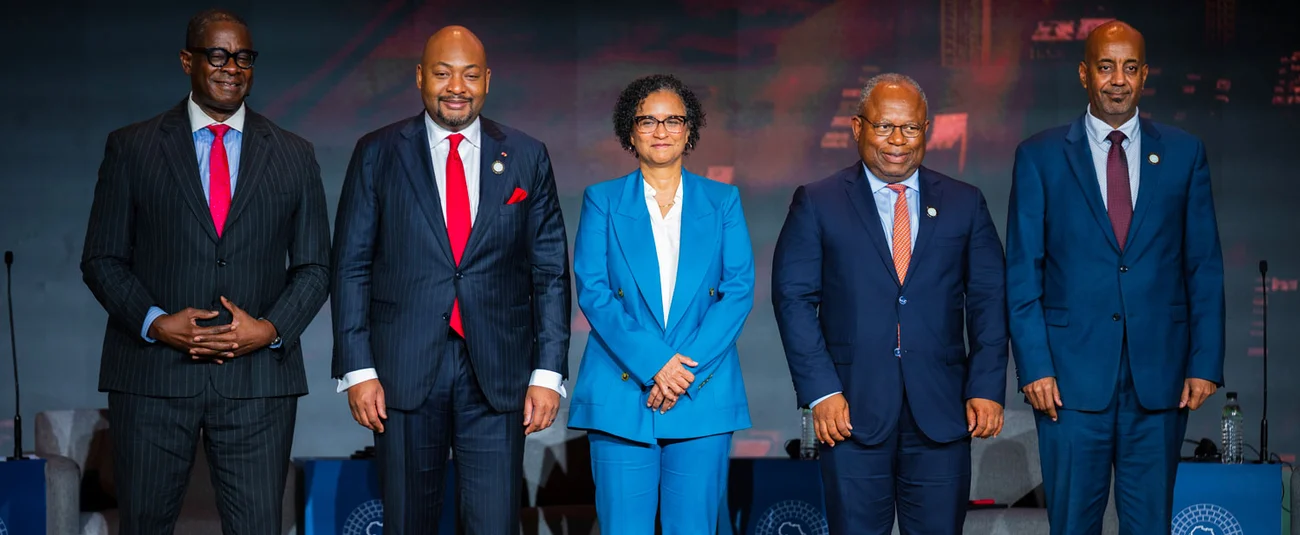
Senior policymakers, financiers, and private sector leaders, and several government leaders have mobilized US$3 billion towards addressing the climate change impact in the Congo Basin while committing to provide technical support to the Cartel Loss and Damage on the continent.
During the Pan-African Finance Institute’s meeting, the delegates noted that the extent of damage to the Congo basin was huge.
There was a dire need, and there was a need to preserve the natural resource from climatic effects, having been recognized as one of the world’s largest ecological lungs.
The meeting, hosted by Congo Brazzaville and ended Friday-29 May, agreed that the funds raised are for 63 low-carbon projects through the Congo Basin Blue Fund.
The leaders threw their weight behind the New African Financial Architecture for Development (NAFAD).
Delegates formally backed the NAFAD framework to better leverage African capital and resources under a strategy that stresses the need to mobilize domestic capital, build an African credit rating agency, and stop relying solely on external finance.
The meeting further reviewed the energy crisis on the continent and launched the Mission 300 program to rapidly scale green energy access across the continent, a communiqué issued after the meeting said.
The AFDB committed to providing an additional US$250 million in preliminary funding to kick-start projects led by the Congo Basin Climate Commission.
The meeting unanimously agreed to back the new Pan-continental program to accelerate energy access and the transition to clean, green energy for 300 million people by 2030.
On the escalating Loss and Damage on the continent, the meeting resolved to accelerate support towards reducing the gravity of the crisis and agreed to provide technical and other forms of support and help vulnerable SADC member states access climate resilience funds.
The meeting noted the continent’s estimated $400 billion annual development financing gap — and sought the maximization of NAFAD.
The new architecture, through the African Union in February, sought to plug Africa’s financing gap by tapping the continent’s own resources more effectively.
It was meant to start unlocking domestic savings, building continent-wide guarantee and shared-risk systems, while deepening local capital markets.
In a knowledge session, ” Mobilising Capital at Scale for Accelerated, Inclusive and Resilient Growth in Africa, Solomon Quaynor, the Bank Group’s Vice-President for Private Sector, Infrastructure and Industrialization, framed the challenge using a power sector analogy. “We have to find base load, and we have to find peak load,” he said.
“Base load has to really come from mobilised African institutional capital and peak load comes from global investors.”
Africa, the United Nations estimates, loses nearly US$200 billion annually to climate-related destruction, including damaged infrastructure, floods, and declining agricultural production.
Overall, the continent is projected to face between US$290 billion and US$440 billion in total Loss and Damage costs between 2020 and 2030, depending on the severity of global warming.
Since 1991, Africa has lost US$611 billion in farm output due to climate disasters, with West Africa losing up to 13.4% of its agricultural GDP.
The continent already loses between 5% and 15% of its per capita economic growth every year due to climate-related impacts, according to the African Development Bank.