
By Jeff Kapembwa
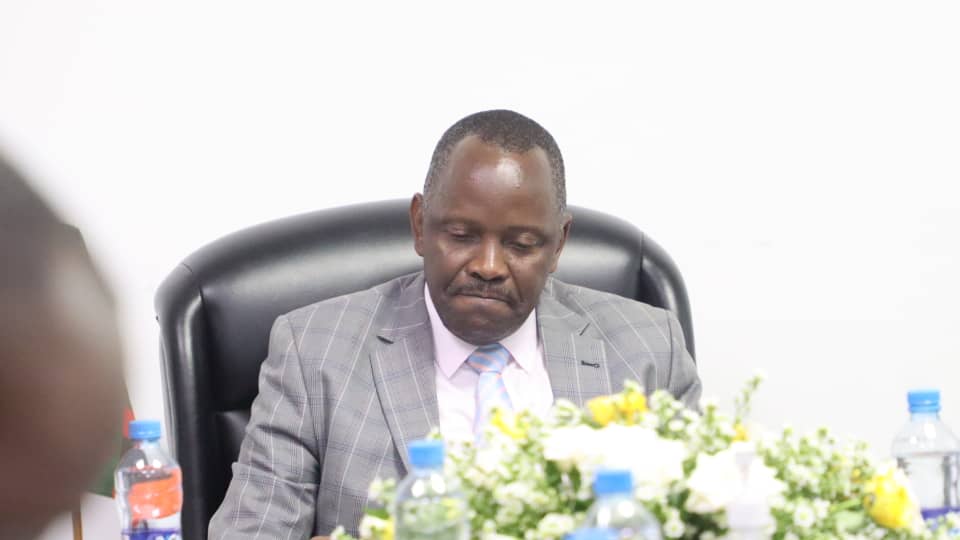
To lure creditworthy investment in the energy sector, Zambia should relentlessly devise bankable proposals and offset the power deficit dwarfing economic growth spurred by recurring climate change, says industry minister Makozo Chikote.
Zambia’s energy production capacity hovers around 5,000 MW, representing over 80 percent of hydropower production.
The inconsistent investment in the sector over the years has reduced the industry’s capacity to meet the energy needs of industry and domestic consumers by two-thirds, fuelling the poor economic performance of the Southern African state despite its natural and mineral capacity.
The lack of review of the Energy Act over the years, leaving tariffs around US$0.04 kWh and US$4.09 kWh, has scared off potential investment from prospective investors in solar, biomass, wind, and other renewable energy sources, a failed bid to bolster the country’s capacity to thrive, and it needs a catch.
The country’s sole reliance over the years on power utility Zesco as the sole and dominant off taker-providing distribution, generation, and transmission, using its power lines across the 116 districts, has further discouraged competitors in the sector, resulting in sustained power outages.
Already, the mines absorbing 50 percent of the country’s total power generation, estimated at 3,317 MW, which is shared between local and foreign markets daily, there is an urgent call for Zambia to devise bankable project proposals to complement established power providers to complement.
Energy Minister Chikote is mindful of various deficiencies that contribute to the country’s power woes and challenges the private sector to devise attractive joint ventures to bolster power production to complement hydro generation.
This, now incidentally, has been reduced threefold, unable to cope with the demand of all consumers as Zambia seeks to industrialize in transition to a middle-income state.
It is inevitable for Zambia to look to the private sector for sustained investment and accelerate renewable energy capacity.
Acquiring such resources, industry experts say, needs bankable projects and predictable policies, as a guarantee of security of tenure on foreign resources ploughed into the economy.
“To attract sustainable energy investment, we must first understand and respond to what investors are looking for. In our consultations with the private sector, financiers, and development partners, several consistent messages have emerged,” he said.
Addressing a climate financing symposium held in Lusaka in collaboration with the Zambia National Commercial Bank as part of the solution to the power deficit, Minister Chikote notes that existing and prospective investors require guaranteed predictability on their involvement.
“Investors require predictability. Zambia has already made significant strides through reforms in the energy sector, including unbundling the electricity value chain, promoting cost-reflective tariffs, and opening up grid access.”
The country’s quest to be competitive has more dimensions, forcing the country to undertake reviews of the Electricity Act and Energy Regulation Act, arguably to create a more transparent and investor-friendly regulatory framework.
The Government, he says, is undertaking various actions to close the gap.
This includes finalizing our Integrated Resource Plan (IRP) to provide a clear long-term roadmap for energy development.
There is an urgent need for Power Purchase Agreements (PPAs) to be structured in credible and financially viable ways, ideal for both parties, with a guarantee to investors of De-risked investment.
“We recognize that investors need assurance of payment and protection from foreign exchange and off-taker risk,” he said.
“To this end, we are working with ZESCO, the Ministry of Finance, and our development partners to enhance creditworthiness and consider mechanisms such as government guarantees and blended finance solutions.”
Zambia, aware of the shortcomings, is strengthening early-stage project development, a major barrier to investment is the lack of well-prepared, investment-ready projects.
This can be pursued through GET FiT Zambia Programme platforms.
Others are the Scaling Solar initiative and partnerships with institutions such as the IFC and AfDB. Efforts are underway to build a transparent pipeline of bankable projects in solar, mini-hydro, and battery storage.
To support large-scale renewable deployment, Zambia, Minister Chikote says, must invest in transmission and distribution infrastructure.
This is because the grid is the backbone of our energy system, which can act as a fulcrum to share power through interconnectivity, hence the need to expand grid capacity.
“We are actively seeking investment in grid expansion and interconnection, including through the Southern African Power Pool, which will enhance regional trade and reduce curtailment risk.” He said of the power-sharing initiative that the continent seeks to actualize-Cape to Cairo.
Zambians, however, should not get more latitude in the sector on the green energy revolution than other players, but be active participants in it.
The country is actively seeking to enhance local content policies, build technical capacity, and empower local companies to be part of renewable energy value chains and avoid sidelining other players.
To embrace various players, the Government is facilitating an all-inclusive role and ensuring there are transparent procurement processes for independent power producers (IPPs), and establishing standardized contracts and risk-sharing frameworks.
There is a need to maintain an open-door policy with investors, banks, and project developers, a call for sustained support from cooperating partners for funding and risk mitigation tools to facilitate green projects more attractive to the market.
And Zanaco Bank representative, Kalengo Simukoko, says the financial institution was strategically ready to complement the Government’s search for abundant alternative energy sources and was collaborating with various “friends of Zambia” .
This is to help mobilize resources to bolster energy production and access in Zambia to provide lines of credit that help to strengthen our sustainability agenda.
The Green Climate Fund, British International Investments, the World Bank, and the European Investment Fund are among other organizations ready to provide credit lines for access.
“We are currently developing a comprehensive green finance strategy to align our lending portfolio with climate-resilient, low-carbon growth,” Simukoko said.
The initiative includes building internal capacity to assess’ renewable energy projects and supporting SMES in clean energy solutions such as solar mini-grids, clean cooking, and energy-efficient agribusiness.
Cognizant of Zambia’s capacities to rejuvenate itself and overcome the impact of the drought that weighed into its energy sector, Zanaco has mobilized and financed about ZMW 1.2 billion worth of renewable energy projects.
These include a US$40 million solar power plant with many more in the pipeline, among others.